What Does AWS CEO Matt Garman Think of Space Data Centres?
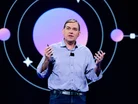
Matt Garman, CEO of Amazon Web Services (AWS), recently joined tech sector leaders including OpenAI’s Sam Altman and Intel’s Lip-Bu Tan at Cisco’s AI Summit to discuss where AI is heading.
While others focus on AI’s potential, Matt was keen to talk about the infrastructure needed to support it.
Jeetu Patel, President and CPO at Cisco, who hosted the conversation and says it is “physically very time consuming” to “get the permits, have the power, make sure that you have the entire stack getting built out".
These tasks relate directly to data centres, prompting Jeetu to ask if space facilities could ease constraints, adding that “solar is going to be 30% more efficient in space.”
Matt's outlook was a little more cautious. “It depends on the timeline for me," he said.
"A big chunk of this is just it’s hard. Going and building some of these things are actually quite difficult.
“People are very excited that they can build software in a fraction of the time, but pouring concrete takes the same amount of time and building buildings takes the same amount of time.
"We haven’t yet built AI agents that can do that. Maybe the robots will eventually.”
Grounded on Earth
Since becoming CEO in mid-2024, Matt has overseen AWS’s three Availability Zones and its 900+ data centres.
He highlights the advantages of existing facilities. “Infinite amount of power that’s always available, great. Easy cooling, that’s great,” he says.
However, he points to practical barriers for off-planet infrastructure: “I don’t know if you’ve seen a rack of servers recently.
“They’re heavy. And the last I checked, humanity has yet to ever build a structure, a permanent structure, in space, on the moon, or anywhere like that.”
These challenges underline why terrestrial data centres remain central to current operations.
Elon Musk and space data centres
Elon Musk, CEO of SpaceX, filed a plan with the Federal Communications Commission on 2nd February to establish a network of orbiting data centres supported by up to one million satellites, ranging from 300 to 1,250 miles above Earth.
Matt says: “Elon says he’s going to launch a million satellites or whatever. There are not enough rockets to launch a million satellites yet.
“Blue New Origin may actually come in handy there. It would be great, but they have to get their cost way down.”
The wider industry perspective
Other tech leaders are also considering space-based data centres.
Google CEO Sundar Pichai described the idea on “Google AI: Release Notes” in November 2025 as “crazy”.
He went on to add: “When you truly step back and envision the amount of compute we’re going to need, it starts making sense and it’s a matter of time.”
Amazon’s Chair and Founder Jeff Bezos predicts that gigawatt-scale data centres will eventually be built in space.
Speaking at Italian Tech Week in Turin with Ferrari Chairman John Elkann, Jeff says: “One of the things that’s going to happen in the next - it’s hard to know exactly when, it’s plus10 years, and I bet it’s not more than 20 - we’re going to start building these gigawatt data centres in space.”
Matt says: “People are excited about the possibilities.
“but the curve depends on the curve of innovation, and whether companies continue their commitment towards the prospect.”
For now, AWS focuses on improving terrestrial data centres while observing long-term developments in space infrastructure.
Matt emphasises the balance between ambition and practicality, ensuring that current facilities meet growing AI demands while keeping an eye on future possibilities beyond Earth.
Company portals





Executives

Elon Musk
Tesla CEO
Jeetu Patel
President & Chief Product Officer

Jeff Bezos
Founder and Executive Chairman at Amazon
Matt Garman
Chief Executive Officer
Sundar Pichai
CEO