Why Anthropic is Scaling Google Cloud Data Centre Capacity
Anthropic has secured tens of billions of dollars in data centre infrastructure through Google Cloud, committing to deploy up to one million of its Tensor Processing Units (TPUs) as part of an expansion that will deliver more than 1GW of capacity in 2026.
The San Francisco firm, which develops the Claude chatbot, serves more than 300,000 business customers. Accounts paying over US$100,000 per year have grown nearly seven times in the past year, driving requirements for processing infrastructure.
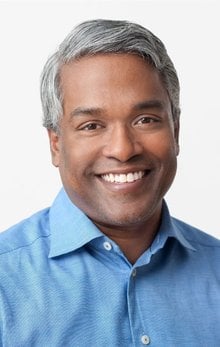
“Anthropic’s choice to significantly expand its usage of TPUs reflects the strong price-performance and efficiency its teams have seen with TPUs for several years,” says Thomas Kurian, Chief Executive Officer of Google Cloud. “We are continuing to innovate and drive further efficiencies and increased capacity of our TPUs, building on our already mature AI accelerator portfolio, including our seventh generation TPU, Ironwood.”
Google Cloud TPUs target data centre chip constraints
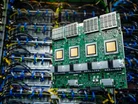
TPUs are processors built for the matrix multiplications required by neural networks. The chips handle training and inference workloads for language models across data centre facilities. Google has developed seven generations of the technology, with the current version codenamed Ironwood.

Announced at its 2025 Next conference, Ironwood delivers 42.5 exaflops of compute per pod and contains more than 9,000 chips per unit, which Google describes as “more than 10x improvement” from its previous TPU generation.
The partnership between Anthropic and Google Cloud spans several years. During this period, Anthropic has tested TPU performance across its workloads in Google data centres. The current infrastructure expansion follows that evaluation period. The testing phase allowed Anthropic to benchmark processing speeds, power consumption and thermal characteristics across different deployment scenarios within data centre environments.
Anthropic diversifies data centre infrastructure across three platforms
Anthropic operates a diversified compute strategy across three chip platforms in data centres. These include Google’s TPUs, Amazon’s Trainium processors and Nvidia graphics processing units. The approach addresses capacity constraints in an industry where processing infrastructure remains limited.
By distributing workloads across multiple data centre providers, the firm mitigates supply risks whilst maintaining negotiating position. The infrastructure will support customer requests, testing programmes, alignment research, and deployment operations. Alignment research focuses on maintaining intended behaviour in systems.
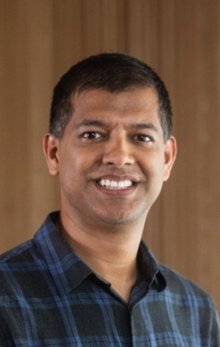
“Anthropic and Google have a longstanding partnership and this latest expansion will help us continue to grow the compute we need to define the frontier of AI,” comments Krishna Rao, Chief Financial Officer at Anthropic. “Our customers – from Fortune 500 companies to AI-native startups – depend on Claude for their most important work and this expanded capacity ensures we can meet our exponentially growing demand while keeping our models at the cutting edge of the industry.”
Amazon Web Services data centres remain primary training infrastructure
Amazon Web Services continues as the primary training partner for Anthropic. Work proceeds on Project Rainier, a compute cluster containing hundreds of thousands of chips distributed across multiple data centres in the United States. The arrangement means the firm maintains simultaneous data centre partnerships with both Google, which holds an equity stake from 2023, and Amazon.
The planned 1GW of capacity highlights the infrastructure requirements facing data centre operators in the sector. The energy demands extend beyond processors to encompass cooling systems required to prevent hardware failure. Data centre facilities require substantial power infrastructure as operations scale.
“Anthropic will continue to invest in additional compute capacity to ensure our models and capabilities remain at the frontier,” Krishna says.
Company portals



Executives
Krishna Rao
Chief Financial Officer
Thomas Kurian
CEO