Why is Meta Selling US$2bn in Data Centre Assets?
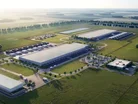
Meta has confirmed plans to divest a substantial portion of its under-construction data centre assets as part of a wider strategic shift in how it approaches infrastructure investment.
In a recent US Securities and Exchange Commission (SEC) filing tied to its Q2 2025 earnings, the company disclosed that in early June it reclassified US$2.04bn worth of assets as “held-for-sale.”
This reclassification includes land and facilities still under development. These assets are now listed as lower than their original cost or current market value minus any associated selling costs.
Meta expects the sale to close within the next 12 months and has indicated that it may involve a co-development arrangement with an external party.
While the company has not disclosed which facilities are included, their development-stage status suggests Meta may choose to lease the sites back once operational.

A shift in funding AI infrastructure
The move signals a broader shift in strategy as hyperscalers adjust to the financial demands of scaling AI infrastructure.
Meta, alongside other leading technology firms, is rethinking how it allocates capital to its physical infrastructure, given the rising cost of constructing and powering data centres designed to support generative AI workloads.
Reuters reports that the divestment is part of Meta’s effort to bring in outside partners to help fund the “massive infrastructure needed to power artificial intelligence”.
According to the report, this strategy is no longer unique to Meta but reflects an emerging industry trend where tech giants are opting to share responsibility for capital-intensive development.
As of 30 June 2025, Meta’s total “held-for-sale” assets had reached US$3.26bn.
The company currently operates or is building around 30 data centre campuses globally, the majority of which are located in the US.
While Meta also leases capacity, the shift to offloading physical assets underlines the scale of the cost pressures linked to AI expansion.
Timing the market for imminent demand
Investor demand for AI-optimised data centres remains strong, particularly in North America.
For Meta, the timing of this sale could align well with favourable market conditions, allowing it to capitalise on high valuations for infrastructure suited to high-density AI workloads.
Selling early-stage developments allows Meta to reduce upfront capital expenditure while retaining the option to lease capacity as needed.
The potential buyers could take on construction risks and benefit from direct engagement with a hyperscale anchor tenant.
Although Meta has not disclosed potential partners, co-development has become an increasingly popular model among tech companies looking to accelerate growth without owning all supporting infrastructure.
This approach also offers flexibility when navigating grid constraints, supply chain disruptions or regulatory considerations.
Meeting demand without overextending
The shift highlights a structural change in how data centre growth is being funded across the industry.
In the past, companies like Meta focused on owning and operating their infrastructure end-to-end.
Today, with Gen AI reshaping usage patterns and intensifying compute demand, the economics of hyperscale build-outs are evolving.
By repositioning US$2bn worth of data centre assets, Meta aims to balance rapid capacity deployment with a more agile financial strategy.
Rather than simply adding more owned assets to its portfolio, the company is opting for a collaborative route that spreads both risk and cost.
As hyperscalers and infrastructure providers navigate the next wave of AI demand, asset sales and strategic partnerships are likely to become more common – especially for facilities still in the early phases of development.
For Meta, this shift marks a practical recalibration of its infrastructure roadmap, reflecting both the complexity and the opportunity of operating data centres while evolving to meet AI demand.