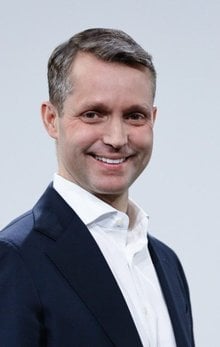
Nokia on the 'AI Supercycle' and Data Centre Growth

The increase in artificial intelligence development is creating a long-term growth trend comparable to the internet boom of the 1990s, according to Nokia CEO Justin Hotrad.
As organisations globally adopt AI to enhance operations, product innovation and supply chain efficiency, the demand for the underlying infrastructure is creating a major opportunity for technology providers.
Justin’s comments position Nokia to capitalise on this trend, which he describes as an “AI supercycle”. His perspective contrasts with a growing debate among some business leaders and investors about the sustainability of current AI investment levels.
At the Dreamforce technology event, Google CEO Sundar Pichai likened the current AI competition among large technology firms to the social media expansion that followed the launch of platforms like YouTube and Facebook.
Data centre demand and network growth
The race to build infrastructure capable of supporting AI applications is leading to a sharp rise in demand for data centres.
Justin Hotrad, who previously led Intel’s Data Centres and AI Group before joining Nokia, explains that this demand is a primary cause of new investment. He notes that Nokia is seeing “growth across the board” from a range of clients.
Justin adds: “Clearly, the incremental growth investment is caused by data centres. It’s a huge step up in volume.”
This trend is reflected in Nokia’s recent financial performance. Nokia reports quarterly earnings on 23 October that surpass market expectations, fuelled by high demand for its optical and cloud technologies.
This performance follows its acquisition of the US optical networking company Infinera, which has strengthened its market position.

Nokia's strategic shift to cloud and AI
In an interview with CNBC discussing Nokia's €435m (US$504m) operating profit, Justin highlights the success of the network infrastructure business and optical networks business.
According to Nokia, AI and cloud customers represent 6% of its most recent quarterly sales as its network infrastructure division expands in line with rising data centre demand.
This increased focus on AI marks a considerable strategic change for Nokia, since the company sold its mobile phone business in 2013.
While mobile networks are still a core part of its operations, the Finnish group is integrating AI more deeply into its radio access and fibre network systems. To support this transition, Nokia formed a Technology and AI organisation in September.
According to Reuters, the division is led by the newly appointed CTO Pallavi Mahajan, a former Intel executive, and is tasked with accelerating AI-based innovation.
Addressing AI investment bubble concerns
Despite the optimism from some quarters, other industry leaders raise concerns that the influx of capital into AI could be creating an investment bubble.
A recent Bank of America survey indicates that over half of fund managers believe AI stocks are currently in a bubble, with firms potentially overbuilding costly infrastructure for unproven ventures.
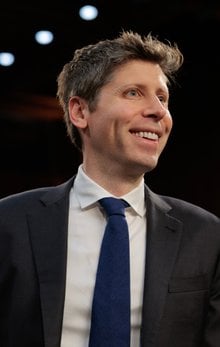
Sam Altman, CEO of OpenAI, tells Business Insider in September: “When bubbles happen, smart people get overexcited about a kernel of truth. Are we in a phase where investors as a whole are overexcited about AI? My opinion is yes.”
This sentiment is echoed by Joe Tsai, Co-Founder of Alibaba, who cautions: “I start to see the beginning of some kind of bubble... I start to get worried when people are building data centres on spec.”
Justin denies these concerns, telling Reuters: “Even if there’s a bubble a trough, we’ll look to the longer-term trends. And right now all those trends are very favourable.”
He explains in his CNBC interview that Nokia is capitalising on the “AI supercycle” and is “continuing to innovate and continuing to build momentum”.
Company portals




Executives
Justin Hotard
President and CEO
Sam Altman
Sundar Pichai
CEO