
Why Will PDG Use HVO to Power Indonesian Data Centres?
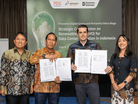
Princeton Digital Group (PDG) has announced a landmark partnership with Pertamina Patra Niaga to roll out Hydrotreated Vegetable Oil (HVO) as a replacement for diesel fuel across its Indonesian data centre operations.
The move marks a major step in PDG’s effort to lower its Scope 1 carbon footprint and advance sustainable digital infrastructure in Asia Pacific.
HVO is a renewable biofuel produced from vegetable oils, animal fats or used cooking oils. Unlike traditional biodiesel, it has a chemical structure closer to fossil diesel, but burns cleaner, reducing both greenhouse gas emissions and harmful particulates.

For data centres, where backup generators are essential to ensure uptime, the switch to HVO offers a way to significantly cut environmental impact without compromising reliability.
PDG expects to reduce carbon emissions by 70 to 90% by adopting HVO while also improving local air quality with lower nitrogen oxide and particulate emissions.
The partnership with Pertamina Patra Niaga
“This collaboration with Pertamina Patra Niaga is a testament to PDG’s commitment to responsible and sustainable growth across Asia Pacific,” says Varoon Raghavan, Chief Operating Officer and Co-founder of PDG.
“As Indonesia’s digital economy rapidly expands, PDG is enabling this transformation with data centres built for scale and sustainability. The deployment of HVO in Indonesia marks a critical step in our strategy to reduce Scope 1 emissions and accelerate the energy transition, while setting a new benchmark for sustainable digital infrastructure in the region.”
Varoon emphasises that the agreement demonstrates how data centres can align directly with national and global decarbonisation efforts.
For Indonesia, which has set a 2060 net-zero goal, initiatives like this help bridge the gap between digital expansion and climate action.
Local fuel production for critical infrastructure
Pertamina Patra Niaga, a subsidiary of state-owned energy company PT Pertamina (Persero), has been instrumental in developing the local supply of HVO.
The company has scaled production and logistics infrastructure to ensure availability of renewable fuels for industries including transport, utilities and now digital infrastructure.
“This collaboration with PDG is a significant step in our mission to accelerate Indonesia’s sustainability journey through strategic partnerships,” said Alimuddin Baso, Director of Central Marketing and Trading at Pertamina Patra Niaga.
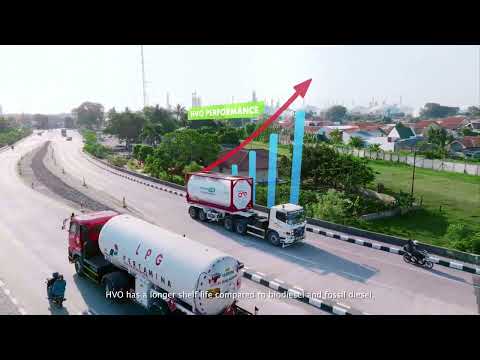
“As an Energy Solution Provider and Decarbonisation Partner, Pertamina Patra Niaga, through our Pertamina One Solution platform, not only delivers cleaner fuels but also provides integrated logistics and infrastructure support.
“By providing cleaner fuels to critical infrastructure such as data centres, we are helping reduce emissions in a rapidly growing industry, while also advancing Indonesia’s 2060 net-zero goal and energy transition.”
Reducing emissions from backup power
Diesel backup generators remain a necessity for data centres across Asia, particularly in fast-growing markets like Indonesia where power stability can vary.
Switching to renewable HVO allows operators like PDG to reduce emissions from backup power systems while maintaining reliability and compliance with global standards.
As hyperscale and colocation facilities continue to expand, Scope 1 emissions from fuel use represent a key challenge for operators working towards net zero.
By substituting diesel with renewable HVO, PDG is tackling one of the most direct sources of carbon output from data centres.
A pathway to net zero
This initiative forms part of PDG’s wider commitment to achieve net zero Scope 1 and Scope 2 emissions by 2030. Alongside renewable energy sourcing and efficiency improvements, fuel substitution is a vital part of that roadmap.
PDG operates across multiple Asia Pacific markets, with Indonesia one of its fastest growing. The introduction of HVO positions the company as a leader in sustainable operations in the region, demonstrating how data centre providers can work with local energy partners to accelerate the transition.
Through its collaboration with Pertamina Patra Niaga, PDG is aligning the growth of Indonesia’s digital economy with cleaner energy practices.
The partnership highlights how cooperation between digital infrastructure providers and energy suppliers can set new standards for sustainability while ensuring operational resilience.