
Wood Mackenzie Report: Can the Grid Keep Up With AI?
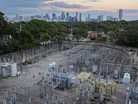
The biggest challenge in data centre development used to be finding enough land and water to keep expansion moving and facilities cooled.
Now, however, the industry’s biggest constraint is power availability.
Across the US, the AI boom is forcing operators and grid planners into a race they may not be fully equipped to handle.
Data centres are being planned and built at a pace that transmission infrastructure simply cannot match, with some grid upgrades still years away from completion.
That mismatch is pushing developers towards unconventional power strategies, from onsite generation to flexible grid agreements, as they attempt to secure speed-to-power for AI workloads.
But according to a new report from Wood Mackenzie, the industry’s rush to solve the problem may be creating a different set of risks entirely.
Ben Hertz-Shargel, Global Head of Grid Transformation and Large Loads, Wood Mackenzie, said: “The power sector is fixated on data centre flexibility, but that is not the end-game for grid operators or data centre operators.
“Firm grid service is the goal, backed by new transmission superhighways.
“But there is a lack of awareness throughout the power sector about the technical and regulatory risk confronting collocation projects, and the business risk of conditional interconnections.”
Power demand outpaces infrastructure
The pressure is particularly acute in deregulated US energy markets, where data centre demand is accelerating faster than generation capacity can be added.
The report highlights figures from PJM Interconnection, which currently has 78GW of committed data centre load against just 36GW of accredited generation capacity in its development pipeline.
In ERCOT, the challenge looks different but equally problematic. Power prices currently sit well below the level needed to incentivise major new gas generation projects, despite forecasts showing substantial capacity additions will be required over the next decade to support AI-led demand growth.
“Load growth and affordability are in direct opposition in the deregulated markets,” said Chris Seiple, Vice Chairman, Energy Transition and Power and Renewables, Wood Mackenzie.
“If prices rise to the level necessary to incentivise new generation, it will raise prices for all customers, prompting a political outcry.”
That tension is beginning to reshape how electricity markets operate.
PJM, the mid-Atlantic grid operator, is already moving towards a split pricing structure that would create a premium tier for new generation contracted directly by large-load customers such as hyperscale data centre operators.
Existing generation assets would remain on a lower pricing tier.
However, Wood Mackenzie warns that approach could trigger unintended consequences. Lower returns for older gas and coal facilities may accelerate plant retirements, potentially creating new reliability concerns while replacement infrastructure remains under development.
Texas has so far avoided similar intervention, instead relying on competitive market dynamics to attract new generation investment.
The limits of bring-your-own-power
As utilities struggle to keep pace, many data centre developers have turned towards colocation strategies and so-called "bring-your-own-generation" models.
More than 90GW of colocated generation projects are now sitting in US interconnection queues, according to the report.
Yet Wood Mackenzie argues the model may only be practical for a small number of hyperscale operators with deep balance sheets and highly specialised engineering capabilities.
“Even for developers that see colocation as a viable bridging solution to grid power, the costs and technical challenges are formidable,” said Ben Hertz-Shargel.

“Technology providers are only beginning to come to terms with this challenge, the mitigation of which is site-specific, making solutions hard to scale.”
The technical issues are substantial.
AI workloads can create sudden swings in electricity demand that place significant strain on gas turbines and reciprocating engines. Battery systems may help absorb those fluctuations but frequent cycling can rapidly degrade lithium-ion assets.
The report also points to problems caused by irregular GPU and cooling loads, including harmful power harmonics and sub-synchronous oscillations that can destabilise both local and wider transmission systems.
Regulatory risk grows
Alongside engineering challenges, developers are facing mounting uncertainty around grid rules.
Regional operators are introducing conditional interconnection frameworks designed to accelerate data centre connections while preserving wider system reliability.
However, those arrangements may undermine the economics behind some projects.
“PJM's and SPP's rules are understood to give the regional grid priority rights over collocated generation,” said Ben.
“During shortages, data centres would be forced to reduce demand to their firm service level, even as their onsite generation was instructed to supply the grid. For some companies, this model is unworkable.”
The concerns are not theoretical.
In 2024, 60 data centres in Virginia reportedly disconnected from the grid simultaneously after a minor disturbance, an event that nearly triggered a wider system collapse.
Following incidents like that, ERCOT has been reviewing stricter ride-through requirements aimed at preventing facilities from switching unnecessarily to backup power during short-term disruptions.
At the same time, grid operators across the US are planning close to US$100bn in transmission investment partly linked to future data centre demand growth.
Who ultimately pays for those upgrades is an unresolved question.
“Grid operators are positioning flexible interconnections as a stopgap, not a long-term solution,” said Chris.
“The expectation – and often the requirement – is that transmission will eventually provide complete, firm service to large loads.
That could cause costs to rise for existing customers if cost allocation methodologies aren’t changed and if the data centre demand doesn’t materialise as forecast.”
Company portals

Executives

Ben Hertz-Shargel
Global Head of Grid Transformation and Large Loads
Chris Seiple
Vice Chairman, Energy Transition and Power and Renewables