
Majorana 1: Microsoft Set to Accelerate Quantum Computing
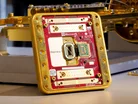
Microsoft has unveiled a new chip called Majorana 1 that it says will create quantum computers that are able to solve “meaningful, industrial-scale problems in years, not decades.”

The quantum processor uses a different technical approach from market competitors and incorporates a new architecture called Topological Core, which Microsoft developed to establish quantum computers capable of addressing industrial computing requirements.
The processor operates through a material called a topoconductor, which monitors and manages quantum particles named Majoranas to generate quantum bits - also known as qubits. These qubits form the core processing components of quantum computers.
“After a nearly 20 year pursuit, we've created an entirely new state of matter, unlocked by a new class of materials, topoconductors, that enable a fundamental leap in computing,” shared Satya Nadella, Microsoft Chief Executive Officer.
Posting on LinkedIn, he added: “We believe this breakthrough will allow us to create a truly meaningful quantum computer not in decades, as some have predicted, but in years.”
A semiconductor revolution
Quantum computers are said to be powerful enough to solve real-world problems, but experts believe they are so complex to create, they are still decades away.
However, Microsoft now says they could come around sooner as a result of the transformative progress it has made with chips made with topological conductors. The technology giant believes topoconductors have the potential to be revolutionary.
The processor fits within a palm-sized quantum chip that includes control electronics, designed for deployment across Microsoft's Azure cloud data centres.
“We took a step back and said 'OK, let's invent the transistor for the quantum age. What properties does it need to have?'” says Chetan Nayak, Microsoft Technical Fellow.
“And that's how we got here – it's the particular combination, the quality and the important details in our new materials stack that have enabled a new kind of qubit and our entire architecture.”
The architecture provides capacity for one million qubits on a single chip - a processing threshold Microsoft indicates would enable quantum computers to process requirements including microplastic decomposition analysis and self-healing material development.
“The qubits created with topoconductors are faster, more reliable and smaller. They are 1/100th of a millimeter, meaning we now have a clear path to a million-qubit processor,” says Satya Nadella.
“Imagine a chip that can fit in the palm of your hand yet is capable of solving problems that even all the computers on Earth today combined could not!”
Qubits: Addressing hardware challenges
Microsoft first began research into topological qubits twenty years ago, based on the theory they would provide more stable qubits requiring reduced error correction. This approach needed creation of Majorana particles, which do not exist naturally and require magnetic fields and superconductors to produce.
“Most of us grew up learning there are three main types of matter that matter: solid, liquid and gas. Today, that changed.”
Qubits are sensitive to environmental disturbances and measurement, which can cause information loss. Therefore, it is essential to develop qubits that can be measured and controlled, whilst remaining protected from environmental interference.
The processor development required creation of a materials stack comprising indium arsenide and aluminium, which Microsoft configured at atomic scale to generate Majorana particles for quantum computing applications.
As a result, the Majorana 1 chip incorporates error resistance at the hardware level and enables digital qubit control, which Microsoft states reduces quantum computing operational complexity.
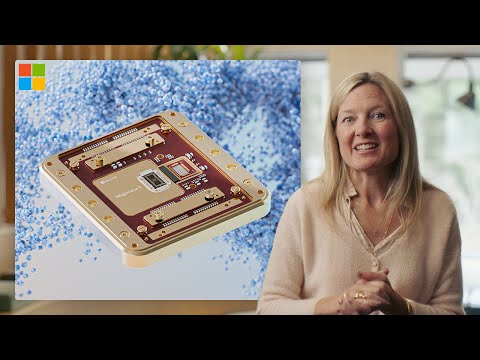
The chip architecture uses aluminium nanowires in H-formations, with each H containing four controllable Majoranas that form one qubit. These can connect across the chip, with a measurement system detecting the difference between one billion and one-billion-and-one electrons in a superconducting wire to determine qubit state.
Additionally, the chip’s measurements use voltage pulses rather than requiring calibration for each qubit.
Powerful future-proof solutions
Microsoft developed the chip through partnerships with quantum computing companies Quantinuum and Atom Computing, alongside Microsoft's Azure Quantum platform that combines AI, high-performance computing (HPC) and quantum systems.
“From the start we wanted to make a quantum computer for commercial impact, not just thought leadership,” explains Matthias Troyer, Microsoft Technical Fellow and Corporate Vice President at Microsoft Quantum. “We knew we needed a new qubit. We knew we had to scale.”
The development marks a shift from approaches taken by IBM and Google, which have focused on superconducting circuits and trapped-ion systems for qubit creation. These systems face stability and scalability limitations that have restricted practical applications.
“It's one thing to discover a new state of matter,” states Chetan. “It's another to take advantage of it to rethink quantum computing at scale.”
Explore the latest edition of Data Centre Magazine and be part of the conversation at our global conference series, Tech & AI LIVE and Data Centre LIVE.
Discover all our upcoming events and secure your tickets today.
Data Centre Magazine is a BizClik brand
