Nvidia Launches NVLink Fusion as AI & Cloud Spending Shifts
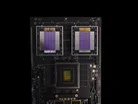
Nvidia has introduced NVLink Fusion technology that allows companies to integrate custom processors into AI infrastructure systems.
NVLink Fusion functions as a platform enabling companies to integrate specialised processors into Nvidia's AI systems. The move hopes to transform Nvidia from solely a chip supplier into a platform provider, as the company seeks to expand its customer base beyond large-scale data centre projects.
The technology also seeks to address growing concerns about the sustainability of sovereign AI infrastructure deals, particularly as cloud computing giants like Microsoft and Google are reassessing their investment strategies to moderate spending in this area.
“Instead of having to build the entire rack of equipment themselves, (companies) could innovate or differentiate on the custom (chip) itself,” Nick Kucharewski, VP at Marvell Technology, explains to Reuters.
Targeting the enterprise market
- Nvidia is striving to expand AI market grip through NVLink Fusion
- Nvidia is facing potential AI spending cuts from leading cloud firms
- Taiwan’s tech ecosystem is crucial for Nvidia's growth
The platform strategy aims to drive demand for Nvidia's underlying AI network and data centre components by attracting hardware developers to build products utilising the Fusion system.
Companies can now plug custom chips into Nvidia infrastructure without constructing complete equipment racks independently.
During Computex, CEO Jensen Huang announced a line of servers described as an “enterprise AI supercomputer” to target business customers beyond the current focus on technology companies and governments.
These enterprise servers handle multiple computing tasks including graphics processing, virtual machines and AI applications. Jensen has pitched the technology as opening access to a market where customers can use systems for various functions.
The enterprise market presents different challenges compared to Nvidia's current customer base. Deals tend to operate at smaller scales than sovereign data centre projects and require more time and resources to secure. This shift by Nvidia reflects its response to changing spending patterns across the AI infrastructure sector.
It’s important to remember that US restrictions on high-technology exports have forced Nvidia to withdraw certain chips from China and develop alternative products that comply with government policy, resulting in market share losses in that region.
In order to seek new growth opportunities, the semiconductor giant has decided to build supercomputers solely within the US.
Taiwan supply chain remains critical for Nvidia’s growth strategy
The initial wave of AI infrastructure development saw companies and nations allocate substantial resources to data centres equipped with Nvidia's processors. However, as these systems become operational and demonstrate capabilities, buyers are becoming more selective about future purchases.
While Jensen Huang announced deals worth hundreds of billions of dollars in regions including the Gulf states during recent travels, analysts suggest such large-scale agreements will become less frequent.

“Is every country going to announce a US$10bn or US$50bn data centre like the Saudis? Of course not,” Jay Goldberg, Seaport Research Analyst tells Reuters. “They're sort of running out of obvious deals.”
In considering this, Taiwan’s technology ecosystem remains crucial for Nvidia's growth as it navigates changing market conditions. The semiconductor company faces the challenge of maintaining growth momentum, with data centre operators and cloud providers moving beyond initial infrastructure buildouts toward more targeted investments.
When asked about plans to address potential AI spending slowdowns, Jensen explained: “AI infrastructure is being built out (everywhere) – that's one of the reasons I'm travelling around the world... AI infrastructure is going to be a part of society.”
Explore the latest edition of Data Centre Magazine and be part of the conversation at our global conference series, Tech & AI LIVE and Data Centre LIVE.
Discover all our upcoming events and secure your tickets today
Data Centre Magazine is a BizClik brand