
Off-Grid Microgrids: The Future of Sustainable Data Centres
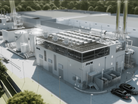
Across Europe grid connection queues are lengthening. This means developers and investors can no longer ignore off-grid options for private wire generation and microgrid solutions to meet the unprecedented demand for data centre infrastructure AI-driven energy needs.
By now everyone knows the demand forecast numbers for powering new data centres. In Europe announcements of large data centre campuses are appearing almost daily.
The forecast of 200GW of demand by 2030 could be an underestimate.
What cannot be underestimated or doubted is that the power for data centres needs to be renewable, economically viable, secure and long term.
But just as renewables are changing the power generation landscape, a lack of grid connections is causing concern. As of 2023 across the world over 3000 GW of renewable generation projects were awaiting grid connections. This is also impacting new data centre developments.
In Europe countries such as Ireland and the Netherlands have effectively banned new data centres that require grid power, while in the UK an 8-10 year waiting time for a new connection is the new normal.
In a changing power generation landscape investors need alternatives to battling to secure grid connections onto ageing transmission systems, meaning the case for microgrids has never been stronger.
However, one challenge has been a relative lack of data on which to make informed decisions.
Hyperscale, off-grid, cheaper and renewable
A new whitepaper comparing the economic costs of standalone hybrid renewable microgrids for data centres in Europe’s key markets shows a growing trend toward faster adoption.
The paper from Loughborough University’s Centre for Renewable Energy Systems Technology (CREST) provides insights into the economic and carbon impact of grid-independent microgrids.
Titled Technoeconomic Feasibility of Wind and Solar Generation for Off-Grid Hyperscale Data Centres, it evaluates the costs and carbon footprint of stand-alone hybrid renewable microgrids versus grid-connected and gas-only options over a 35-year operational period in the FLAP-D data centre markets.
The study finds that off-grid generation could deliver both lower costs and emissions than conventional grid power. It highlights the feasibility of using hybrid renewable energy systems that combine wind, solar, gas and battery storage to provide reliable and sustainable energy to data centres without access to grid connections.
With the energy consumption of global data centres expected to rise from 460 TWh in 2022 to 1000 TWh by 2026, and data centre power demands reaching 6% of total UK energy consumption by 2030 independent power solutions becoming necessary. That Europe’s aging grid infrastructure has an average transmission system age of 50 years, further underscores the urgency.
The whitepaper evaluates real-world scenarios and optimal configurations for data centres in major European markets by calculating the financial and environmental impact of using hybrid renewable microgrids, combining renewables, gas turbines, and batteries for stand-alone operation.
It examines a 50 MW constant load hyperscale data centre over a 35-year lifespan, comparing hybrid renewable and gas generation models with traditional grid-powered solutions.
The findings indicate that hybrid renewable energy configurations consistently result in lower levelized costs of energy (LCOE) and reduced CO2 emissions.

To address economic mismatches between generation and consumption, the study introduces a new metric: the Levelized Cost of Energy Utilised (LCOEu). This metric reflects the true cost of consumed energy, considering only the energy actually used by the data centre. Across all sites analysed, the LCOEu ranged from 70 to 102 GBP/MWh, with emissions between 0.021 and 0.074 tCO2eq/MWh.
As most renewable projects take longer to develop than data centre infrastructure, gas remains a necessary bridging energy source. The study assesses a gas-only system capable of fully powering a 50 MW facility and determines it provides a feasible interim solution until renewable power integration or grid access is available.
Microgrid by Design
Data centre investors are coming under increasing pressure to prove their sustainability credentials and must find ways to power operations while reducing environmental impact.
By demonstrating how hybrid renewable systems reduce emissions compared to conventional grid power, the whitepaper’s comparative data makes a compelling investment case for integrated microgrid solutions wherever feasible.
As demand for sustainable data centre power grows, the shift toward on-site, grid-independent power generation is accelerating. The CREST study highlights the potential for hybrid renewable microgrids to become the standard model for new data centre developments.
The consensus is clear: data centres must transition from being grid-reliant energy consumers to self-sufficient power producers. The question is no longer if on-site power will be deployed, but where and when it will happen.
2025 will be remembered as the year grid-independent microgrid power for data centres became mainstream, fundamentally reshaping the provision of renewable energy at scale.
The full Technoeconomic Feasibility of Wind and Solar Generation for Off-Grid Hyperscale Data Centres report is available for free download .
AVK, an expert in data centre microgrids, has been helping customers navigate these challenges for over a decade. From feasibility studies and design to commissioning and operational management, AVK supports developers, hyperscale operators, and colocation providers in implementing sustainable, off-grid power solutions.
Disclosure: This article is an advertorial, and monetary payment was received from AVK. It has passed Editorial’s assessment for being informative.
Explore the latest edition of Data Centre Magazine and be part of the conversation at our global conference series, Tech & AI LIVE.
Discover all our upcoming events and secure your tickets today.
Data Centre Magazine is a BizClik brand