Schneider Electric Q&A on Energy Demand and Data Centres
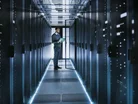
Schneider Electric’s technology footprint stretches across energy, automation and sustainability.
The global firm, known for its long-standing presence in digital innovation, now plays a central role in addressing challenges in AI-heavy infrastructure like data centres.
With energy use climbing and electrical systems straining to keep up, Schneider Electric is aiming to ensure data centres remain efficient and resilient.
At the core of this push is AI, integrated directly into Schneider Electric’s systems to improve how digital infrastructure consumes and conserves energy.
Chief Technology Officer Scott Harden leads this work, shaping the technology roadmap and research priorities across the innovation business.
He also collaborates with the wider digital function, focusing on platform development and the company’s growing software portfolio.
Scott's attention is firmly on the power challenges linked to AI, electric vehicles and the broader move towards electrification.
Each of these is adding complexity to a grid system that was not built to handle unpredictable, surging loads.
The traditional model of forecasting electricity no longer fits.
AI-based tools must now support more accurate and real-time modelling of energy requirements, particularly in high-demand areas like data centres.
Data centres — essential to AI model training and digital services — are among the fastest-growing electricity users globally.
Scott sees this not just as a technical issue but as a wider threat to resilience and sustainability.
In this Q&A, Scott explains how Schneider Electric’s technology is advancing the performance and efficiency of data centres, while supporting energy optimisation and sustainability goals.
How do you position Schneider Electric to help solve the world's most challenging energy and demand issues?
There's a concept that we talk about a lot called Electricity 4.0 .
What that is from our perspective is the marriage of digitalisation and electrification with the outcome being focused on sustainability.
We have a real obligation to participate because of the various solutions that we bring to market for energy distribution, automation and all of the other aspects when it comes to the built environment, as well as the grid itself.
It's a topic that is incredibly important to us. It's our mission and I love talking about it.
How has your role changed in recent years with the AI boom and the demands that come with it?
It's fascinating — not only how rapidly AI as become just part of the DNA of business globally, but that it's not going away and we have just scratched the surface.

Before Schneider, I worked at Microsoft — a company that's right there in the centre of what's happening. This was three short years ago at a time when we weren't even talking about OpenAI, Chat GPT and Gen AI concepts, but here we are today.
What we are talking about is the role of technology when it comes to energy transition. As CTO for the energy industry at Microsoft, we talked a lot about how big transformative themes like cloud computing were going to reshape the way that the energy systems would operate.
This is going to be absolutely essential because not only are we seeing rising demand, but rising complexity of the overall system itself.
Three years ago, when we were talking about the role of cloud and how we were going to truly be able to move the needle towards energy transition, we talked a lot about companies like Schneider Electric and here I am today. Why am I here?
It’s because I find it to be truly fascinating that companies like Schneider and the whole theme around Electricity 4.0 have truly embraced technology as an essential disruptive capability.
Then, all of a sudden, came the AI boom.
This meant when we were talking about renewables, we talked about how it created somewhat of a conflict because you're trying to go forward with a very distributed system that was focused on clean energy while, at the same time, you had rising demand for electrification.
Then you throw data centres into the mix that have gigawatt consumption and need to be able to truly focus on large language models.
This has created a pretty interesting scenario, because now all of a sudden everybody's revisiting the timelines associated with decarbonising the system. How do we do this at the same time?
I think it's great because it's becoming a forcing function for us to really look at things that need to be accomplished in a short amount of time to able to be able to serve the needs for this high growth in demand.
That's where Schneider’s position is really reinforced. We need to know the solutions we need to go faster on and that is what we are looking at. The area I think is the most ripe for investment and disruption is going to be on the demand side. There's a lot of work that we're doing there.
How can demand-side solutions help address the transmission capacity problem and offset the need for more transmission infrastructure in the short term?
One area of research and development that we're really focused on is microgrids. I think they're going to ultimately become essential because we are not going to be able to build out the transmission that is truly needed to be able to move clean energy from the source to the consumption to the loads.
There is some activity around siting data centres closer to renewables and things like that, but the reality is that that is just not where the information and the infrastructure will sit — so we have to think of things in a more distributed fashion.
Microgrids are going to truly ultimately play an essential role in helping offset the needs of transmission buildout, which unless something changes around permitting and citing and jurisdictional conflicts, it’ll be a struggle to get there.
It’s also going to be important for the same concepts that apply to microgrids to work at the residential level. We're doing a lot of work there with home energy management systems (HEMs) where our Wiser solution helps not only manage the loads within a home to improve the efficiency of their energy use but also to be essentially an organising layer that connects them to the grid.
All of these investments that people are making now with heat pumps and intelligent thermostats can be grid connected. What we now have to do is create intuitive customer experience to enable that.
This shows there is both a commercial layer with microgrids and a residential layer. By leveraging technologies like HEMs, we're really going to help be able to provide flexibility to a system that, until now, has really only been dependent upon capital investment through infrastructure like transmission.
What specific technologies or approaches does Schneider Electric envision for managing the increasing electricity demand from data centres, particularly those driven by AI applications, while maintaining grid stability and efficiency?
As data centres and microsgrids become much more closely aligned — and there's work that we're doing there — then they become a bi-directional resource as well.
Right now, they're purely a load, but the opportunity will be there, especially as data centres start to essentially implement more cited storage within the data centre for backup power that can offer buffering capabilities to the grid.
Data centres themselves, although they are providing this obvious amount of demand on the system, I think that they can actually become participants in the whole notion of this multi-directional energy system.
Explore the latest edition of Data Centre Magazine and be part of the conversation at our global conference series, Tech & AI LIVE.
Discover all our upcoming events and secure your tickets today.
Data Centre Magazine is a BizClik brand