As hyperscale demand accelerates and enterprise workloads continue their migration to the cloud, data centre real estate has become a critical battleground for infrastructure investment.
Land acquisition, power accessibility and proximity to key network hubs now define competitive advantage as much as technical capability.
For operators, success increasingly hinges on securing, developing and optimising strategic sites at scale.
Here, Data Centre Magazine highlights the Top 10 companies best positioned to capitalise on these dynamics, examining how real estate strategy underpins their growth, resilience and long-term value in an increasingly constrained global market.
10. Aligned Data Centers

- CEO: Andrew Schaap
- Founded: 2013
- Location: US
Aligned Data Centers has differentiated itself through a flexible, build-to-scale approach that places real estate agility at the centre of its model. Its Adaptive Modular Infrastructure enables rapid deployment across strategically acquired campuses, particularly in high-growth US metros. By securing large parcels of land with strong power availability early, Aligned mitigates supply constraints while offering hyperscale clients room to expand. This forward-looking land banking strategy enhances long-term asset value and positions the company to respond quickly to shifting enterprise and cloud demand.
9. DataBank

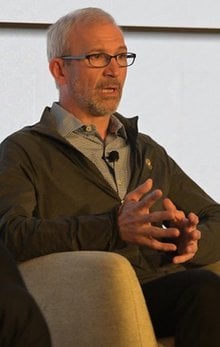
- CEO: Raul Martynek
- Founded: 2005
- Location: US
DataBank’s growth has been driven by a targeted acquisition strategy focused on high-value regional markets. Its real estate footprint prioritises edge locations and secondary cities where latency requirements intersect with lower land costs and available power. By aggregating facilities into a cohesive platform, DataBank enhances operational efficiency while increasing the underlying value of its assets. Its emphasis on owned real estate, rather than leased space, strengthens balance sheet stability and allows for greater control over expansion and redevelopment in key US regions.
8. Keppel DC REIT
- CEO: Loh Hwee Long
- Founded: 2014
- Location: Singapore
Keppel DC REIT stands out as a pure-play data centre real estate investment trust, offering investors direct exposure to digital infrastructure assets. Its portfolio spans Asia-Pacific and Europe, focusing on income-generating properties with long-term leases. The REIT structure emphasises disciplined capital allocation and asset enhancement, ensuring properties maintain high occupancy and valuation. By selectively acquiring stabilised assets in prime markets, Keppel balances risk and return while capitalising on sustained demand for secure, well-located data centre real estate.
7. Vantage Data Centers
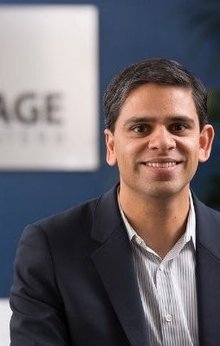
- CEO: Sureel Choksi
- Founded: 2010
- Location: US
Vantage Data Centers has built its reputation on hyperscale campuses located in key global markets, where land availability and power access are tightly constrained. Its strategy centres on acquiring large, scalable sites capable of supporting multi-building developments. This campus model maximises land utilisation while creating long-term leasing opportunities with major cloud providers. Vantage’s disciplined site selection, often near major fibre routes and energy infrastructure, ensures its real estate assets remain both highly desirable and resilient in an increasingly competitive market.
6. STACK Infrastructure
- CEOs: Brian Cox (EMEA - Interim); Matt VanderZanden (Americas); Preet Gona (APAC)
- Founded: 2019
- Location: US
STACK Infrastructure combines speed-to-market with a strong emphasis on strategic land acquisition. Its real estate approach focuses on securing shovel-ready sites in Tier I and emerging markets, enabling rapid development aligned with hyperscale demand. By prioritising locations with existing entitlements and power agreements, STACK reduces deployment risk and accelerates time to revenue. Its growing portfolio reflects a deliberate effort to build long-term value through ownership of high-quality land assets in regions where supply constraints are intensifying.
5. QTS Data Centers

- CEO: Tag Greason and David Robey (Co-CEOs)
- Founded: 2005
- Location: US
QTS has developed a distinctive real estate strategy centred on large-scale mega campuses, particularly in the US. These sites offer extensive acreage and significant power capacity, allowing for phased development tailored to hyperscale clients. By controlling vast land reserves, QTS provides flexibility for future expansion while enhancing asset longevity. Its focus on integrated campuses also supports operational efficiencies and sustainability initiatives, reinforcing the value of its real estate portfolio as both a strategic and financial asset.
4. NTT Global Data Centers

- CEO: Doug Adams
- Founded: 2001
- Location: US
NTT Global Data Centers leverages the broader NTT Group’s global reach to secure prime real estate in key international markets. Its portfolio spans North America, Europe and Asia, with a focus on carrier-dense, highly connected sites. The company’s real estate strategy prioritises proximity to major business hubs and network exchanges, enhancing the attractiveness of its facilities. By combining global scale with local market expertise, NTT GDC ensures its assets remain competitive and aligned with evolving enterprise and hyperscale requirements.
3. CyrusOne
- CEO: Eric Schwartz
- Founded: 2001
- Location: US
CyrusOne has built a strong position through targeted investment in hyperscale-ready campuses across North America and Europe. Its real estate model emphasises large, strategically located sites capable of supporting significant power loads. By focusing on high-demand metros and securing long-term land positions, CyrusOne ensures scalability for its clients while protecting asset value. Its disciplined expansion strategy, combined with a focus on connectivity-rich environments, underpins its reputation as a trusted partner for cloud and enterprise customers.
2. Digital Realty
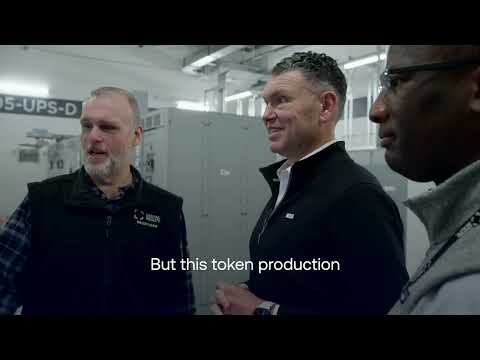
- CEO: br
- Founded: 2004
- Location: US
Digital Realty is one of the most established players in data centre real estate, with a vast global portfolio spanning more than 25 countries. Its PlatformDIGITAL offering integrates colocation and hyperscale capabilities across a network of highly strategic locations, reinforcing the importance of interconnected real estate assets. The company’s approach centres on acquiring and developing sites in key metros with demand, connectivity and power converge. By clustering assets within major markets, Digital Realty enhances network effects and increases the overall value of its portfolio.
Real estate remains central to its growth strategy, with continued investment in land banking and redevelopment projects. The company also focuses on sustainability, ensuring its properties meet evolving regulatory and environmental standards. Through disciplined capital deployment and a strong emphasis on location, Digital Realty maintains its position as a cornerstone of global digital infrastructure.
1. Equinix

- CEO: Adaire Fox-Martin
- Founded: 1998
- Location: US
Equinix leads the sector by redefining data centre real estate with its global scope and as a platform for digital ecosystems rather than simply physical infrastructure. Its International Business Exchange facilities are strategically located in the world’s most connected urban centres, where proximity to networks, enterprises and cloud providers drives unparalleled demand. This focus on premium, high-density locations elevates the value of its real estate portfolio beyond traditional metrics.
The company’s strategy hinges on acquiring and optimising assets in gateway markets where land is scarce and connectivity is critical. By continuously expanding within these metros, Equinix strengthens interconnection opportunities and creates powerful network effects. Its disciplined approach to site selection, combined with long-term ownership and redevelopment, ensures sustained asset appreciation. In a market defined by constraints on space and power, Equinix’s real estate expertise underpins its position as the industry’s most influential operator.
Company portals







Executives
Adaire Fox-Martin
Chief Executive Officer & President

Andrew Schaap
CEO
Andy Power
President & Chief Executive Officer
Brian Cox
Chief Executive Officer
David Robey
Co-Chief Executive Officer
Doug Adams
CEO & President, NTT Global Data Centers
Eric Schwartz
Chief Executive Officer
Raul Martynek
CEO
Sureel Choksi
President and CEO
Tag Greason
Co-Chief Executive Officer