AMD and Schneider Electric Unveil Helios AI Reference Design
Data centre operators building out AI infrastructure face a persistent problem: matching compute ambition with power and cooling capacity that can actually support it.
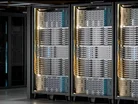
Schneider Electric and AMD have moved to close that gap, unveiling a jointly engineered reference design for the AMD Helios rack-scale solution.
The design marks the first milestone in a collaboration between the two companies and is intended to give operators a tested blueprint for deploying high-density AI environments with less risk and complexity.

It supports AI clusters of up to 10.4MW of IT capacity for greenfield builds, alongside individual racks running as high as 246 kW, figures that reflect how quickly rack densities are climbing across the sector.
High-density blueprint for AI factories
Helios itself is built around AMD Instinct MI455X GPUs, 6th Gen AMD EPYC CPUs, AMD Pensando Vulcano NICs and the open ROCm software ecosystem, and is designed to handle larger and more complex AI workloads while keeping power and efficiency in check.
The reference design covers four technical areas: facility power, facility cooling, IT space and lifecycle software, giving architects a defined structure to plan against rather than starting from scratch.
The design is aimed at both greenfield AI factories and high-density retrofits, with support for modular, multi-cluster environments that allow operators to scale capacity in stages rather than committing to a single fixed build.
That flexibility matters for operators weighing up how quickly AI demand might grow against the capital cost of overbuilding power and cooling capacity upfront.
Cooling and efficiency at scale
Liquid cooling sits at the centre of the design, with Motivair by Schneider Electric CDU-based systems and hybrid air/liquid approaches capable of removing up to 84% of heat generated within a rack. That level of heat rejection is central to supporting racks at 246 kW, densities that would overwhelm most air-cooled facilities.
The companies say the design also supports a PUE as low as approximately 1.12 at full load, and has been validated to ANSI standards for deployments in the United States, with plans to extend the framework to IEC standards for international projects.
Digital modelling underpins the approach, with electrical and thermal performance validated using ETAP and EcoStruxure IT Design CFD simulation tools.

These feed into an Electrical Digital Twin capability intended to model and manage infrastructure performance, alongside real-time monitoring and operational visibility through AVEVA's Unified Operations Center. The same digital-first approach is positioned to support AI-driven predictive maintenance and system-level optimisation across power, cooling and IT, rather than treating each layer of the facility as a separate design problem.
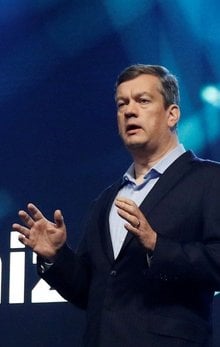
“Today organisations require comprehensive, AI-ready reference designs that can take them from planning to deployment faster and with less risk," says Manish Kumar, Executive Vice President, Secure Power & Data Centers at Schneider Electric.
“Through our collaboration with AMD, we're delivering an engineering-backed reference design that bridges the gap between advanced AI compute platforms, energy tech, and real-world data centre implementation, enabling customers to deploy scalable, high-density AI environments with greater confidence, efficiency and speed.”
"Schneider Electric is proud to be AMD’s partner of choice for its first Helios reference design," says Rob Bunger, Global Director of Data Center Solution Architecture at Schneider Electric. "The engineering-backed design provides a validated blueprint for supporting AMD’s Helios rack-scale architecture across both greenfield and retrofit deployments, including the first option with Motivair Rear Door Heat Exchangers.
"Supporting 246kW per rack demands rigorous electrical and thermal engineering, validated through ETAP and EcoStruxure IT Design CFD, enabling customers to deploy with greater confidence, speed and reduced complexity."
Reducing integration risk for operators
For AMD, the priority is ensuring compute, networking, power and cooling are designed as a single system rather than assembled after the fact.
“AI infrastructure is rapidly moving to full-scale AI factories, and that requires compute, networking, power and cooling to be designed together from the start,” says Forrest Norrod, Executive Vice President and General Manager of the Data Center Solutions Business Group at AMD.
“AMD Helios provides an open, rack-scale architecture built to deliver the performance, efficiency and flexibility required for next-generation AI workloads.
“By working with Schneider Electric to create a validated reference design, we are giving customers a practical blueprint to accelerate high-density AI deployments, reduce integration risk and scale with greater confidence and efficiency.”
Company portals



Executives
Forrest Norrod
EVP and GM of the Data Center Solutions Business Group

Manish Kumar
Executive Vice President of Digital Energy

Robert Bunger
Global Director of Data Center Solution Architecture