
How Hammer and AMD are Pushing CPU-First AI Strategy
In the race to scale AI infrastructure, Hammer Distribution and AMD are harnessing the power of the CPU (Central Processing Unit) for data centre strategy.
As power availability tightens and compute demand rises, the companies are promoting a CPU-first approach to help operators manage workloads within existing energy limits rather than relying on additional capacity.
This position reflects growing pressure on UK data centres, where access to grid power is dictating how quickly new infrastructure can come online.
The challenge for Hammer and AMD is not only about expanding compute, but about using available power more effectively across AI workloads.

"Zombie projects" cleared from the grid
The demand for compute is projected to increase by 100x over the next five years, creating strain on infrastructure already facing constraints.
UK policy direction from Ofgem and the National Energy System Operator identifies grid capacity as a primary barrier to data centre expansion, placing energy access ahead of land or hardware as the key limiting factor.
Reforms made in December last year address this by removing so-called 'zombie projects' from grid connection queues, which are stalled or speculative developments which waste grid power. This allows priority access for developments that meet efficiency and strategic criteria.
This also shifts the focus for operators, who now need to demonstrate that infrastructure is not only scalable but also energy efficient.
Within this environment, the concept of ‘time-to-power’ is critical. Delays in securing grid connections affect deployment timelines, prompting data centre operators to look for ways to maximise performance within existing facilities rather than waiting for new capacity.
CPUs take a central role in AI workloads
Hammer and AMD argue that the CPU is responsible for managing core computing tasks and coordinating system processes. It is a system which plays a decisive role in determining how efficiently AI systems operate.
While GPUs are associated with model training, the growing emphasis on inference shifts attention towards how workloads are executed at scale.
Inference is the stage where trained models generate outputs, which places different demands on infrastructure. Rather than requiring peak processing bursts, it depends on consistent throughput and efficient handling of data across systems.
CPU performance directly influences whether workloads run smoothly or become constrained by delays. Inefficiencies at this level have a direct impact on data centre operations.
Adam Blackwell, Director of AI, Server and Advanced Technology at Hammer Distribution, says: “The next phase of AI isn't constrained by model ambition so much as power availability and system efficiency.
“By optimising the CPU's role in the AI pipeline, from data ingest to inference, we are enabling our partners to deliver viable AI solutions that fit within today's strict European energy reporting and power constraints.”
CPU-first inference within existing infrastructure
Hammer and AMD position CPU-led inference as a practical model for a range of enterprise workloads, including document processing and retrieval augmented generation, which is a process that combines search with AI models.
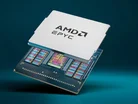
AMD’s EPYC processors support this approach by enabling inference workloads to run on existing server infrastructure. This reduces the need to deploy additional accelerators in data centres and allows operators to reserve GPU resources for large-scale training tasks.
Lower reliance on accelerators reduces overall power consumption, while the ability to use existing systems helps avoid delays associated with new hardware procurement or grid upgrades. In a constrained energy environment, this supports more predictable deployment timelines.

At the same time, regulatory requirements are also increasing. The European Commission’s Energy Efficiency Directive is introducing mandatory reporting for data centre performance, which requires operators to track how energy is consumed and used.
Within this framework, CPUs play a role in ensuring that energy consumption translates into productive output. Maximising utilisation means that each watt contributes to processing workloads, aligning infrastructure performance with regulatory expectations.
Hammer and AMD are aligning AI deployment with the realities of data centre operations, where power availability, efficiency and workload management define how infrastructure evolves.
Company portals


Executives

Adam Blackwell
Director of AI and Server technologies