
Can the Gulf States Redefine AI Data Centre Supply Chains?
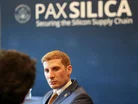
Qatar and the United Arab Emirates have formally joined the US-led Pax Silica agreement, marking a strategic shift that places data centres and AI infrastructure at the centre of Gulf economic and security planning.
The move signals a pivot away from oil-led growth towards silicon, software and large-scale compute.
Pax Silica, also known as the "Silicon Declaration", is a framework launched by the Trump administration to strengthen global supply chains for semiconductors and AI.
Qatar joined the pact on 12 January 2026, with the UAE set to follow on 15 January, alongside members including the US, UK, Australia, Israel, Japan, Singapore and South Korea.
For the Gulf states, the agreement represents a recalibration of national priorities towards digital infrastructure.
Vast energy reserves, sovereign wealth and emerging hyperscale ambitions position both countries as potential anchors for global AI data centre capacity going forward.
Jacob Helberg, US Under-Secretary of State for Economic Affairs, explains: “If the 20th century ran on oil and steel, the 21st century is going to run on compute and minerals.”

Energy and compute at scale
One of Pax Silica’s central objectives is addressing the infrastructure demands created by AI.
Data centres supporting advanced model training and inference require enormous volumes of reliable power, with global AI-related electricity consumption forecast to rise sharply by 2030.
The UAE and Qatar bring clear advantages in this context. Both have large-scale electricity generation capacity, established experience in energy exports and growing investment in grid resilience.
These factors are increasingly attractive to hyperscale operators seeking locations capable of supporting multi-gigawatt campuses.
In policy terms, the pact frames energy not only as a commodity but as an enabler of compute.
For Gulf states, this creates a pathway to repurpose hydrocarbons, renewables and capital into long-term data centre development, supporting domestic AI ambitions while hosting international workloads.
Jacob characterises this approach as a form of silicon statecraft, where energy assets and capital are used to secure a position in the digital economy rather than simply funding consumption.
Capital flows into AI infrastructure
Capital deployment is another pillar of Pax Silica with direct implications for data centres. The Qatar Investment Authority manages assets of around US$524bn, while UAE sovereign wealth funds collectively oversee more than US$1tn.
These funds are already being channelled into global digital infrastructure.
Notable examples include Stargate, the US$500bn AI data centre initiative involving OpenAI and SoftBank, and a separate US$100bn collaboration between Abu Dhabi-based MGX, BlackRock and Microsoft.
Both projects highlight how Gulf capital is aligning with hyperscale data centre growth in the US and beyond.
For operators and vendors, this concentration of capital offers funding certainty for long-duration data centre projects, particularly those requiring heavy upfront investment in power, land and connectivity.
Connectivity and physical infrastructure

Pax Silica also extends beyond chips and servers to the physical networks that support data centre ecosystems.
A key element is the development of the India–Middle East–Europe Corridor, designed to integrate ports, rail and subsea cable routes linking Asia, the Gulf and Europe.
For data centres, this matters as much as compute itself. Secure and efficient transport corridors underpin the movement of equipment, critical minerals and network capacity.
Enhanced connectivity through the Gulf could strengthen Doha and Abu Dhabi as hubs for regional data aggregation and interconnection.
The agreement also aligns with major regional projects such as Israel’s Fort Foundry One industrial park and plans for a 5GW AI facility in Abu Dhabi, both of which rely on close integration between power, compute and network infrastructure.
Strategic alignment and constraints
While the pact aims to establish technological advantage over competitors, particularly China, it does not require complete economic disengagement. Instead, it introduces conditions around trusted infrastructure and supply chains.
This has already been reflected in the UAE, where AI firm G42 divested Chinese interests to finalise a partnership with Microsoft. Such moves underline how data centre ownership, hardware sourcing and cloud partnerships are becoming geopolitical considerations.
Jacob says: “Our strategy is to create a competitive edge so steep, so insurmountable that no adversary or competitor can scale it.”
As Pax Silica takes shape, data centres sit at its core – as both consumers of energy and symbols of digital sovereignty. For Qatar and the UAE, securing a role in the global AI supply chain increasingly means hosting the compute that powers it.



Executives
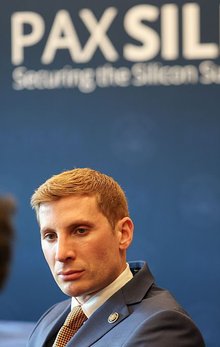
Jacob Helberg
US Under-Secretary of State for Economic Affairs