How the Middle East Data Centre Sector Can Spur AI Dominance
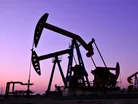
The Middle East is shifting its focus from hydrocarbons to high-density data centres as nations across the Gulf reposition themselves for leadership in AI.
Central to this new strategy is a bold push into digital infrastructure — including hyperscale data centres — that will serve as the foundation for the region’s AI ambitions.
“Compute is the new oil,” says Mohammed Soliman, Senior Fellow at the Middle East Institute in Washington DC. The region’s goal is to become a key exporter of compute — the processing power delivered by data centres powered with advanced GPUs — rather than crude.
This reorientation is supported by deep capital reserves, cheap renewable energy and high quality infrastructure that will help to get the ball rolling.

Stargate leads with hyperscale ambition
At the heart of this transformation is Stargate, a flagship AI and data centre project backed by UAE state-linked firm G42 and developed in partnership with OpenAI and other US tech firms.
Announced during US President Donald Trump’s visit to the UAE earlier this year, Stargate is designed to become the largest AI infrastructure hub outside North America.
Stargate will include large-scale data centres purpose-built to train and deploy advanced AI models, serving OpenAI and other US firms.
These facilities will be constructed by Cisco and Oracle, with Nvidia providing its top-tier GPU chips. SoftBank has joined the initiative as a key partner.
"Just like Emirates helped turn the UAE into a global hub for air travel, now the UAE is at a stage where it can become an AI and data hub," says Hassan Alnaqbi, CEO of Khazna.
Khazna, which is majority-owned by G42, currently operates 29 data centres across the UAE and is leading infrastructure development for Stargate.
Regional expansion and sovereign strategy
Beyond the UAE, Saudi Arabia is also scaling its data centre capabilities. Its Public Investment Fund has launched Humain, a national AI company developing AI factories with hundreds of thousands of Nvidia chips.
In parallel, state-backed investment firm Mubadala is supporting G42’s joint venture with Microsoft — MGX — which is investing US$100bn in AI infrastructure and cloud technology, including data centres built for AI workloads.
According to Baghdad Gherras, Chief Data Officer at Medad Holdings LLC, these investments will play a central role in drawing global researchers and companies to the region.
"Building world-class digital and AI infrastructure will act as a magnet," says Baghdad.
To support talent attraction, the UAE is offering long-term “golden visas” to data scientists, engineers and researchers. Lighter regulations are being introduced to make it easier for international companies to operate in the region.
Nevertheless, challenges remain. The region has not yet produced an AI firm on the scale of OpenAI, Mistral or DeepSeek. Developing research excellence to match its infrastructure ambitions may yet prove costly and time-consuming.
Geopolitics behind the racks
AI infrastructure in the Gulf is no longer just about domestic priorities. The region is now a focal point in the broader geopolitical and technological competition between the United States and China.
President Trump’s visit reinforced the UAE’s tilt towards Washington. In line with this pivot, the country has scaled back its reliance on Chinese technology and Huawei hardware — a move designed to better align with the US-led AI ecosystem.
"It's basically us trying to bring a promising, rising AI region – which is the Gulf – into the American AI stack, to be on Team America AI," says Mohammed Soliman.
That “AI stack” refers to the full US AI value chain, from chips and data centres to software and models. At present, most of the core technologies underpinning global AI infrastructure are dominated by US companies like Nvidia and Microsoft.
"At this stage the Americans are ahead in the AI game. So, it made sense for the UAE to bet on them," Baghdad says.
As the Middle East continues to build its hyperscale footprint, data centres are becoming one of the region’s most strategic infrastructure assets — with AI set to define its post-oil economic trajectory.