
How Nvidia GB300 NVL72 Provides Data Centres Steady AI Power
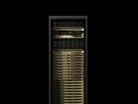
Nvidia is rolling out new energy management features in its platform to address the energy demands of large AI training workloads.
With thousands of GPUs operating in synchronised bursts, data centres running these tasks are creating power fluctuations that strain grid infrastructure.
The GB300 NVL72 integrates hardware and software to smooth power spikes, aiming to reduce peak demand on the grid by up to 30%.
These new features also appear in the GB200 NVL72 platform and allow data centre operators to reduce the over-provisioning of power infrastructure, potentially lowering operating costs and increasing rack density within existing budgets.
The Nvidia GB300 NVL72 is a major leap in performance for AI reasoning and agentic workloads, delivering up to a 10x boost in user responsiveness, a 5x improvement in throughput per watt compared to the previous generation Nvidia Hopper architecture and a 50x increase in output for reasoning model inference.
In July, CoreWeave became the first cloud provider to deploy the platform.
"CoreWeave is constantly working to push the boundaries of AI development further, deploying the bleeding-edge cloud capabilities required to train the next generation of AI models," said Peter Salanki, Co-Founder and Chief Technology Officer at CoreWeave.
"We're proud to be the first to stand up this transformative platform and help innovators prepare for the next exciting wave of AI."
AI training disrupts grid consistency
Traditional data centres operate workloads that vary across systems, which helps balance power demand.
In contrast, AI training involves many GPUs performing identical calculations on different data simultaneously. This synchronisation leads to abrupt swings between high and low power states across entire racks.
As a result, the grid must respond to rapid load changes, which can take up to 90 minutes using conventional generation resources.
These swings can cause electrical resonance, stress on transformers and other infrastructure, and voltage instability for other grid users.
Nvidia’s engineers visualise this pattern using heatmaps and time-series charts that show how thousands of GPUs simultaneously ramp up power at the start of a job, cycle through rapid load changes during the run, and drop sharply at the end.
To mitigate this, Nvidia has introduced a coordinated set of features designed to smooth the power profile of AI workloads across three stages: ramp-up, steady state and ramp-down.
Hardware and software for power smoothing
At workload start, Nvidia’s new power cap feature controls GPU draw by gradually raising power limits in a way that aligns with grid ramp tolerances. This avoids a sudden surge that could destabilise supply.
At the end of a training run, the GB300 platform uses a GPU burn mechanism that keeps power draw high temporarily, allowing the system to taper off slowly.
This burn mode uses the GPU to dissipate power in a controlled way. If a new workload begins, it disengages immediately; if not, the system reduces power steadily in line with preconfigured limits.

To handle fast transients during the steady state, Nvidia’s updated power shelves include energy storage in the form of electrolytic capacitors.
These charge during low-demand intervals and discharge during peaks, flattening the power curve seen by the grid. The result is a much smoother AC power profile compared to the previous generation GB200 PSU, as confirmed by Nvidia’s internal testing.
Measurements from identical AI training workloads on GB200 and GB300 racks show that the older system mirrors the power spikes at the DC level with similar instability at the AC grid input.
In contrast, the GB300 shelf reduces grid-facing peak power by 30%, while maintaining the same output pattern to the GPUs.
Nvidia worked with power electronics supplier LITEON Technology to optimise the physical design of the GB300 power shelf.
Half of its volume is now occupied by energy storage elements, delivering 65 joules per GPU. A dedicated charge management controller orchestrates the storage and release of power in real time to maintain grid stability.
Reducing provisioning for AI-scale facilities
Data centres have historically provisioned power for worst-case loads, meaning peak GPU demand must be supported even if it only occurs briefly.
By levelling those peaks, the GB300’s energy smoothing capability allows infrastructure to be dimensioned closer to actual average use.
This allows two options for operators: either increase the number of racks within the same facility power budget or reduce the overall power allocation required for a deployment.
The smoothing takes place entirely within the rack, optimises the load profile seen by the grid and does not send energy back to the utility.

Power smoothing strategies in both GB200 and GB300 NVL72 systems are managed at the shelf and rack levels, using multiple shelves per rack to balance load.
Fine-tuning is enabled through Nvidia’s SMI tool or the Redfish protocol, which expose configuration parameters such as GPU idle time before ramp-down and target ramp rates.
These innovations are part of Nvidia’s response to the energy demands of AI infrastructure.
By integrating storage and smarter power controls, the GB300 NVL72 helps data centre operators keep pace with growing model sizes without overwhelming power systems. These systems deliver a rack-level, fast transient power smoothing solution.
