
Nvidia GTC Paris Unpacked: Advancing European AI Development
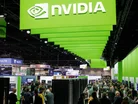
Nvidia co-founder and CEO Jensen Huang has announced many company developments at the Nvidia GTC Paris conference.
He went into detail about how Europe is building AI infrastructure and how Nvidia is poised to help, announcing partnerships with governments and cloud providers across the continent and outlining a roadmap to even further success.
Speaking at the Dôme de Paris during the company's GTC conference, he said: “We now have a new industry, an AI industry and it's now part of the new infrastructure, called intelligence infrastructure, that will be used by every country, every society.”
The company has recorded inference user growth from 8 million to 800 million over two years, driving demand for the GB200 platform which combines 72 processing units into what Huang describes as "one giant GPU" designed for reasoning and planning tasks.
Jensen Huang also spoke at London Tech Week.
Nvidia GB200 systems reach weekly production targets
Nvidia has moved its GB200 NVL72 platform into full production whilst announcing plans for Europe's first industrial AI cloud facility in Germany. This is part of the company’s plan to support continental AI infrastructure development through partnerships with governments and cloud providers.
Manufacturing partners are producing 1,000 GB200 systems weekly according to Jensen Huang, with the platform designed specifically for compute-intensive reasoning applications.
“This machine was designed to be a thinking machine, a thinking machine, in the sense that it reasons, it plans, it spends a lot of time talking to itself,” he says.
The company offers systems ranging from the compact DGX Spark to rack-mounted RTX PRO Servers for different deployment requirements. Nvidia is working with European partners to establish AI infrastructure services for third-party use alongside AI factories that companies build for internal revenue generation.
GB200 NVL72 represents Nvidia's response to increasing demand for inference processing capabilities, targeting data centres requiring high-performance computing for AI workloads. The platform's architecture supports the computational requirements for reasoning and planning tasks that require extended processing cycles.
European partnerships span government agencies, telecommunications companies and cloud providers seeking to deploy Nvidia's DGX Cloud Lepton platform across the region.
Lepton provides access to accelerated computing capacity and integrates with Hugging Face, a platform for machine learning models.
Targeting the German manufacturing sector
Nvidia has also announced plans to build what it describes as the world's first industrial AI cloud in Germany – eager to support European manufacturers in simulation, automation and optimisation processes using the company's Omniverse platform for digital twin creation.
“We're working on industrial AI with one company after another,” Jensen explains, referring to collaborations across the continent using digital twin technology.
Digital twin technology enables manufacturers to create virtual representations of physical systems, allowing for testing and optimisation without disrupting production processes. The German facility will provide cloud-based access to these capabilities for European manufacturers seeking to implement AI-driven optimisation.
With this in mind, Nvidia is expanding its European technology centre network with facilities in Finland, Germany, Spain, Italy and the UK to accelerate skills development and quantum computing research. These centres will support the industrial AI cloud infrastructure and provide technical expertise for European operations.
CUDA-Q advances quantum computing partnerships
Nvidia's CUDA-Q platform, enabling hybrid classical and quantum computing, is operational on Denmark's Gefion supercomputer. The company has made CUDA-Q available on its Grace Blackwell systems, extending quantum computing capabilities to its latest hardware platform.

At GTC, Nvidia announced partnerships with European supercomputing centres and quantum hardware manufacturers to advance hybrid quantum-AI research and quantum error correction development.
“Quantum computing is reaching an inflection point,” Jensen says. “We are within reach of being able to apply quantum computing, quantum classical computing, in areas that can solve some interesting problems in the coming years.”
Nvidia DRIVE platform enters automotive production phase
Nvidia DRIVE, the company's autonomous vehicle platform, has entered production to support large-scale deployment of intelligent transportation systems. The platform provides software and hardware components for self-driving vehicle development, targeting automotive manufacturers and technology companies.
The company demonstrated robotics capabilities through partnerships with DeepMind, Google's AI research unit and Disney to develop Newton, a physics training engine for robotics applications.
“Soon, everything that moves will be robotic,” Jensen says, “and the car is the next one.”
Looking ahead in the data centre industry, the Nvidia CEO positioned AI factories as the next generation of data centres, designed specifically to generate tokens, the basic units of AI model processing.
These facilities represent a shift from traditional data centre operations towards AI-specific infrastructure designed for token generation rather than general computing workloads.
At the event, Jensen introduced Grek, a demonstration robot, to illustrate how physical and digital systems will converge.
“We have physical robots, and we have information robots. We call them agents,” he explains. “The technology necessary to teach a robot to manipulate, to simulate — and of course, the manifestation of an incredible robot — is now right in front of us.”
Nvidia hopes that these automotive and robotics applications will represent expansion opportunities for data centre operators, as autonomous systems continue to require substantial computing resources for training and inference processing.
“These AI factories are going to generate tokens,” Jensen says, “and these tokens are going to become your food, little Grek.”
Explore the latest edition of Data Centre Magazine and be part of the conversation at our global conference series, Tech & AI LIVE and Data Centre LIVE.
Discover all our upcoming events and secure your tickets today.
Data Centre Magazine is a BizClik brand
