From Background to Boardroom: The Data Centre Energy Shift
Underlying the surging data centre investment and innovation push is a crucial component: the energy powering it.
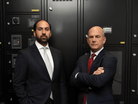
According to Prism Power directors Adhum Wolde-Lule and Keith Hall, sourcing and distributing energy is forcing a shift in how businesses operate.
Prism Power’s team of engineering experts design bespoke electrical switchgear and power distribution and monitoring solutions for a cross-sector of international clients, from property developers and construction companies to SMRs, data centres and global brands.
Adhum and Keith told Data Centre Magazine about their perspective on the data centre energy evolution.
How are data-centre operators reshaping corporate strategy now that energy security and pricing have become core business risks?
Keith: Over two decades in this industry, I’ve never seen energy sit so firmly at the centre of strategic planning. Operators now assess power availability and stability before almost any other factor. Long-term certainty – of price, capacity and resilience are becoming the foundation for sustainable growth.
Adhum: Coming into the business this year, it’s clear that operators increasingly want partners who can address risk early. We’re being asked to support long-term planning, grid-engagement strategy and infrastructure modernisation far earlier in the life cycle. Power has moved from a support function to a strategic lever – and the industry is reorganising around that reality.
With hyperscale facilities exceeding 80MW, what structural changes are needed to stop digital demand outpacing grid capacity?
Keith: Historically, the grid expanded reactively. Today, hyperscale demand requires proactive, joint planning. Operators and utilities are now co-investing in substations and network reinforcement, because neither side can tackle the challenge alone.
Adhum: Internally, operators are also upgrading their electrical architecture. Higher-efficiency systems, modular switchgear and intelligent load management are becoming essential to make the most of constrained capacity. One of Prism’s strengths, built over 20 years, is engineering smart infrastructure that’s scalable.
Why is nuclear power becoming attractive for operators needing continuous, low-carbon baseload, and how does it compare to renewables?
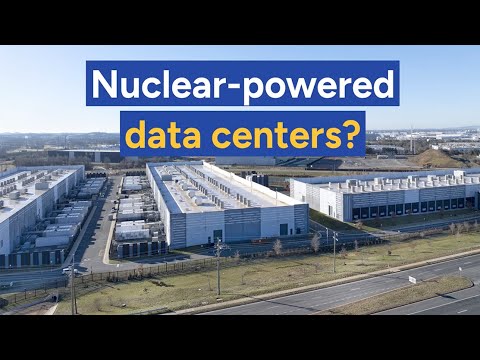
Keith: For mission-critical facilities, stability matters as much as sustainability. Nuclear offers clean, uninterrupted baseload that renewables simply can’t match without extensive storage. That reliability profile aligns perfectly with the uptime requirements we design for.
Adhum: I see nuclear becoming the anchor for many future energy strategies, with renewables playing a complementary role. The hybrid model – nuclear baseload plus renewable flexibility, gives operators a credible route to meet both resilience expectations and carbon commitments.
With grid-connection delays reaching 36 months, how realistic is co-locating SMRs as a solution to bypass national bottlenecks?
Keith: Technically, SMRs are entirely realistic. The engineering case is strong. The regulatory pathway is what needs to mature. Once that accelerates, colocated or campus-level SMRs will become a practical option for operators constrained by grid timelines.
Adhum: Many of the operators we’re speaking to are already exploring energy campuses where SMRs form the baseload backbone. Prism’s responsibility will be ensuring the interface, protection schemes, redundancy, and compliance are engineered to mission-critical standards. From where we sit, interest is growing rapidly and adoption will follow.
What do AWS and Microsoft’s long-term nuclear partnerships signal about vertically integrating energy supply?
Keith: It signals a major shift in operator strategy. Securing decades of nuclear baseload delivers certainty in a market where grid availability can no longer be assumed. It’s a strong competitive advantage – and others will follow.
Adhum: Operators want energy independence, predictable pricing, and guaranteed uptime. That creates significant opportunity for companies like Prism, where engineering capability meets long-term energy planning. As a new shareholder, this is exactly the kind of transition we’re preparing the business to support.
Company portals
Executives
Adhum Carter Wolde-Lule
Director

Keith Hall
Managing Director