Can AMD Challenge Nvidia with 6GW OpenAI Chip Partnership?

AMD and OpenAI have announced a landmark partnership that will see the ChatGPT creator deploy 6GW of AMD Instinct data centre GPUs across multiple generations, in what could become one of the largest AI infrastructure deals to date.
The collaboration represents a significant challenge to Nvidia’s dominance in the AI accelerator market and signals AMD’s growing role in powering hyperscale compute environments. As demand for AI training capacity surges, energy and silicon availability have become the defining constraints in building the next generation of data centres.
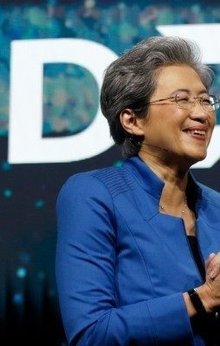
“We are thrilled to partner with OpenAI to deliver AI compute at massive scale,” says Dr Lisa Su, Chair and CEO of AMD. “This partnership brings the best of AMD and OpenAI together to create a true win-win enabling the world’s most ambitious AI buildout and advancing the entire AI ecosystem.”
AMD and OpenAI: Scaling AI infrastructure
The first 1GW of AMD’s Instinct MI450 Series GPUs is expected to be delivered in the second half of 2026, with further deployments scaling to reach the 6GW target in subsequent phases.
For OpenAI, which has relied almost entirely on Nvidia’s GPUs to train its large language models, the deal represents a major strategic diversification of its compute supply chain. Nvidia currently commands between 80% and 95% of the AI accelerator market, leaving customers vulnerable to supply constraints and pricing pressures.
Now, AMD’s Instinct line competes directly with Nvidia’s H100 and H200 chips in data centres where large-scale AI workloads are trained and deployed.
“Working alongside AMD will allow us to scale to deliver AI tools that benefit people everywhere,” says Greg Brockman, Co-Founder and President of OpenAI.
Equity-linked partnership model
To reinforce the partnership, AMD has issued OpenAI a warrant for up to 160 million shares of its common stock. The warrant will vest in tranches as OpenAI achieves deployment milestones, starting with the initial 1GW installation and progressing toward the full 6GW goal.
Vesting will also depend on AMD meeting share-price targets and OpenAI fulfilling the technical and commercial conditions required to deploy the systems at scale. The structure goes far beyond a standard supply agreement, effectively tying the financial performance of both companies to the success of the collaboration.
“This partnership is a major step in building the compute capacity needed to realise AI’s full potential,” says Sam Altman, Co-Founder and CEO of OpenAI.
“AMD’s leadership in high-performance chips will enable us to accelerate progress and bring the benefits of advanced AI to everyone faster.”
Financial and strategic impact
For AMD, the deal offers both validation and a long-term revenue pipeline as it looks to establish itself as the second major player in AI compute.

Jean Hu, Executive Vice-President, Chief Financial Officer and Treasurer at AMD, says the partnership is “expected to deliver tens of billions of dollars in revenue for AMD while accelerating OpenAI’s AI infrastructure buildout”.
She adds that the agreement “creates significant strategic alignment and shareholder value for both AMD and OpenAI and is expected to be highly accretive to AMD’s non-GAAP earnings-per-share”.
The partnership follows AMD’s release of its MI300X chips in 2023, designed to offer customers an alternative to Nvidia’s products amid ongoing global shortages.
“Working alongside AMD will allow us to scale to deliver AI tools that benefit people everywhere.”
By securing OpenAI as a flagship customer, AMD gains credibility within the AI data centre market and strengthens its position in the high-performance computing sector.
Deeper technical collaboration
Beyond the supply of hardware, AMD and OpenAI plan to collaborate on performance optimisation and product development.
The partnership will see OpenAI’s software teams work closely with AMD engineers to fine-tune systems for training and inference workloads, helping AMD adapt its architectures to OpenAI’s evolving compute requirements.
“Building the future of AI requires deep collaboration across every layer of the stack,” says Greg. “Working alongside AMD will allow us to scale to deliver AI tools that benefit people everywhere.”
The 6GW rollout will place energy infrastructure at the heart of AI growth, highlighting how power capacity, supply chain resilience and hardware diversity are becoming critical factors in the design of data centres worldwide.



Executives

Greg Brockman
President, Chairman, & Co-Founder
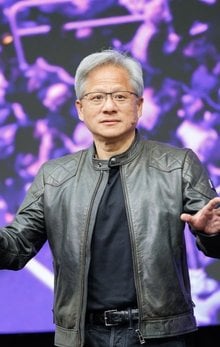
Jensen Huang
Founder and CEO
Lisa Su
Chair & CEO

Sam Altman