CyrusOne Decouples Emissions From Data Centre Growth
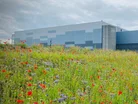
CyrusOne’s 2025 Sustainability Report sets out how the company is managing rapid business growth while reducing environmental impact.
With data demand surging due to AI and cloud computing, the company has grown by 70% since 2021.
Yet, it has managed to cut its carbon emissions and maintain a strong focus on biodiversity, water efficiency and circularity in its data centre developments.
Reducing emissions despite expansion
“Over the past six years, we’ve been incorporating sustainability in all aspects of our business,” says Eric Schwartz, CEO of CyrusOne.
“The maturity of our sustainability programme has produced tangible benefits and opportunities while laying the groundwork for mandatory reporting.”
Despite the sharp increase in demand, CyrusOne has reduced its Scope 1 emissions from 30,223 MtCO₂e to 27,710 MtCO₂e and Scope 2 market-based emissions from 578,481 MtCO₂e to 402,058 MtCO₂e.
In Europe, all of the company’s operations are now powered entirely by renewable energy.
However, Scope 3 emissions – those generated in its supply chain – have increased from 402,932 MtCO₂e to 474,137 MtCO₂e, highlighting the challenges of addressing indirect environmental impacts.
CyrusOne’s climate targets have been validated by the Science Based Targets initiative (SBTi), and the company remains a founding member of the Climate Neutral Data Centre Pact. Its goal is to achieve global climate neutrality by 2030.

Water-free cooling and restoration partnerships
Cooling systems in data centres often rely on large volumes of water, but CyrusOne has focused on water-free cooling technology at most of its sites.
Its report outlines a strategy to design all new facilities with the ability to operate without consuming water for cooling. This reduces risk and operating costs, especially in water-stressed regions.
The company is also partnering with non-profits to restore water to local ecosystems, helping offset any remaining water-related impact.
CyrusOne aims to go further, becoming water positive – giving back more water than it uses – at sites in high-stress areas.
Sustainable construction and circular design
Because CyrusOne does not manage the servers used by its customers, it has identified its biggest circular economy opportunity in how it builds data centres.
“We focus on construction upstreaming or eliminating the need for a material all together,” the report says.
“We then rethink our processes to look for alternative products or materials that either incorporate recycled or renewable content, or have longer lifespans, thereby reducing the frequency that the product needs to be replaced.”
CyrusOne’s design approach also considers how to reuse materials that might otherwise be discarded, and emphasises recycling where reuse is not possible.
Biodiversity and site landscaping
CyrusOne made biodiversity a formal part of its environmental strategy in 2020.
The company has introduced local landscaping strategies across sites to support pollinators and other species, using native and drought-resistant plants that reduce water usage and maintenance costs.
CyrusOne has adopted the DCs for Bees Pollinator Plan at its Dublin and Amsterdam campuses. This plan includes 42 practical biodiversity actions, such as planting wildflowers and heritage orchard trees.
Matt Pullen, Executive Vice President and Managing Director for Europe, says: “The specific plan of action in the DCs for Bees Pollinator Plan makes it easy to roll out across our company and gives our employees a tangible way to give back to our community.
“As with our broader involvement in Host in Ireland, being a part of a collective provides an opportunity to have a bigger, longer lasting impact.
“For something as important as Ireland’s biodiversity, we are very proud to be a part of this programme.”
With progress across emissions, water and biodiversity, CyrusOne’s sustainability strategy provides a clear roadmap for aligning data centre growth with long-term environmental responsibility.