How Google Rethinks Capacity Planning with Demand Response
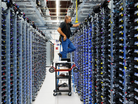
Google is fundamentally rethinking how it plans and operates data centre capacity in response to the exponential growth of AI workloads and mounting pressure on global electricity grids.
Through a novel capacity planning approach that combines demand response technologies, co-located clean energy infrastructure and next-generation nuclear power agreements, the company is attempting to reconcile the seemingly incompatible goals of rapid AI expansion and carbon-free operations.
The strategy comes as Google reaffirms its 2025 commitment to spending around US$75bn on building out data centre capacity to support AI, with the investment focused on acquiring chips and constructing servers needed for both core services and AI development.
Shifting the paradigm
Traditional data centre capacity planning has long relied on building for peak demand, requiring costly upgrades to transmission infrastructure and generating capacity. Google is now targeting the flexibility of its own data centre operations, adjusting power usage dynamically in response to local grid conditions, particularly for energy-intensive AI training processes.
“Innovation isn't just about developing brand new shiny things,” says Kate Brandt, Google's Chief Sustainability Officer. “In fact, some of the most important innovations come from collaborations to make existing systems more intelligent – and in this case, more flexible.”
Through demand response, Google is shifting machine learning workloads to periods of lower demand or when clean energy is more readily available. The approach is designed to meet growing power needs without requiring expensive grid infrastructure upgrades.
Utility partnerships prove the concept
Google has launched pilot projects with several US utilities, including Omaha Public Power District, Tennessee Valley Authority and Indiana Michigan Power, demonstrating the ability to reduce AI-related demand during critical grid events.
Michael Terrell, Google's Head of Advanced Energy, explains: “By including load flexibility in our overall energy plan, we can manage AI-driven growth even where power generation and transmission are constrained.”
The approach allows more rigid projects that may have to wait years to come online as grid infrastructure and power plants are built to be fast-tracked for interconnection using the grid capacity that's already available.
Co-locating power and compute
In December 2024, Google entered a strategic partnership with Intersect Power and TPG Rise Climate to develop industrial parks with gigawatts of data centre capacity co-located with new clean energy plants, with the first phase expected to be operational by 2026.
“The scale of AI presents an opportunity to completely rethink data centre development – by co-locating them where possible with the grid-connected carbon-free energy that keeps them up and running,” says Amanda Peterson Corio, Google's Global Head of Data Centre Energy.
The partnership targets US$20bn in renewable power infrastructure investment by the end of the decade, combining solar, wind and battery storage with data centre development.
Nuclear ambitions
In October 2024, Google signed the world’s first corporate agreement to purchase nuclear energy from multiple small modular reactors to be developed by Kairos Power, with the first reactor expected online by 2030 and the full 500MW deployment complete by 2035.

“We believe that nuclear energy has a critical role to play in supporting our clean growth and helping to deliver on the progress of AI,” k said at the time of the announcement.
In August 2025, Google announced that Kairos's Hermes 2 Plant in Oak Ridge, Tennessee, would supply 50MW of power under a long-term purchase agreement with Tennessee Valley Authority to power Google's data centres in Montgomery County, Tennessee, and Jackson County, Alabama.
Google has since expanded its nuclear strategy further, providing early-stage capital to Elementl Power to prepare three potential sites in the US for advanced nuclear power projects, with each site planned to have at least 600MW of capacity.
Global footprint expansion
Google’s capacity planning strategy extends well beyond US borders. The company has announced a $15bn data centre investment in Visakhapatnam, India, with 1GW of projected IT capacity and US$2bn allocated for renewable energy development as part of Google's broader US$75bn global data centre investment strategy for 2025.
In September 2025, Google opened its data centre in Waltham Cross, Hertfordshire, as part of a two-year £5bn (US$6.88bn) investment in the UK. The facility features a pioneering agreement with Shell Energy Europe Limited as its 24/7 Carbon-Free Energy Manager, which will manage a power portfolio addressing the intermittency of clean energy generation through access to battery energy storage systems.
The planning challenge
In September 2024, Google CEO Sundar Pichai confirmed that the company is developing data centres that will consume more than 1GW of power, admitting: “We are now working on over 1GW data centres, which I didn't think we would be thinking about just two years earlier.”
The company's 2025 Environmental Report revealed that despite having tackled rising emissions on account of its AI use last year, Google has been able to reduce its data centre energy emissions by 12% in 2024, compared to 2023. This is even as its data centre electricity consumption increased by 27% year-on-year due to business growth concerning AI.
Despite these challenges, Google maintains its commitment to operating on 24/7 carbon-free energy by 2030, though the CEO has acknowledged the trajectory of AI investments has “added to the scale of the task needed”.
As workloads driven by AI, cloud adoption and data localisation continue to accelerate, Google's capacity planning innovations may prove critical not just for the company's own growth, but for the broader data centre industry's ability to scale sustainably.
Company portals

Executives
Amanda Peterson Corio
Global Head of Data Center Energy
Kate Brandt
Member Board of Trustees
Michael Terrell
Head of Advanced Energy