How Microsoft Data Centres Drive Sustainable Cloud Growth

From 2023 to 2027, Microsoft plans to grow its European cloud capacity by 40%, with more than 200 data centres operating across the region by 2026.
The company aims to be carbon negative, water positive and zero waste by 2030, integrating sustainability into every stage of its infrastructure development.
But how?
Microsoft expands European data centre footprint sustainably
In Middenmeer, Netherlands, Microsoft is applying design principles drawn from local ecosystems. The company has worked with landscape architects and the community to plant native species and reshape its data centre to fit more cohesively into the Noord-Holland environment.
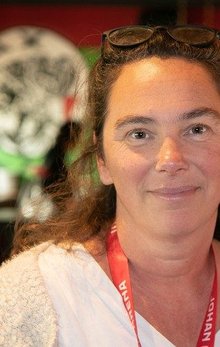
Florien ten Hove, Community Affairs Manager for Microsoft Datacenters in the Netherlands, says: “Now we turned it around and the landscaping is the baseline for the design,” Florien says. “It’s a totally different approach, all based on biomimicry.”
Kaitlin Chuzi, Director of Biomimicry for Microsoft’s global data centre operations, explains that the initiative aims to strengthen biodiversity and resilience: “We expect the native plants we chose will mirror a healthy, resilient ecosystem and support biodiversity, improve storm water control and prevent erosion while reflecting the natural beauty of Noord-Holland.
Water-positive design and local collaboration in Spain
Across the other side of Europe, in Zaragoza, Spain, Microsoft is constructing data centres using a closed-loop cooling system that recirculates water between servers and chillers, eliminating additional water use.
The region’s history of drought has influenced Microsoft’s local strategy and pushed the company to align its operations with community conditions.
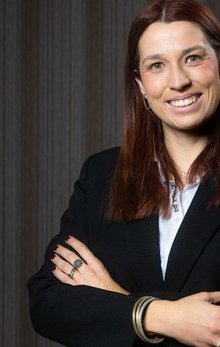
Ana Liesa Sorinas, Community Affairs Manager for Microsoft Datacenters in Spain, says: “We are designing, building and operating data centres that are aligned with the community reality.” Microsoft is also supporting farm and municipal water projects in the region.
One project involves seven farms covering 740 hectares using AI-driven irrigation to save 100,000 cubic metres of water annually by 2027. Another project uses a smart sphere technology called Nautilus to detect and reduce leaks in Spain’s 275,000km water pipeline system.
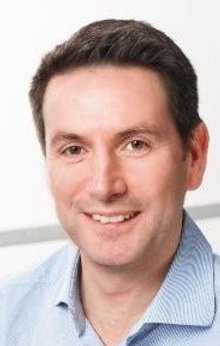
Eoin Doherty, Vice President of Cloud Operations + Innovation for Microsoft in Europe, the Middle East and Africa, says, “We combine our consumption reduction efforts with investment in water reclamation projects to protect the various watersheds.”
Recycled steel defines Welsh Microsoft data centre build
Over in the UK, Newport, Wales, Microsoft is transforming a former radiator factory into a datacenter, reusing structural steel beams from the original building.
Project Manager John O’Sullivan says the reuse effort provided a practical example of sustainable construction. “I could touch this, I could see it, I could see we could make a difference here.”
Ten per cent of the data centre's steel frame comes from the old factory, saving about 520 tons of carbon dioxide. With 74% of the steel overall being recycled, carbon savings reach 4,400 tons. Landscaping efforts at the site include replanting native species and linking wildlife habitats to an adjacent nature reserve.

Circular Centres advance zero waste goals
Microsoft opened its first Circular Center in Amsterdam in 2020 to recover and repurpose data centre components. There are now eight centres globally, with more under construction, including one in Newport. These hubs manage the reuse of servers and parts, achieving a 90.9% reuse and recycling rate in 2024, surpassing the company’s target ahead of schedule.
The Newport Circular Center will handle materials from all Microsoft UK data centres, processing about 226,800KG annually. Some of these materials will support vocational training programmes to equip new technicians with hands-on experience.
Grid balancing and heat recycling in Nordic data centres
Microsoft data centres in Finland, Sweden and Denmark are adding Grid-Interactive Uninterruptible Power Supply systems (GUPS) to help stabilise local energy grids.
Olli Huotari, Senior Program Manager for Microsoft’s Nordic GUPS initiative, says: “The battery system smooths the flow by doing just a tiny bit of correction along the way and keeping the sine wave still looking good.” He adds, “We see it as one of those things where we are being a good grid citizen.”
In parallel, Microsoft is recovering waste heat from Finnish and Danish data centres to power nearby municipal heating systems.
In Finland, this partnership with energy company Fortum will provide heat to around 250,000 clients by 2027.
Senior project manager Shannon Wojcik says: “Especially in the Nordics, they use the heat from the data centres as a valuable resource that they can use for their heating network.”
Company portals

Executives
Ana Liesa Sorinas
Community Affairs Manager
Eoin Doherty
General Manager, Microsoft Data Centre Operations, EMEA Region
Florien ten Hove
Datacenter Community Affairs Lead

John O'Sullivan
Senior Program Manager
Kaitlin Chuzi
Director of Biomimicry & Integrated Technology
Olli Huotari
Senior Program Manager

Shannon Wojcik
Senior Program Manager, Nordics Energy Lead