Mistral AI Strategy in Paris for $830m Data Centre Deal

Mistral AI has raised US$830m in debt financing to support the construction of a new data centre near Paris, adding to a growing pipeline of AI infrastructure across Europe.
The facility, located in Bruyeres-le-Chatel, is designed to support both model training and inference workloads, marking a further step in the company’s push to build dedicated, high-capacity compute environments.
It is expected to become operational in the second quarter of 2026.
The project forms part of a wider expansion strategy that targets 200MW of total compute capacity across Europe by 2027.
Alongside the French site, Mistral outlined its plans last month to invest €1.2bn (US$1.4bn) in Sweden to develop additional data centre infrastructure, signalling a multi-region approach to capacity deployment.
Mistral AI's investments highlight a shift towards purpose-built facilities optimised for AI workloads.

Financing and infrastructure expansion
The Paris data centre is backed by a consortium of seven global banks, including Bpifrance, BNP Paribas, Crédit Agricole CIB, HSBC, La Banque Postale, MUFG and Natixis CIB.
The US$830m debt package reflects how developers are turning to structured financing to support large-scale data centre builds, particularly those designed for AI workloads.
Mistral has already secured more than €2.8bn (US$3.1bn) in funding from General Catalyst, ASML, a16z, Lightspeed and DST Global.
This level of capital proves the cost associated with building high-density facilities, where power and hardware requirements exceed those of traditional enterprise data centres.
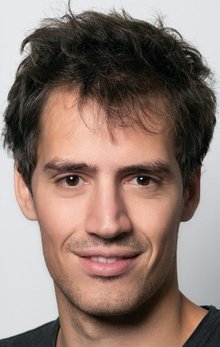
Arthur Mensch, Chief Executive Officer of Mistral AI, sets out the rationale for scaling infrastructure in line with demand. He says: “Scaling our infrastructure in Europe is critical to empower our customers and to ensure AI innovation and autonomy remain at the heart of Europe.
“We will continue to invest in this area, given the surging and sustained demand from governments, enterprises and research institutions seeking to build their own customised AI environment, rather than depend on third-party cloud providers.”
The funding model reflects a broader trend across the sector, where developers combine equity investment with debt financing to accelerate delivery timelines while maintaining control over infrastructure assets.
High-density compute and NVIDIA integration
At the core of the Paris facility is a focus on high-density computing. The site is expected to deploy 13,800 NVIDIA GB300 GPUs.
The deployment brings total capacity at the site to 44MW, placing it within the category of large-scale AI data centres. The higher MW capacity enables operators to run more compute-intensive workloads.
The data centre is designed to handle both training and inference. These dual functions require consistent performance and efficient cooling systems to manage heat generated by dense GPU clusters.
European capacity targets and market momentum
The Paris development sits within a wider European expansion plan that aims to distribute compute capacity across multiple locations.
By targeting 200MW by 2027, Mistral positions itself among a growing group of companies building dedicated AI infrastructure rather than relying solely on hyperscale cloud providers.
The broader market shows similar momentum. In 2026, UK-based AI data centre company Nscale raised US$2bn, while autonomous driving firm Wayve secured US$1.2bn. In France, AMI Labs raised US$1bn, further indicating investor appetite for AI and data centre projects across the region.
Requirements such as high power density, advanced cooling and proximity to fibre networks are shaping how new sites are designed and financed.
The Mistral project in Bruyeres-le-Chatel reflects these priorities, combining dedicated funding with a defined capacity roadmap. As construction progresses, the facility adds to Europe’s growing inventory of AI-focused data centres, with deployment timelines and power availability being central to delivery.


Executives
Arthur Mensch
Co-founder & CEO