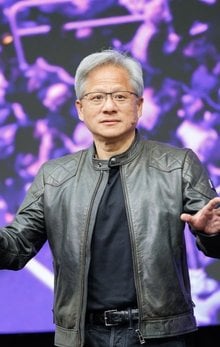
Nvidia & Samsung: AI, Data Centres and Future Manufacturing

The energy consumption of data centres is a subject of increasing focus for the technology industry.
According to Jensen Huang, Founder and CEO of Nvidia: “Data centres are already about 1-2% of global electricity consumption and that consumption is expected to continue to grow. This continued growth is not sustainable, neither for operating budgets nor for our planet.“
In response, a collaboration between Nvidia and Samsung Electronics is set to address efficiency in high-tech manufacturing, providing a potential blueprint for the future of data centre operations.
Samsung is developing a semiconductor AI factory powered by more than 50,000 Nvidia GPUs. The facility is intended to be a core component of Samsung’s digital transformation strategy, using AI to refine and improve semiconductor manufacturing.
“We are at the dawn of the AI industrial revolution – a new era that will redefine how the world designs, builds and manufactures,“ says Jensen.
“As Korea’s and one of the world’s foremost technology and industrial leaders, Samsung is forging its AI foundation with Nvidia to lead the future of intelligent and autonomous manufacturing – transforming Samsung itself and the many industries around the world built on Samsung technologies.“
AI-driven manufacturing and digital twins
The partnership utilises Nvidia GPUs, NVIDIA CUDA-X libraries and solutions from other technology firms like Synopsys, Cadence and Siemens. This combination is aimed at delivering speedups in circuit simulation, verification and manufacturing analysis while improving overall efficiency.
The collaboration has reportedly led to a 20-fold increase in performance and allows for scalable deployment across the semiconductor manufacturing process.
A key feature of the facility will be a real-time digital twin. This virtual model of the factory enables advanced operational planning, anomaly detection and logistics optimisation. The use of a digital twin could also help to reduce the factory's environmental impact by simulating processes and identifying efficiencies before implementation.
“Nvidia has been a visionary of this new AI era and its technologies have empowered innovators to reinvent industries,” says Jay Y. Lee, Executive Chairman of Samsung Electronics.
“From Samsung’s DRAM for Nvidia’s game-changing graphics card in 1995 to our new AI factory, we are thrilled to continue our longstanding journey with Nvidia in leading this transformation as we envision creating new standards for the future and accelerating breakthroughs for the world.”
Tackling data centre energy consumption
As AI capabilities expand so does its implementation across industries, raising questions about the technology's environmental footprint, particularly its energy use.
Nvidia’s AI platform, the GB300 NVL72, directly addresses this by introducing onboard energy storage and power management tools. These are designed to lessen the strain that intensive AI workloads place on electricity grids. The system uses both hardware and software to limit energy spikes, offering a way to improve grid stability.
Nvidia also believes that AI can be applied to make data centres themselves more sustainable.
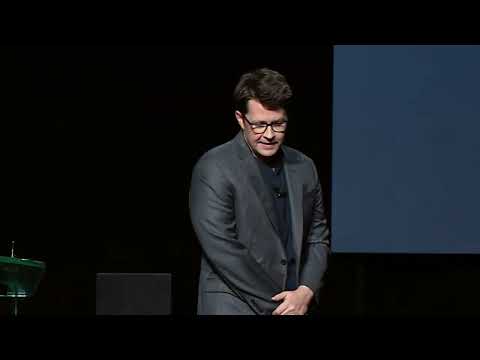
Josh Parker, Senior Director of Corporate Sustainability at Nvidia, says: “AI, I firmly believe, is going to be the best tool that we've ever seen to help us achieve more sustainability and more sustainable outcomes.“
Accelerated computing for sustainable outcomes
Nvidia’s approach is centred on the concept of accelerated computing, which pairs GPUs with CPUs to process complex computations with greater speed and efficiency.
According to Nvidia, these integrated systems can be up to 20 times more energy efficient than traditional CPU-only systems for AI inference and training tasks. This gain in efficiency is a critical factor in managing the growing energy demands of AI infrastructure.
Josh explains: “If you compare the energy efficiency for AI inference from eight years ago until today, it's 45,000 times more energy efficient.“
An engineer and a lawyer by background, Josh advocates for using data to guide sustainability programmes.
He is scheduled to speak on a panel at Sustainability LIVE: The Net Zero Summit in March 2026, where he will discuss the use of AI in emissions tracking, energy optimisation and climate modelling.


Executives
Jensen Huang
Founder and CEO
Josh Parker
Head of Sustainability