
How PowerCell's Fuel Cells Support ECL's Santa Clara Campus
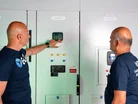
As AI data centres demand ever-greater amounts of electricity, operators are looking beyond the grid to secure reliable power.
Hydrogen fuel cells are one alternative option, and PowerCell Group's latest agreement with ECL marks another step towards deploying the technology at production scale.
PowerCell has secured an order to supply hydrogen fuel cell systems for ECL's CSC-1 AI data centre campus in Santa Clara, California.
The contract covers PowerCell's PS190 fuel cell systems, which will be integrated into ECL's FlexGrid microgrid architecture as containerised units, providing around 5MW of installed capacity.

The agreement, valued at approximately SEK30m (US$2.9m), also includes licences for PowerCell's Distributed Master Controller (DMC), software designed to coordinate multiple power sources across a site.
Deliveries are due to be completed by the end of 2026.
Building on operational experience
The latest deployment follows earlier work between the two companies at ECL's MV-1 AI data centre in Mountain View, California, where PowerCell's fuel cells and DMC software were tested under live operating conditions.
CSC-1 is a 35MW AI-focused campus designed around ECL's FlexGrid architecture, combining grid electricity, battery storage, natural gas generation and hydrogen fuel cells.
This approach is intended to provide resilient power by allowing multiple energy sources to operate together.
The project also represents a shift in how fuel cells are being used within data centres. Instead of acting solely as backup generation, the systems are designed to contribute to the site's primary power mix alongside ECL's Lightning energy management platform.
Tackling data centre power constraints
Richard Berkling, CEO of PowerCell Group, believes growing demand for AI infrastructure is making resilient power a critical challenge.
"As demand for computing capacity accelerates, access to reliable power has become one of the industry's biggest constraints," he says.
Richard also points to the operational track record that underpins the latest order.
"ECL deserves significant credit for having continuously operated liquid hydrogen-powered AI infrastructure over the past two years," he explains.
ECL Founder and CEO Yuval Bachar says the decision followed extensive testing of competing technologies.
"Every AI roadmap we see is constrained by power not imagination funding or demand," he notes.
Yuval also says the company has moved beyond evaluating the technology.
"This is not a pilot or a proof of concept we are placing a firm order for PS190 Systems because we have the operational data to back it up."
Looking beyond the first deployment
PowerCell manufactures the systems in partnership with Bosch, which is both the company's largest shareholder and its production partner for North America.
Alongside the confirmed 5MW order, PowerCell and ECL have also signed a non-binding memorandum of understanding covering approximately 300MW of additional hydrogen fuel cell capacity.
If future projects proceed, the agreement would significantly expand the role of hydrogen-powered microgrids as data centre operators continue searching for ways to deploy AI infrastructure despite growing pressure on electricity networks.
Company portals



Executives
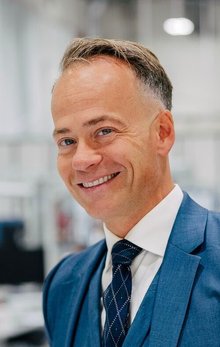
Richard Berkling
CEO
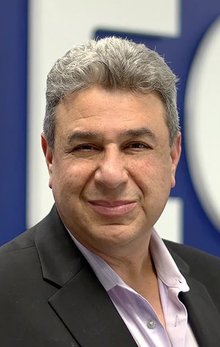
Yuval Bachar
Founder and CEO