
AI and the Rise of Autonomous Data Centres

In 2025, we aren’t merely witnessing new tools or incremental improvements, but a seismic shift in how data centres are designed, built and run.
The industry stands at a crossroads, transitioning from human-optimised facilities to environments where AI oversees core components from energy consumption and dynamic capacity scaling, to predictive maintenance and even documentation.
The scale, complexity and speed of this shift pose both opportunities and challenges for data centre operators and the broader technology value chain.
From human-driven to machine-managed
Traditional approaches to data centres, where reliability and uptime are paramount, have given way to an even more dynamic, automated status quo where adaptability, flexibility and instantaneous responsiveness define operational excellence.
Today’s facilities are being challenged by AI workloads that require 40-100+ kW of power per rack, compared to traditional IT racks, which might need 7-10 kW.
Modern data centres rely on AI algorithms not just to monitor, but to actively manage, optimise and intervene in real time – balancing loads, activating cooling systems and pre-empting faults before they occur.
“AI will follow the data, not the other way around,” says Michael Dell, Founder and CEO of Dell Technologies. “The future of AI will be decentralised, low latency and hyper efficient, and that’s why Dell is pioneering the edge AI revolution, bringing real-time intelligence to wherever the data lives.”
This vision highlights the tectonic shift towards ‘AI at the edge’, where distributed intelligence empowers businesses to respond instantly to events across global networks, making data centres the ultimate engine room of digital economies.
Operators are under pressure to accommodate AI’s exponential requirements, sparking a redesign of racks, power delivery and even building footprints.
Powering the data-hungry age
The rapid expansion of AI-centric applications is fundamentally redrawing the boundaries of the data centre market.

McKinsey research indicates global demand for data centres could triple by 2030, with some 70% of this demand arising from AI workloads.
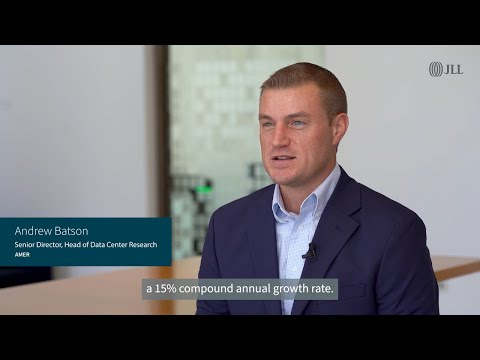
Jones Lang LaSalle (JLL) reports that more than 10GW of new capacity will break ground this year, and capital investments from technology giants are projected to exceed several hundred billion dollars.
Energy demand has become a defining bottleneck. International Energy Agency (IEA) estimates suggest data centres accounted for about 1.5% of global electricity consumption in 2024, or 415 terawatt-hours (TWh).
The IEA forecasts this could more than double to 945 TWh by 2030, rising to 1,200 TWh by 2035.
This explosion in computational demand compels operators and policymakers to radically rethink not only energy sourcing but also power transmission, grid integration and sustainable design strategies.
“The pace of AI innovation is not slowing down, and the data centre industry must continue to adapt,” observes Jonathan Kinsey, former EMEA Lead and Global Chair, Data Centre Solutions at JLL.
“AI’s transformative power demands have already reshaped our world, yet its most significant and enduring effect may lie in how we rise to meet the substantial energy demands required to fuel this technological revolution.”
This challenge now influences every facet of planning – from site selection and utility negotiations to the adoption of emerging renewables and storage solutions.
Smarter thermal management and green initiatives
AI’s impact is acutely visible in thermal management. Next-generation AI chips can triple previous power demands, rendering legacy cooling solutions inefficient if not obsolete.
About 70% of new AI-ready data centres are employing direct-to-chip liquid cooling or immersion systems – technologies that are up to 3,000 times more efficient than traditional air cooling.
Energy used for cooling alone may represent up to 40% of a centre’s power footprint, so even modest efficiency gains can have global implications.
Companies like Ecolab are helping data centres take this a step further and transform thermal management into a competitive edge.
Mike Obradovitch, Area Vice President of Corporate Accounts for Ecolab’s Global High Tech division, emphasised this industry-wide shift ahead of Datacloud Global Congress 2025.
“The evolution of cooling operations is moving to the forefront, helping data centres build versatility and flexibility into cooling architecture designs and enhance operational resiliency, while furthering sustainability initiatives,” Mike said.
“When executed effectively, well-designed cooling architectures require less power, freeing more energy that can be allocated to HPC, enabling increased rack density and better support for next-generation processors.”
These advances are complemented by a wave of green initiatives – ranging from on-site solar and wind power generation to grid-scale battery integration and airflow simulation – that are increasingly embedded in the design and operation of AI data centres.
The convergence of environmental compliance and economic necessity is accelerating the deployment of smart, sustainable solutions.
The AI-augmented workforce
AI is not only transforming hardware and infrastructure – it is continually reshaping the data centre workforce.

For every new generation of technology, roles become more specialised. Technicians now need expertise in both traditional plant maintenance and sophisticated systems for AI monitoring, dynamic cooling and anomaly detection. The most sought-after candidates are those who can navigate the intersection of legacy and AI-enabled environments.
The result is a talent crunch unprecedented in the industry’s history. Data centre technician salaries have jumped 43% over three years as companies compete for those with hybrid skill sets.
Earlier in 2025, Microsoft announced it would help job seekers boost their technology proficiency credentials for prospective employers, expanding its digital skills initiative over the next year by paying for 50,000 people to become “Microsoft Certified” in high-demand skills like Data Science, AI, Cybersecurity Analysis and Cloud Solution Architecture.
Not only has AI changed requirements for physical infrastructure, it is rewriting what it means to work in this sector. Demand for hybrid skill sets, particularly those blending IT, engineering and data science, has surged.
While automation may reduce the number of manual tasks, it lifts the value of personnel who can interpret, audit and intervene in complex machine-led environments.
Autonomy, resilience, security
2025 marks a watershed: true autonomy is now visible in many top-tier facilities, where predictive analytics, self-healing designs and cyber-aware systems underpin every aspect of operation.
The baseline of human intervention is falling in some regards as sophisticated AI platforms extend and expand – but expert oversight remains vital for governance and resilience.
Regulatory frameworks are evolving rapidly to address the nuances of AI auditing, system transparency and cyber risk in the age of autonomous infrastructure.
What lies ahead?
AI’s momentum in the data centre sector is showing no sign of slowing.
The challenge is to scale rapidly while embedding efficiency, resilience and sustainability at the core of every new project.
Sovereign AI and government policies are emerging as new drivers, aiming to balance national security, competitiveness and environmental responsibility.
The era of autonomous, AI-supervised data centres has truly dawned. These facilities are no longer merely digital warehouses but have become the most advanced factories, manufacturing insight and intelligence at an unprecedented pace. Sustained by complex ecosystems of technology, policy and expertise, their future will be written by those bold enough to harness not only the power of AI – but the means to use it responsibly.
Company portals



Executives

Michael Dell
CEO