
How SINES is Redefining AI Data Centre Scale with Renewables
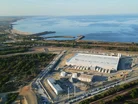
The SINES Data Campus is set to emerge as one of Europe’s most significant data centre builds, designed for a future defined by AI-driven demand and extreme compute density.
Once fully completed in 2030, the site is expected to surpass 1.2GW of capacity, placing it among the largest data centre campuses globally.
A fresh €695m (US$812.6m) investment from Nscale, which will operate the facility alongside Start Campus and Microsoft, is focusing on SINES at a time when hyperscalers are racing to secure power-rich, scalable infrastructure.
The project’s combination of renewable energy sourcing and industrial reuse will make it a standout in Europe’s digital infrastructure pipeline.
Why Sines became a data centre hub
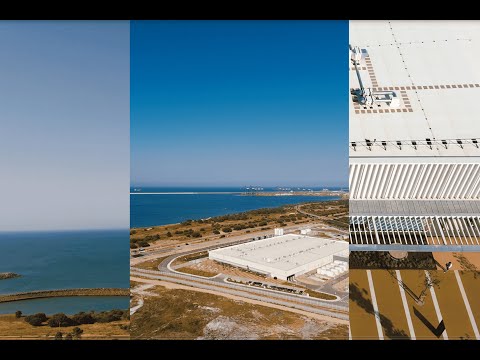
Start Campus, the developer behind the project, was established in Lisbon in 2020 and quickly turned its attention to Sines, a small coastal town on Portugal’s Alentejo shoreline.
In the town, the company found an industrial site beside a recently decommissioned coal-fired power station owned by EDP.
The location already carried critical infrastructure advantages, including a seawater intake system and direct proximity to subsea fibre cable routes connecting Europe and beyond, helping to accelerate development.
The site was officially recognised as a Project of National Interest by the Portuguese government in March 2021. Construction began in April 2022 and the first facility, SIN01, entered operation in late 2024, a timeline that aligned aligned with Portugal’s rapidly greening energy mix.
- In 2024, 87.5% of the country’s electricity came from renewable sources according to Eurostat, strengthening the commercial and environmental case for a low-carbon hyperscale campus.
Speaking in 2025, Robert Dunn, CEO of Start Campus, said: “At Start Campus, we are committed to building the foundation for the next generation of sustainable, AI-ready digital infrastructure.
“Power is one of the most critical resources in today’s digital infrastructure. But it’s not just about access – it’s about managing power efficiently, intelligently and sustainably at scale.”
What is driving investment in AI infrastructure?
The surge in AI workloads has shifted data centre priorities toward large-scale, power-secure campuses capable of supporting high-density compute.
SINES has become a key example of how operators are repositioning around these requirements.
“Building on a proven foundation, the expanded deployment in Sines, Portugal creates one of the most advanced environments in Europe for high-density AI infrastructure,” says Josh Payne, CEO and Founder of Nscale.
“It also represents one of the largest AI infrastructure investments in Portugal’s history – and among the most significant in the EU – reflecting the surging demand we’re seeing for Nscale’s services."
How ocean cooling is changing data centre design
SIN01 is the first AI-focused data centre to rely on ocean water as its primary cooling source, drawing directly from the Atlantic and returning it at a marginally higher temperature. This eliminates reliance on freshwater cooling systems entirely.
The data centre also benefits from the site’s industrial past. Existing seawater channels from the former coal facility have been repurposed, reducing the need for new water infrastructure and enabling rapid deployment of the cooling system.
The result is a Water Usage Effectiveness rating of zero and a design PUE of 1.1, placing the facility among the most efficient hyperscale data centres currently operating in Europe.
What SINES means for sustainable hyperscale growth
The UN estimates data centres used around 448TWh of electricity last year, highlighting their growing share of global power demand.
That scale is prompting closer scrutiny of where new infrastructure is built and how efficiently it operates. SINES shows how site selection, renewable integration and industrial reuse can combine to support large-scale AI infrastructure.
Even so, operating at this level of efficiency requires ongoing optimisation rather than static design advantages.
“It takes daily attention to make sure that you can be as sustainable as possible,” adds Robert.
Company portals



Executives
Josh Payne
Founder & CEO
Robert Dunn
CEO