
Will Tata and Intel's Deal Boost AI Data Centres in India?
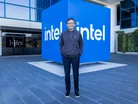
Tata Electronics and Intel have signed a Memorandum of Understanding (MoU) to accelerate India’s semiconductor ambitions, with plans that could influence how future AI data centres across the country are powered, supplied and scaled.
The companies will explore opportunities for Intel products to be manufactured and packaged at Tata’s planned fabrication and assembly facilities, deepening domestic access to advanced chips and strengthening the infrastructure that underpins India’s growing digital economy.
Lip-Bu Tan, CEO of Intel Corporation, says the collaboration reflects a pivotal moment in the evolution of India’s compute market.
“Intel’s technology has driven decades of advancement in computing and as we continue to innovate, our ambition is to broaden our reach, accelerate growth and deliver even greater value to our customers,” he says.
“We see this as a tremendous opportunity to collaborate with Tata to rapidly scale in one of the world’s fastest-growing compute markets, fuelled by rising PC demand and rapid AI adoption across India.”
Semiconductor capacity and the data centre sector
India’s data centre market has expanded sharply in recent years, driven by enterprise cloud migration, hyperscale investment and the rapid shift towards AI workloads.

A domestic semiconductor manufacturing capability has become increasingly important as operators look for greater supply chain stability and long-term access to high-performance chips.
Tata Electronics’ US$14bn semiconductor programme is central to this aim. Its plans include India’s first chip fabrication plant in Gujarat and an assembly and testing facility in Assam.
These facilities offer the potential to shorten component lead times for data centre builders and reduce dependency on imported silicon, particularly for compute and storage hardware used in AI and cloud services.
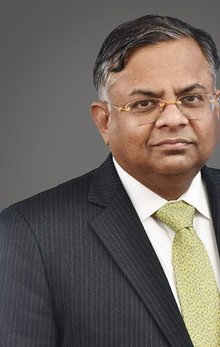
Natarajan Chandrasekaran, Chairman of Tata Sons, describes the partnership as a meaningful step in the group’s semiconductor roadmap.
“The Tata Group is deeply committed to developing a robust semiconductor industry in India,” Natarajan says.
“We are excited to collaborate with Intel, and this strategic alliance would accelerate our efforts. Together, we will drive an expanded technology ecosystem and deliver leading semiconductors and systems solutions, positioning us well to capture the large and growing AI opportunity.”
Strengthening supply chains for advanced compute
Under the India Semiconductor Mission, multiple projects have already been approved, but the agreement with Intel brings one of the world’s major chip designers into direct alignment with India’s ambitions.
For data centre operators planning high-density AI campuses, local manufacturing could help improve predictability around the availability of processors, packaging and supporting components.
As a prospective customer for Tata’s foundry operations, Intel’s involvement signals confidence in the capability being developed in Gujarat.
The foundry is expected to support sectors including AI, automotive, computing and data storage, aligning closely with demand forecasts for India’s growing fleet of hyperscale and edge data centres.
Dr Randhir Thakur, CEO and Managing Director of Tata Electronics, says the deal reinforces the company’s strategy to build out a resilient manufacturing base.
“This MoU aligns with Tata Electronics’ roadmap across EMS, OSAT and Semiconductor Fab, enabling a reliable and resilient supply chain for our customers,” he says.
“This collaboration would drive cost competitiveness, faster time-to-market, greater operational agility and enable Intel products to capture the surging demand for next-generation AI compute in India.”
AI-enabled PCs and broader digital infrastructure
Alongside chip manufacturing, the companies will also explore opportunities to scale AI-enabled PC solutions across India.
While consumer-focused, these devices are increasingly integrated with cloud-hosted and data centre-delivered AI services, contributing to a broader ecosystem that requires reliable domestic compute infrastructure.
The agreement sits within a wider national push to embed India within global technology supply chains.
For data centre developers in India, particularly those planning GPU-driven AI campuses, Tata’s investment and Intel’s engagement provide a clearer indication of how local silicon output may evolve over the next decade.
Company portals



Executives

Dr Randhir Thakur
CEO and Managing Director
Lip-Bu Tan
Chief Executive Officer
Natarajan Chandrasekaran
Chairman