Vertiv & Generate: Addressing Data Centre Power Constraints

Vertiv and Generate Capital are collaborating to deliver Bring Your Own Power & Cooling (BYOP&C) solutions for data centres across the US.
The partnership combines Vertiv’s power and cooling infrastructure with Generate’s financing and asset ownership model. The goal is to help data centre operators deploy capacity in markets where grid access is limited or delayed, while maintaining the option to connect to utility power in the future.
Demand for AI and high-density compute workloads is placing increasing pressure on power infrastructure that supports data centre campuses. Operators often face long grid interconnection timelines as well as high upfront capital requirements for power and cooling equipment.
Vertiv and Generate say their collaboration addresses both issues by combining infrastructure technology within a single deployment model designed to shorten time-to-operation and support faster capacity build-outs.
Solutions for constrained power markets
The collaboration focuses on Vertiv’s Bring Your Own Power & Cooling approach, which enables data centre operators to deploy on-site energy generation and cooling systems while waiting for utility grid capacity to become available.
Scott Armul, Chief Product and Technology Officer at Vertiv says: “This collaboration expands Vertiv's Bring Your Own Power & Cooling strategy by combining converged physical infrastructure with the financing and ownership models to enable our customers to achieve a faster time to token.
“By integrating Vertiv's comprehensive power, thermal, and services capabilities with Generate's capital and operational model, we can help customers overcome grid constraints and bring critical capacity online with greater speed and certainty.”
Under the agreement, Vertiv supplies integrated power and cooling systems designed specifically for high-density computing environments. These include modular infrastructure components that shorten design timelines and allow repeatable deployments across multiple sites.
Generate provides project financing and infrastructure ownership. This structure allows data centre operators to deploy critical infrastructure without committing large upfront capital investments.
The companies say the combined approach enables near-term capacity deployment while preserving the ability to transition to grid-connected utility power once additional grid capacity becomes available.

Integrated infrastructure and financing
Vertiv’s contribution focuses on the physical infrastructure that supports data centre power and cooling. This includes the power train as well as the thermal chain, which is responsible for maintaining safe operating temperatures.
The infrastructure can include reciprocating engines, gas turbines, fuel cells and battery energy storage systems.
Cooling infrastructure is also delivered as pre-engineered modules designed to integrate with on-site power systems and high-density computing environments.
Generate’s role focuses on financing and operating these assets as infrastructure investments. The company provides funding, ownership and operations and maintenance services while offering commercial structures designed to reduce customer capital expenditure.
The model enables data centre operators to deploy infrastructure rapidly in locations where waiting for utility grid capacity could delay projects by several years.
Customers also retain flexibility to transition their power supply to the grid when interconnection becomes available. In some cases on-site generation systems can continue operating alongside grid power as resilience assets that support reliability during outages or periods of high demand.
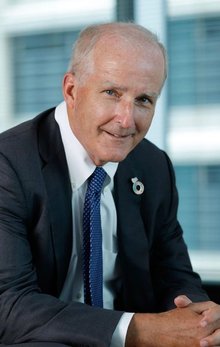
"As AI-driven demand accelerates, customers need more than equipment, they need a deployable infrastructure model," said David Crane, CEO of Generate.
"Our collaboration with Vertiv combines proven power and cooling infrastructure with flexible financing, ownership, and operations to help customers deploy faster, manage capital efficiently, and preserve long-term grid transition options."
Supporting AI-driven data centre growth
Initial deployments will target North American markets where access to utility power is constrained and where AI workloads are increasing demand for new data centre capacity.
High-density computing environments such as AI training clusters require substantial electricity supply and advanced cooling systems to manage heat output from processors and accelerators.
Vertiv says the modular infrastructure approach helps reduce engineering timelines by standardising core systems that can be replicated across sites. This can simplify project planning and support faster construction cycles.
The collaboration also expands Vertiv’s wider BYOP&C ecosystem. The company has previously announced partnerships with Caterpillar and Solar Turbines aimed at supporting on-site energy solutions for data centre facilities.
Vertiv and Generate aim to provide data centre operators with an integrated model for deploying power and cooling infrastructure in regions where grid capacity remains limited.
Company portals

Executives
David Crane
Chairman and Chief Executive Officer
Scott Armul
Chief Technology and Products Officer