
How WBS is Powering a 3.2GW Baltic Data Centre Campus
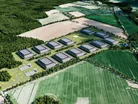
WBS Power, a fast-scaling player in renewable energy, is advancing into the data centre sector with plans for what could become one of Europe’s largest hyperscale campuses.
The move underscores the growing link between energy infrastructure and AI-driven demand, as WBS positions itself at the intersection of energy and digital infrastructure.
The company has secured a grid connection for a proposed 3.2GW development in northern Poland, marking a significant step forward for a project designed to support AI and high-performance computing workloads.
Known as the Baltic Data Center Campus, the site will be located in Lublewo, near the coastal city of Gdańsk.
The scale of the development reflects the growing demands being placed on data centre infrastructure, particularly as AI adoption accelerates across industries.
"This will be the largest project of its kind in Poland and one of the largest in Europe," says Maciej Marcjanik, CEO of WBS Power.
Phased build out from now until 2029
The campus will be developed in four phases, each delivering 800MW of capacity. Preparatory work across all phases is expected to be completed by the end of next year, with the first operational data centre scheduled to come online between 2028 and 2029.
The site’s proximity to one of Poland’s largest power substations is central to its design, enabling access to substantial capacity from day one.
WBS plans to draw initially on a diversified energy mix that includes conventional generation supplemented by renewables. Over time, the company expects nuclear power to play a role in ensuring long-term supply stability.
“The digital revolution requires infrastructure on an entirely new scale,” says Hubert Bojdo, CFO of WBS.
“We selected the location for the Baltic Data Center Campus very carefully, ensuring access to large power capacities, a diversified energy mix already in place today, and the long-term prospect of stable supply supported by future nuclear generation.”
Energy-first approach to data centre delivery
WBS describes itself not as a traditional data centre operator but as an energy infrastructure provider, focusing on the delivery of power systems required to support large-scale digital workloads.
As hyperscale demand rises, particularly for AI applications, energy availability is often a more pressing challenge than land or construction capacity.
“The rapid development of AI is driving demand for hyperscale data centres supported by advanced infrastructure and reliable access to large volumes of power,” says Maciej.
“The integration of renewable energy and energy storage with digital infrastructure will be a key pillar of competitiveness for next-generation hyperscale projects,” he adds.
Battery storage and renewable integration are expected to play a central role in the campus, helping to balance supply and demand while supporting decarbonisation goals. This aligns with wider industry efforts to reduce emissions without compromising performance or uptime.

Expanding footprint in European data centres
The Baltic Data Center Campus is part of a broader push by WBS into digital infrastructure. The company is also progressing a 500MW data centre project in Finsterwalde, Germany.
For Hubert, this evolution builds directly on the company’s existing capabilities.
“This is a natural step in our growth strategy,” he says, “enabling us to leverage the expertise and market experience we have developed over many years.”
“We are building the infrastructure that will underpin the next phase of the global digital transformation.”
Converting capacity into operational scale
WBS’s strategy reflects a broader shift in how data centre projects are conceived and delivered, with energy infrastructure taking a leading role in site selection and development planning.
"We are proud that a Polish company can contribute to Europe's energy and digital transformation, strengthening its economic competitiveness and technological sovereignty," Maciej explains.