How will Hitachi Energy & RT-One Back Brazil’s Data Centres?

Brazil is set to host Latin America’s largest AI data centre platform following a collaboration between RT-One and Hitachi Energy to develop the power infrastructure required for large-scale AI workloads.
The agreement covers electrification for a multi-site data centre programme including a mega campus in Uberlândia in the state of Minas Gerais, a second campus in Maringá in Paraná and a third location currently under evaluation.
Together, the sites are intended to support high-density computing while strengthening Brazil’s position in digital sovereignty and clean energy-led infrastructure development.
At the centre of the collaboration is the delivery of high-voltage electrical systems and grid connections designed to support the reliability and scale demanded by AI data centres. Hitachi Energy will draw on its experience in network integration to support power availability, resilience and efficiency across the campuses.
Power infrastructure for AI-scale campuses

AI-focused data centres are placing unprecedented demands on electrical infrastructure, with high rack densities and continuous compute loads driving the need for robust grid connections and future-proofed designs.
The RT-One campuses are being planned with modular expansion in mind, requiring electrical systems that can scale without compromising stability.
Hitachi Energy’s role includes the design of advanced high-voltage systems capable of secure network integration and flexibility for future growth. These capabilities are particularly relevant in Brazil, where electricity demand is forecast to rise by 3.3% annually through to 2035, driven by industrial electrification, mobility and the growth of digital infrastructure.
“We signed this agreement with RT-One because we believe in Brazil’s potential as a global hub for AI and data centres,” says Fábio Nugnezi, Director of Marketing and Sales at Hitachi Energy in Brazil.
“Hitachi Energy, as a global leader in electrification technology, can contribute to RT-One’s goals by enabling reliable and sustainable power for its data centres. To do this, we are bringing our strengths in engineering, supply chain, technology, and expertise in clean energy.”
The partnership reflects the increasing role of power engineering firms in enabling AI data centre platforms, where access to resilient electricity has become as critical as land availability or fibre connectivity.
Supporting a renewable-heavy energy mix
Brazil’s electricity grid is largely renewable, creating both opportunities and challenges for hyperscale-style data centre developments.
While the availability of clean energy supports sustainability goals, maintaining consistent supply for always-on AI workloads requires careful grid planning and automation.
The systems being developed under the agreement are designed to ensure continuous access to energy while maintaining flexibility within the national grid. This includes the ability to manage peak demand and support future capacity increases without extensive reconfiguration.
“Hitachi Energy, bringing its entire portfolio of high-voltage systems integration and automation, is an essential partner for the development of energy infrastructure focused on large-scale data centers,” says Ricardo Simões, Global VP at RT-One.
For data centre operators, this approach aligns with a broader shift towards designing campuses that integrate closely with national grids while retaining the resilience expected of mission-critical infrastructure.
Campus scale and delivery timelines
The first phase of the programme will deliver 100MW of capacity at the Uberlândia campus, followed by up to 200MW at the Maringá site.
Both locations are planned for modular expansion beyond 400MW per campus, allowing RT-One to respond to demand from AI training inference and high-performance computing workloads.
Initial deliveries are scheduled for 2026, with the campuses expected to support a mix of AI development, HPC, cybersecurity and sovereign cloud services within Brazil. The scale of the project places it among the most significant data centre developments in the region to date.
By distributing capacity across multiple campuses while maintaining common infrastructure standards, RT-One aims to balance scale with operational resilience.
Positioning Brazil in the AI data centre landscape
The collaboration underscores how power infrastructure is shaping the geography of AI data centre investment.
Access to renewable energy grid capacity and experienced electrification partners is increasingly decisive in determining where large AI platforms can be built.
For Brazil, the RT-One programme represents a step towards hosting AI compute at a scale previously concentrated in North America, Europe and parts of Asia. For Hitachi Energy, it reinforces the role of high-voltage systems integration as a foundational layer for next-generation data centre campuses.
With construction timelines aligned to first deliveries in 2026, the focus now shifts to execution and grid integration as the campuses move from planning into build phases.
Company portals


Executives
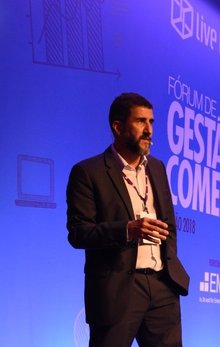
Fábio Nugnezi
Director of Marketing and Sales in Brazil
Ricardo Simões Pimentel
Global VP