
IDCA Global Energy Report: AI Data Centres' Power Challenge
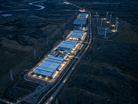
Every new AI model requires vast computing power and that means more electricity and tougher decisions about where facilities can be built.
A new report from the International Data Center Authority (IDCA) shows how quickly that picture is changing, revealing an industry that is expanding faster than many electricity networks can support.
It also highlights the so-called 'Goldilocks' countries that are best placed to host the next generation of digital infrastructure.
Today's data centres consume 67.7GW of electricity, representing 1.9% of global electricity generation, up from 1.7% a year earlier.
Although that share seems modest, demand is rising rapidly across established data centre markets.

- 43% of the sector's global energy consumption is accounted for by the US.
- Its data centres draw on 6% of the country's electricity supply.
The growth of AI platforms including ChatGPT, Claude and Gemini is a major factor behind that increase.
Electricity consumption from AI data centres grew by 50% during 2025 alone, while the International Energy Agency (IEA) projects that global data centre electricity demand will reach around 945TWh by 2030, more than double current levels.
Mehdi Paryavi, Founder, Chairman and CEO of the IDCA, said: “The report outlines the consumption of electricity by the world's nations and shows a global footprint of 2%, or 67.7GW,” he says.
“It outlines the extent of energy and highlights the countries with the strongest commitments to renewable energy and those that still have strong potential for data centre development at the moment, in the face of numerous global power constraints.”
Why data centre power strategies are changing
One of the report's key themes is that traditional utility grids are no longer enough for gigawatt-scale AI facilities.
The IDCA points to June 2026 orders from the US Federal Energy Regulatory Commission (FERC), which instructed regional transmission organisations to develop tariffs that support co-location and behind-the-meter generation.
According to the report, this could transform data centres from major electricity consumers into operators capable of generating and managing part of their own power supply.
Ireland already provides an example of this direction.
Its data centres consume around one-fifth of the country's electricity and Dublin ended its multi-year moratorium in December 2025 through a Large Energy Users Connection Policy.
Under the rules, new facilities must provide their own generation capacity and meet 80% of demand through additional renewable energy projects within six years.

Mehdi, however, believes that approach has clear limits.
“Bring-your-own-power is surely the message in many parts of the world, but it is only feasible and viable if you are already a credible, stable and attractive enough data centre destination,” he explains.
“It will not work for regions or economies that are trying to become future digital hubs of the world or to build global trust to attract AI and data centre development investment.”
Clean energy and efficiency remain priorities
Renewable energy supplies 29.6% of global electricity generation, while nuclear contributes another 8.9%, bringing total low-carbon generation to 38.6%.
Even so, the report concludes that demand continues to outpace available supply.
As a result, it highlights technologies including small modular reactors, hydrogen fuel cells, liquefied natural gas and battery energy storage systems as options to bridge the gap.
Examples already emerging include Google's agreement with Kairos Power for 500MW of nuclear energy and Microsoft's 20-year agreement with Constellation Energy to support the restart of the Three Mile Island nuclear plant in Pennsylvania.
The report also identifies opportunities inside data centres themselves. Around 13% of US data centre electricity consumption, more than 3GW, powers so-called "zombie" applications.
These are applications that remain running despite no longer serving any useful purpose because they have not been properly decommissioned. The report notes this wasted electricity is roughly equivalent to the output of three nuclear reactors.
Mehdi believes utilities are responding to AI demand, even if infrastructure cannot expand overnight.
“Utilities have long planning and construction cycles, and they can't just build out massive new facilities that are underused,” he says.
“But utilities have got the message that we've entered a new economic era; we anticipate that over the long term they will catch up. But the short- to medium-term will be characterised by constraints in many regions and nations.”
- Postponed 100MW data centre deployments are estimated to cost operators more than US$10,000 per megawatt per day in lost revenue.
Where the next wave of capacity could emerge
The IDCA identifies 41 so-called 'Goldilocks' nations through its Digital Readiness Index. These countries, including Colombia, Malaysia, Brazil, Romania and Kenya, offer what the organisation considers the right balance of infrastructure and opportunity for new data centre investment.
Another 27 developed nations, including China, India and Russia, have enough available electricity capacity to absorb at least 1GW of additional data centre demand without investing in new generation.
The IDCA's Emissions Reduction Challenge index places the above countries, the US, Brazil, Indonesia and Mexico in its highest category, with those countries collectively producing more than 60% of global emissions.
Looking ahead, Mehdi argues that success is measured by more than installed power capacity alone.
“Success will be found by the level of achievement of these companies and their ability to drive positive economic growth in the countries they serve,” he says.
Company portals

Executives

Mehdi Paryavi
Founder, Chairman and CEO