How Will Google and NextEra Build GW-Scale AI Data Centres?

Google Cloud and NextEra Energy have announced a major expansion of their partnership that will see the two companies build gigawatt-scale data centre campuses powered by dedicated energy infrastructure.
The collaboration reflects rising demand for energy-efficient digital infrastructure as AI deployments increase across industries.
John Ketchum, Chairman and CEO of NextEra Energy, says the partnership captures a turning point for the energy and technology sectors.
“Our partnership with Google exemplifies this very singular moment when energy and technology are becoming inextricably intertwined,” he says.
“Together, we intend to build data centre capacity and energy infrastructure at scale, advance cutting-edge technology and reimagine how energy companies operate.”
Gigawatt-scale campuses with dedicated generation
Central to the agreement is the development of new US data centre sites that will have their own power plants to supply the high-density computing capacity needed for enterprise AI.
Both companies say the model aims to provide reliable power that is not constrained by grid limitations, while integrating technologies that can support long-term energy resilience.
NextEra brings significant experience as one of America’s largest energy infrastructure operators. The partnership builds on an existing 3.5GW portfolio of renewable energy contracts and projects the two companies already share.
The new campuses will be designed to meet Google Cloud’s AI requirements and NextEra’s ambitions for modern, digitally supported energy operations.
As part of this collaboration, the companies are evaluating additional locations across the US for future data centre development.
AI tools to modernise energy operations
Alongside the infrastructure build, Google Cloud’s AI capabilities will be embedded across NextEra’s operations.
AI models will support predictive maintenance, supply chain planning, crew deployment and response to weather-related disruption.
Google Cloud’s CEO Thomas Kurian says the partnership strengthens an already long-standing relationship.

“Working with NextEra Energy to power our infrastructure growth further strengthens our long-standing collaboration and will help us meet increasing demand from our customers as they deploy AI technologies at scale,” explains Thomas.
“By infusing NextEra Energy’s deep domain expertise with Google Cloud’s AI infrastructure, platform and models, we can together support the digital future of energy infrastructure.”
NextEra intends to use Google’s generative and agentic AI tools to improve the accuracy of its forecasting and grid management.
The company will also integrate Google’s open-source modelling tools, including the TimesFM 2.5 forecasting model and WeatherNext 2, to support more efficient operational planning and prevent outages.
The first commercial product arising from the collaboration is expected by mid-2026 and will be available through the Google Cloud Marketplace.
Strengthening grid resilience
NextEra says the use of Google’s security-constrained power flow modelling will allow it to optimise energy distribution across its network and reduce capital expenditure associated with grid upgrades.
This is expected to support a more reliable power supply for both its own facilities and wider utility customers.
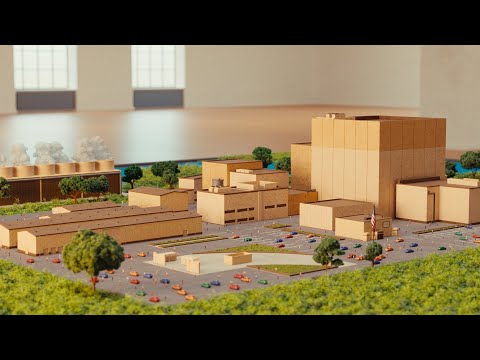
The companies also recently announced plans to restart the Duane Arnold Energy Centre in Iowa, the state’s only nuclear facility, with the aim of supporting Google’s future AI computing needs.
Nuclear power is expected to play an increasing role in dedicated energy supply for hyperscale data centres as operators seek low-carbon, high-availability sources.
Expanding data centre development
Three joint data centre campuses are already in development across the US, with more to follow as site selection continues.
The partnership aims to align long-term data centre expansion with dedicated clean power, enabling capacity growth without placing additional strain on existing grids.
Both Google and NextEra present the collaboration as a strategic response to the rising energy footprint of AI workloads and the need to combine digital innovation with dependable infrastructure planning.