Inside Google’s Next AI Data Centre Development in Austria
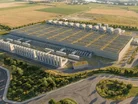
Google has announced plans to build its first data centre in Austria, marking a significant step in its European infrastructure strategy as demand for cloud and AI services accelerates.
The new facility, located in Kronstorf in Upper Austria, is designed to strengthen the region’s position within the global digital economy while supporting the next wave of AI-driven innovation.
Once operational, the site is expected to create around 100 direct jobs, alongside thousands more across construction, supply chains and local businesses.

A strategic investment in Europe’s digital future
For regional leaders, the investment is a signal of long-term economic and technological confidence. Thomas Stelzer, Governor of Upper Austria, says: “Google’s decision to build in Kronstorf is a powerful signal for Upper Austria as a hub for business and innovation.
“It demonstrates that Upper Austria is internationally sought-after, competitive, reliable and forward-looking.
“This investment creates jobs, strengthens our digital infrastructure, and provides additional momentum to our AI and innovation strategy.
“Our goal is clear: we do not just want to use the technologies of tomorrow; we want to develop them right here and secure long-term value creation.”
The development reflects Google’s broader push to expand its European data centre footprint, ensuring that core services such as Search, YouTube, Maps and Workspace, can scale efficiently and reliably alongside rapidly growing AI workloads,
Christine Antlanger-Winter, Country Director Google Switzerland & Regional Senior Director Alpine, highlights the strategic importance of the move: “I’m pleased to announce Google’s first investment in a data center in Austria.
“This will give businesses, public institutions and people throughout Austria even better access to our technology, thus supporting the digital transformation.
“It also underscores our long-term vision for Europe, demonstrating a deep commitment to accelerating regional innovation through strategic investment.”
Sustainability at the core of design
Sustainability sits at the centre of the Kronstorf project, aligning with Google’s ambition to operate on 24/7 carbon-free energy across all its data centre operations.
Adam Elman, Sustainability Director at Google, explains: “Sustainability is at the heart of our plans. The facility is designed for off-site heat recovery, allowing us to provide excess heat to local partners for free to help decarbonise the region.
“This site supports our global goal to operate on 24/7 carbon-free energy on every grid where we work.
“We’ve launched a new fund with the Upper Austrian Fisheries Association to actively improve the water ecosystem of the Enns River."
In addition to heat reuse, the site will feature a green roof fitted with solar panels, contributing clean energy directly to operations.
Google’s wider environmental strategy extends beyond the facility itself. The company has committed to replenishing more freshwater than it consumes by 2030 and is investing locally through a dedicated fund to enhance the Enns river ecosystem in partnership with the Upper Austrian Fisheries Association.
Community engagement and transparency
Community engagement is another key pillar of the project, as Google is developing an on-site information centre in Kronstorf.
It is designed to give residents and regional stakeholders insight into digital infrastructure, economic impact and sustainability initiatives. The centre aims to foster transparency and dialogue, reflecting increasing public interest in how hyperscale infrastructure integrates with local communities.
Investing in Austria’s AI talent pipeline
Alongside physical infrastructure, Google is investing in human capital.
A new multi-year collaboration with the University of Applied Sciences Upper Austria will establish AI-focused curricula and certifications, helping to equip students with in-demand digital skills.
This builds on Google’s existing track record in Austria, where it has trained more than 140,000 individuals since 2014 across education, business and development sectors.
As AI adoption accelerates and data centre demand continues to surge, the Kronstorf project illustrates how hyperscalers are balancing scale with sustainability, while embedding themselves more deeply into regional economies.
The facility positions Austria as an emerging node in Europe’s digital infrastructure landscape, and a participant in shaping the technologies of the future.
Company portals

Executives
Adam Elman
Director of Sustainability for EMEA
Christine Antlanger-Winter
Country Director Google Switzerland / Regional Director Austria & Switzerland