
Power Bottleneck: Siemens Advanced Software for Data Centres

For data centre operators, access to grid capacity is up there with one of the most pressing challenges. With the growing demand for cloud, AI and edge services, power constraints cause delays or, in some cases, block deployments.
Siemens has now responded to this challenge with the launch of Gridscale X Flexibility Manager, a software solution designed to help electricity distribution system operators, or DSOs, manage congestion and unlock hidden grid capacity.
The platform aims to accelerate connections for power-intensive users like data centres, without the need to expand physical grid assets.
For developers working on edge or hyperscale projects, particularly in regions with saturated infrastructure, this offers an alternative to long delays and costly substation upgrades.

Smart tools for overloaded grids
Gridscale X Flexibility Manager helps DSOs identify grid congestion before it happens, using data to predict where capacity problems are likely.
The platform then draws on flexibility from distributed energy resources, known as DERs. These include electric vehicles, battery storage, rooftop solar and heat pumps – all of which can reduce or shift their energy use to free up capacity.
By activating these DERs in real time, the system allows new users like data centres to connect to the network without waiting for new grid infrastructure.
Siemens says the approach can increase the use of existing grid capacity by up to 20%, while reducing the need for infrastructure investment by up to 40%.
Sabine Erlinghagen, Chief Executive of Siemens Grid Software, says: "Unlocking the potential of flexibility for grid planning and operations is a gamechanger for DSOs navigating the energy transition.
"With Gridscale X, utilities can maximise the use of existing infrastructure, accelerate renewable integration and data centre connections and make smarter investments to deliver a more resilient energy future.
“It's not just about managing today’s grid but shaping tomorrow’s autonomous energy landscape."
The tool integrates with DSO monitoring systems and works by continuously scanning for areas where future power demand may exceed network limits.
If a constraint is forecasted, the software identifies flexibility options among connected participants – such as businesses or homes with battery systems or solar panels –and triggers a response through market or control channels.
For the data centre sector, which requires predictable and scalable power supply, this software-defined flexibility is key.
As edge deployments move closer to users, and colocation facilities appear in rural or suburban areas, grid constraints become more difficult to manage through traditional methods.
Gridscale X provides a software layer to help DSOs allocate capacity more efficiently.
Software-defined energy meets digital infrastructure
Gridscale X Flexibility Manager sits within Siemens Xcelerator, the company’s open digital business platform.
It adds a layer of intelligence and control that supports the wider digitalisation of the energy system.
This matters for telecoms and data centre developers who are not only power users, but often own their own generation and backup systems.
The software supports a model where these distributed assets become part of the solution, responding automatically to grid needs.
In effect, data centres can participate as active players in the energy market, helping to stabilise the system while benefiting from quicker and cheaper connections.
Within the context of 5G rollout, fibre expansion and the growth of edge computing, many telecoms providers are becoming infrastructure owners as well.
With more investment going into private data centres and on-premise compute at the network edge, access to agile energy tools becomes vital.
A Siemens-commissioned study shows 74% of energy executives see smart grid software as essential to the energy transition. The same trend is playing out in telecoms, where software-defined operations are becoming the standard for managing networks, workloads and now power.

Collaborations with European grid operators
Siemens develops the Flexibility Manager in partnership with several European DSOs, including Alliander in the Netherlands, Elvia in Norway, and KNG (Kärnten Netz) in Austria.
In Carinthia, Austria, KNG expects solar generation in its region to nearly double by 2030.
That growth, especially in rural areas with long feeder lines, creates risks around voltage control and capacity congestion.
To manage this, KNG trials the Flexibility Manager in preparation for new regulations around market-based flexibility.
Robert Schmaranz, Head of Operations at KNG, says: “We are facing a new and increasingly complex regulatory framework, combined with massive challenges in system operations as we transition to a cleaner energy future.
“Collaborating with Siemens, we were able to address real network challenges while preparing for the upcoming market-based flexibility framework.
“The collaboration also gave us the opportunity to exchange experiences with other European DSOs, sharing best practices as we collectively shape the next phase of flexibility implementation.”
Siemens' software shows how digital infrastructure providers can use energy flexibility not just to access power, but to contribute to grid resilience and stability.
Company portals
Executives

Robert Schmaranz
Head of Operations
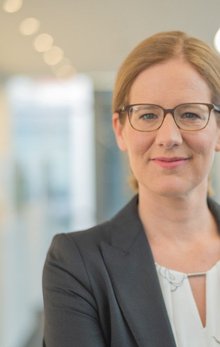
Sabine Erlinghagen
CEO of Siemens Grid Software