
Powering Resilience: Business Continuity in the AI Era
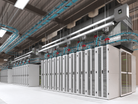
Data centres are experiencing a fundamental shift in operational demands, driven by the proliferation of artificial intelligence and high-performance computing workloads. The infrastructure that supports these facilities – particularly uninterruptible power supply systems – is being forced to evolve beyond traditional measures of performance.
Where UPS systems were once evaluated primarily on capacity, redundancy configurations, and physical footprint, the criteria for success are changing. The focus is shifting towards how these systems behave when conditions deviate from the norm: during maintenance windows, component failures, and periods of acute stress.
“The rapid rise of artificial intelligence (AI) and high-performance computing (HPC) is placing unprecedented demands on data centre power infrastructure,” says Michel Bommer, UPS Technology Director – R&D at Legrand.
“Increased loads are becoming more volatile, adding increased pressure on electrical systems. As a result, data centre operators need to ensure their infrastructure can continue to meet capacity demands while delivering operational safety, resilience, energy efficiency and long-term service continuity.”
The scale and speed of this change are redefining expectations for uninterruptible power supply (UPS) systems.
Instead of focusing on capacity, component redundancy, or compact designs, Michel says that “resilience must be assessed by how systems perform under stress, during maintenance, and failure scenarios”.
“It is also essential to evaluate how effectively they preserve service continuity throughout the UPS lifecycle,” he adds.
Reliability must be engineered and proven
For operators of mission-critical facilities, service continuity is not an incidental outcome. Instead, it is inherently engineered into operations.
Modular UPS systems designed for high-density environments distribute intelligence, power and redundancy across every essential subsystem — a strategy Michel describes as “highly effective at eliminating single points of failure”.
“By duplicating each critical component, these architectures guarantee power delivery, even in the event of a component's fault or during active maintenance,” he explains. “The ability to contain faults, no matter where they occur, without disrupting the load, is critical to maintaining service continuity in high-availability environments.”
Modern UPS designs embed redundancy at every critical level to maximise availability and fault tolerance
- Parallel, hot-swappable power modules that allow instantaneous load sharing and automatic compensation if a module fails, maintaining output performance without interruption.
- Dual, independent communication buses that ensure real-time synchronisation between modules and supervisory controls, safeguarding against disruption if one communication channel is compromised.
- Duplicated auxiliary subsystems that protect against reliability risks from supporting components.
- Automatic static bypass control with a dedicated digital control unit that operates entirely independently from the main UPS controller.
“Together, these measures ensure that no single electrical, logical, or auxiliary failure can interrupt service delivery,” says Michel.
Increasingly, leading UPS architectures validate their physical and functional robustness through Failure Modes, Effects, and Criticality Analysis (FMECA) — a method, Michel notes, “traditionally associated with aerospace and defence applications”.
“FMECA assesses how failures occur, how they propagate, and whether they can be safely contained,” he adds.
“When evaluating UPS solutions, operators should look for proof of system-level validation rather than relying solely on redundancy claims.”
Hot maintenance and operational safety

UPS failures are rarely caused by a single event. “Components degrade, incorrect sizing causes overloads, inconsistent maintenance, environmental factors, and human error are all contributing factors,” Michel explains.
Resilient UPS systems should therefore be designed for graceful degradation — ensuring that faults are isolated and compensated for without disrupting critical loads.
According to Michel, indicators of this capability include “independent, autonomous and self-configuring power modules that enable true hot maintenance”.
“This allows modules to be replaced without any downtime in service operations. More importantly, they allow maintenance to occur as a planned, non-disruptive process rather than as a risk to service continuity,” he notes.
“Operational safety is not a secondary consideration; it is a prerequisite for long-term uptime. UPS systems that are difficult or hazardous to maintain often lead to irregular servicing, increased human error, and heightened personal and operational risk.”
UPS architectures that incorporate physical compartmentalisation and clearly defined access paths enable safe maintenance of live systems.
“In the event of a module failure, components can be replaced without disrupting critical loads, supported by Voltage and Frequency Independent (VFI) architecture,” Michel says.
“Clear segregation between power, control, and auxiliary sections reduces arc-flash risk and support routine maintenance procedures – an often overlooked but critical factor in long-term resilience planning.”
Resilience for dynamic, AI-heavy loads
AI and HPC servers can generate rapid load variations and power peaks that can cause significant increases in power draw within milliseconds, pushing UPS systems past their thermal design power (TDP) or absolute power thresholds.
Traditional UPS systems, designed for steady enterprise loads, often struggle to adapt to such fluctuations.
“To mitigate the impact of increased thermal and electrical stress, modern UPS architectures are now adopting silicon carbide (SiC) semiconductors, which offer yields exceeding 98%, significantly reducing energy losses and operating temperatures,” says Michel.
“SiC devices can operate at higher temperatures – up to 175 °C – compared to 125 °C for conventional IGBT-based designs. This capability extends component lifespan and enhances long-term reliability.”
When assessing UPS options, operators should lead with efficiency by validating it in real-world conditions (load range, operating mode and temperature) and assess whether the design sustains that performance across changing AI-driven loads.
They should understand, as Michel emphasises, “how a UPS manages repeated power peaks and maintains consistent performance and service continuity over time, particularly under sustained operational and thermal stress”.
Cybersecurity built into the architecture

As UPS systems become increasingly network-connected, protecting their control and communication layers has made cybersecurity a core design principle.
“Unauthorised access to or control of a UPS system can result in power disruptions, equipment damage, and loss of availability,” Michel warns.
In the UK, the Department for Science, Innovation and Technology estimates the annual cost of significant cyberattacks at £14.7bn (US$19.8bn) – equivalent to 0.5% of the UK’s GDP.
“Best-in-class UPS systems should include built-in features that support strong security practices, ensuring that essential operations remain unaffected even if network access is compromised,” says Michel.
“Indicators of a cyber-resilient design include robust authentication processes that allow only authorised personnel to gain access, remote supervision over an isolated LAN without enabling remote control orders, encrypted data exchange, and isolating monitoring and communication functions from core power operations. These architectures help maintain service continuity even during cyber incidents.”
By embedding cybersecurity resilience at the architectural level, operators can protect uptime against both physical and digital threats – a critical aspect of business continuity in today’s interconnected ecosystems.
Evaluating UPS for long-term resilience
For data centre operators, evaluating UPS systems is about balancing long-term operational outcomes against short-term optimisation.
As Michel advises, they should assess:
- How the system performs during faults, maintenance and partial failures.
- Whether reliability claims are backed by rigorous physical and functional engineering analysis.
- The safety and practicality of live maintenance throughout the system’s lifespan.
- Stability of performance under dynamic, AI-driven load conditions.
- Protection of critical power functions from cyber and operational risks.
“Resilience doesn’t come from a single feature. It’s built through well-considered architectural choices that support service continuity, uptime, operational safety, and efficient performance throughout the data centre’s lifecycle,” Michel states.
A practical example of resilience in action

While many UPS solutions promise some degree of fault tolerance, only a handful deliver verified, long-term resilience in high-density environments.
One such example is Legrand’s Keor FLEX high-power modular UPS, which Michel highlights as a demonstration of what validated reliability can achieve.
“One example is Legrand’s Keor FLEX high-power modular UPS, which demonstrates how validated reliability, fault isolation, operational safety, and cyber-secure design can be combined to support long-term service continuity,” he says.
It serves as a proof point that UPS resilience can no longer be considered an optional feature. “As AI workloads continue to reshape power dynamics, resilience will increasingly depend on how safely, predictably, and efficiently systems operate under real operational stress,” concludes Michel.
Company portals

Executives
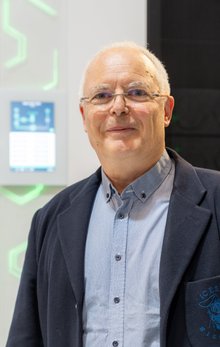
Michel Bommer
UPS Technology Director – R&D