Rolls-Royce and INERATEC Back e-Fuels for Green Data Centres
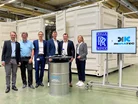
Rolls-Royce Power Systems and INERATEC have announced a partnership aimed at decarbonising emergency power for data centres by replacing fossil diesel with synthetic e-Fuels.
These fuels, made from renewable hydrogen and captured CO₂, are intended to serve as a low-emission alternative for diesel generators that ensure uptime in the event of a grid failure.
With the sharp rise in AI applications, global data centres are seeing higher power demand.
While many operators have invested in renewable energy for primary operations, diesel remains the default for backup systems — posing an obstacle to full decarbonisation.
"mtu backup generators from Rolls-Royce are already approved for operation with sustainable fuels,” explains Tobias Ostermaier, President Stationary Power Solutions at Rolls-Royce Power Systems.
“Customers in the critical infrastructure sector, such as data centres, who are aiming to reduce their carbon footprint, will soon also be able to use e-Fuels.
“We are committed to the use of e-Fuels in data centres together with INERATEC."
What are e-Fuels and how do they work?
INERATEC’s synthetic e-Diesel is created using a process known as Power-to-X, which uses renewable electricity to generate hydrogen via electrolysis.
That hydrogen is then combined with captured carbon dioxide to produce liquid fuel.
The result is a synthetic diesel with lifecycle emissions far below those of fossil-based fuels.
The company’s ERA ONE facility in Frankfurt offers a short delivery route for rapid rollout in the initial stages.
The company's e-Fuels are certified under the International Sustainability and Carbon Certification (ISCC) framework and can be used in existing generator systems without hardware modifications.
Maximilian Backhaus, Chief Commercial Officer at INERATEC, says: "The secure energy supply for AI-powered data centres is one of the defining challenges of our time.
“Our e-Fuels offer a climate-neutral solution that is scalable, dependable and ready for immediate deployment.
“Together with Rolls-Royce, we’re bringing this solution to the places where it’s needed most — starting now."
The companies will first target German data centres, leveraging the proximity of INERATEC’s production facility to enable shorter delivery routes and faster deployment.
Decarbonising critical infrastructure without disruption
Diesel backup systems are considered essential for data centres operating to Tier III and Tier IV uptime standards, but they contribute disproportionately to site emissions.
In most cases, backup systems run infrequently, yet they must remain on standby, fully fuelled and tested regularly.
The partnership between Rolls-Royce and INERATEC provides a drop-in replacement that allows operators to retain their existing systems while eliminating a major source of embedded carbon.
The e-Fuel approach offers a path to reducing direct Scope 1 emissions, which are becoming a focus area as large operators face regulatory and investor pressure to move beyond Scope 2 decarbonisation (electricity sourcing).
By integrating INERATEC’s fuel into mtu-branded generator systems, Rolls-Royce aims to offer a turnkey option for operators seeking to boost the sustainability credentials of their backup infrastructure.
The companies say that the rollout will begin immediately in Germany and later scale to other markets, with an international roadmap already under discussion.
Next steps: Scaling and standardisation
While early deployment will depend on fuel availability from INERATEC’s Frankfurt facility, both firms have expressed a long-term goal of international expansion.
This includes aligning with future data centre construction and retrofits in regions with growing digital infrastructure demand and increasingly strict sustainability targets.
Rolls-Royce’s established customer base in Europe and INERATEC’s focus on scalable production position the partnership to address wider demand as the industry moves toward full lifecycle decarbonisation.
The collaboration marks a shift in how operators think about emergency power, opening up a new application for synthetic fuels that aligns with data centre resilience requirements, environmental expectations and sustainability strategy.