Samsung's AI Strategy and Data Centres: What Links Them?

In 2026, AI is becoming an increasingly frequent occurrence in daily life, from smartphones to lawn mowers, the infrastructure that AI is dependent on faces growing pressure to balance and improve performance with security.
Samsung Electronics' panel during CES 2026 in Las Vegas, In Tech We Trust? Rethinking Security & Privacy in the AI Age, brought together technology, ethics and research leaders to explore how trust impacts AI adoption – and what this could mean for data centre operators.
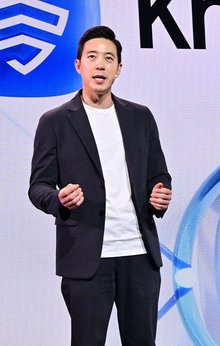
The session featured Allie K Miller, CEO of Open Machine, Amy Webb, CEO of the Future Today Strategy Group, Zack Kass, Global AI Advisor at ZKAI Advisory and former Head of Go-To-Market at OpenAI and Shin Baik, Group Head of Samsung's AI Platform Centre.
Balancing local and cloud processing
AI increasingly works behind the scenes, anticipating needs and automating routines across devices.
According to the panel, trust must be established through clear, consistent design that considers where processing happens and how data moves between environments.
Allie told attendees how clarity drives confidence: "When it comes to AI, users are looking for transparency and control.
“They want to understand whether an AI model is running locally or in the cloud, to know their data is secure and to clearly see what is powered by AI and what is not. That level of visibility builds confidence."
Samsung outlined its "trust-by-design" approach, which relies on a hybrid infrastructure model.
On-device AI keeps personal data local where possible, reducing reliance on centralised data centres. Cloud-based systems are used only when faster processing or broader scale is required.
This distribution could have implications for data centre operators.
As more intelligence shifts to the edge, facilities may need to adapt their role from primary processing hubs to orchestration layers that manage distributed workloads, synchronise updates and provide backup capacity.

Security across distributed environments
As intelligence becomes embedded in phones, televisions and household devices, the infrastructure securing these endpoints must scale accordingly.
Samsung positions its Knox security platform as a foundation for this shift, built into devices from the chipset up to protect sensitive data across every layer.
Shin said during the panel: "Trust in AI starts with security that's proven, not promised. For more than a decade, Samsung Knox has provided a deeply embedded security platform designed to protect sensitive data at every layer."
Knox Matrix, Samsung's cross-device framework, enables devices to validate each other within a network. This mutual authentication reduces the risk of a single point of failure and creates ongoing verification loops that could lessen the burden on centralised security infrastructure.
For data centres managing AI workloads, this approach suggests a future where edge devices handle more of their own authentication and threat detection, potentially reducing the volume of security traffic routed back to core facilities.
Infrastructure for transparency
Beyond encryption and authentication, the panel explored how trust in AI ties into ethical design and user control.
Samsung highlighted industry partnerships with companies like Google and Microsoft as examples of collaborative work on interoperability and shared security protocols.
Allie stressed the value of transparency in data usage and model operation.
Zack acknowledged the risks of misinformation and misuse, but added during the discussion: "For every risk, there is also a countermeasure and technology itself will play a critical role in mitigating AI's downsides."
Amy offered a pragmatic view: "I don't think they're making decisions based on trust alone. People aren't paying for trust. They buy things because of convenience. So, if the AI piece of this hooks people in, it makes their lives easier and more convenient."
The panel agreed that long-term trust is likely to be built by embedding transparency, accountability and clear user choice into every product from the outset – a requirement that extends from consumer devices back through the data centre infrastructure supporting them.
Company portals



Executives
Amy Webb
Chief Executive Officer and Founder
Shin-Chul Baik
Group Head of AI Platform Centre