Scala Tests Hollow-Core Fibre in LatAm Data Centre

Scala Data Centers, Lightera and Nokia have completed the first Latin American test of AccuCore HCF hollow-core fibre at Scala’s Tamboré data centre campus in São Paulo, Brazil.
As the region's largest data centre complex, the campus was the ideal location for the proof of concept.
The results showed a latency reduction of around 32% compared to conventional optical fibres, marking a potential breakthrough in pushing transmission speeds closer to the physical limits of light.
"Innovation is in our DNA. Enabling the first hollow-core fibre test in the Americas reinforces Scala's role as a cutting-edge platform for digital transformation and positions us at the frontier of what is physically possible in digital performance" explains Agostinho Villela, Chief Technology Officer (CTO) at Scala Data Centers.
A new frontier for connectivity
The collaboration highlighted each company's unique contributions. Scala Data Centers provided the infrastructure, while Lightera, which integrates Furukawa Electric Co.'s global optical fibre operations, supplied the AccuCore HCF cable and its connectivity solution.

Nokia provided its 1830 PSI-M optical transmission platform, optimised for data centres and equipped with its PSE-6 photonic chipset. Integrator MagicComp handled the physical installation, with VIAVI Solutions contributing advanced optical testing equipment.
Unlike traditional fibres that transmit light through a solid silica core, hollow-core fibre guides light through a central air core. This structure allows data to travel at a much faster rate, with latency testing conducted at 10GE, 100GE and 400GE rates.

"This is the most advanced optical technology available today. Hollow-core fibre enables near-absolute maximum transmission speeds delivering lower latency and greater energy efficiency. It's as if São Paulo were digitally 32% closer to Vitória, Espírito Santo, a huge step forward for latency-sensitive workloads," says Helio José Durigan, Senior Vice President for LATAM and EMEA regions at Lightera.
Werner Kuster Marques, CEO of MagicComp, comments: "Participating in this historic achievement reinforces our commitment to innovation and excellence. The physical cable installation was a challenge we executed with precision, showcasing the trust that major players place in MagicComp and our role in building the critical infrastructures of the future."
Latency gains and practical applications
Latency is a critical factor for workloads such as machine learning model training, high-frequency financial applications, cloud computing, gaming and distributed computing.
The 32% latency reduction could enable data centres to optimise communication between processing modules. This can accelerate training cycles and critical transactions.
The tested version of the technology currently has a range of around 1.5–2.5 km. The development roadmap aims to overcome this limitation, with the goal of expanding its operation to metropolitan and long-distance connections, extending low-latency benefits to physically distant locations.
"We are proud to see our 1830 platform successfully tested at the largest data centre complex in Latin America located in Brazil – a key market for the growth of AI infrastructure. This achievement demonstrates the critical role of collaboration across the digital ecosystem and highlights the importance of building transport networks capable of supporting next-generation AI workloads and future-proof scalability," says Felipe Leão, Head of Optical Networks for Latin America at Nokia.
Future deployments for AI fabric
Following the successful test, Scala, Lightera and Nokia are exploring production-scale deployments. The initial focus will be on ultra-low latency and high data volume applications, aligning with Scala's vision for a digital infrastructure optimised for AI Fabric.
The technology's evolution is expected to include deployments in intra-site, intra-campus and eventually inter-campus scenarios. This reflects its expansion potential and the strategic challenges that must be addressed to make it a widespread reality.
Company portals


Executives
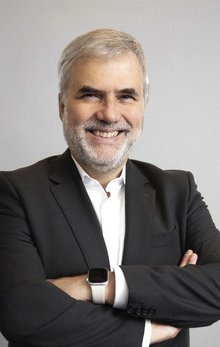
Agostinho Villela
VP of Technology
Felipe Leao
Head of Business Development Optical Networks - LATAM