How NVIDIA and SK Telecom are Growing AI Computing Capacity
NVIDIA and SK Telecom are bringing data centre infrastructure to the forefront of their AI ambitions through plans for a gigawatt-scale AI Cloud in South Korea.
Powered by NVIDIA’s DSX platform, the project will support the development of AI factories capable of handling AI training, inference and enterprise workloads.
It will also expand the country’s computing capacity for future AI services.
The first AI factory is expected to come online in 2027 as part of a broader strategy to support organisations across South Korea and the wider Asian market.
As demand for computing resources continues to rise, data centres sit at the heart of national and enterprise AI strategies.

AI clouds place data centres at the centre of growth
The partnership arrives as investment in AI infrastructure accelerates.
Organisations are seeking facilities capable of supporting large-scale AI processing, creating demand for purpose-built environments that differ from traditional cloud platforms.
According to NVIDIA, AI Clouds are designed specifically for AI workloads and rely on GPU-based infrastructure optimised for AI applications.
SK Telecom plans to use the platform to provide sovereign AI services and enterprise AI applications across multiple industries in South Korea.
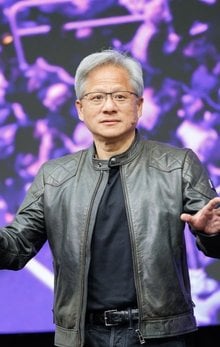
“Telecom networks are becoming national AI infrastructure,” says Jensen Huang, Founder and CEO of NVIDIA.
“They connect people, companies, devices and machines – and now they can become the backbone of new AI clouds.
“With NVIDIA DSX, SK Telecom can build Korea’s AI cloud at scale and bring agents, enterprise and physical AI to the companies and industries that power Korea and the world.”
Full-stack infrastructure from chips to operations
The project supports SK Telecom’s ambition to strengthen its position across the AI infrastructure stack.
The company says it secures capabilities spanning processors, memory and data centre operations, giving it greater control over the components required to build and operate AI environments.
“Through our close partnership with NVIDIA, we have now secured full-stack AI infrastructure capabilities, from chips to data center operations,” says Chey Tae-won, Chairman of SK Group.
“We will work with NVIDIA to tackle GPU, memory and energy challenges and become a leading AI factory player shaping Asia’s AI ecosystem.”
As gigawatt-scale projects emerge, balancing computing performance with energy consumption is a critical operational challenge.
Expanding AI factory and data centre capabilities
The agreement builds on a series of AI initiatives already underway within SK Telecom and the wider SK Group ecosystem.
SK Telecom works with digital twins and NVIDIA Omniverse technology to model semiconductor manufacturing facilities operated by SK hynix.
Such projects show how simulation technologies can support planning and operational efficiency across complex industrial environments.
Earlier this year, SK Telecom also adopted open-source NVIDIA Nemotron datasets to help train its A.X K1 model as part of South Korea's Sovereign AI Foundation Model Project.

Under the latest agreement, the company joins NVIDIA’s Cloud Partner programme, gaining access to AI infrastructure and development resources.
This provides a pathway to deploy new services while supporting the expansion of AI-focused data centre environments.
The partnership extends beyond deployment.
NVIDIA and SK Group also plan to jointly research next-generation AI factory architectures, with work focusing on accelerated computing and data centre operations.
The initiative illustrates how AI demand is reshaping infrastructure investment for the data centre sector.
Facilities are increasingly designed around high-performance computing requirements, while operators seek greater integration across hardware, software and operational management.
The planned AI Cloud and AI factories place data centre infrastructure at the centre of SK Telecom’s strategy as it expands its role in the AI economy.
Company portals


Executives
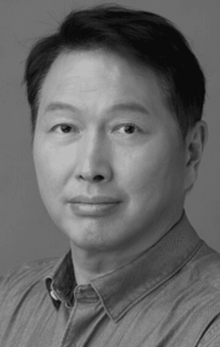
Chey Tae-won
Chairman
Jensen Huang
Founder and CEO