
Ecolab: Water and Sustainability Key to Data Centre Strategy
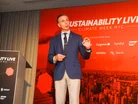
Sustainability is no longer an optional add-on for data centre operators. It now sits at the core of strategy, driving growth and shaping operational priorities.
For Emilio Tenuta, Chief Sustainability Officer at global water and hygiene solutions provider Ecolab, this evolution is long overdue.
After more than 40 years with Ecolab – including 16 years in sustainability leadership – Emilio has seen corporate thinking shift decisively.
"The biggest shift I've seen is that sustainability has moved from the sidelines to the centre of the business strategy," he says.
This change is most evident in how businesses manage resources.
Water, once viewed as an abundant utility, is now recognised as a critical business dependency and growing risk.
With forecasts pointing to a 56% global freshwater shortfall by 2030, the challenge is now strategic.
- Ecolab’s 2024 Growth & Impact Report demonstrates how the company’s sustainability expertise has produced outstanding results for partners across industries and continents
- In 2024, it helped its customers conserve 226 billion gallons of water
- Its hygiene and food safety programmes protected 1.7 billion people from foodborne illnesses and infections
- The company’s climate-driven solutions enabled customers to avoid 4.6 million tons of greenhouse gas emissions
- Since 2019, the report says Ecolab’s science-based and digital solutions have delivered US$9.1bn in cumulative value through efficiency, risk reduction and sustainable growth
Water risk is a business issue
"Water is the number one physical risk that companies will face in the changing climate," says Emilio.
The scale of the issue requires companies to reduce their dependence on water and use it more intelligently.
He adds: “There's more pressure than ever on businesses to reduce water use. And water is a critical resource and dependency; every part of our global economy requires water to produce the goods and services that we enjoy today.”
Ecolab’s approach tackles the problem directly. Its smart water management tools and nature-based solutions aim to make businesses more resilient, while also lowering costs.
Emilio says: “We help them do more with less. If you use less water, you're less vulnerable to climate change. But at the same time, if you use less water, you also use less energy because water requires heating, cooling and pumping.”

One such tool is Ecolab’s Smart Water Navigator, which helps companies assess water-related risks, set location-specific goals and track progress.
A new AI-enabled version is planned for 2026, building on existing smart tools already in use.
Digital technology plays a central role. Ecolab’s 3D TRASAR Technology enables real-time monitoring of water systems.
For data centres, where cooling is essential, this is particularly important. Direct-to-chip liquid cooling systems using this tech optimise cooling, protect servers and lower environmental impact.
"The biggest shift I've seen is that sustainability has moved from the side lines to the centre of the business strategy"
The company is also piloting an artificial intelligence-powered water efficiency solution with Digital Realty, one of the world’s largest data centre providers.
The collaboration focuses on boosting water efficiency, strengthening operational resilience and minimising environmental impact.
Emilio says: “We see the effects of climate change impacting areas around the world and it is imperative to continue to innovate and to use the technology already on the shelf.
"Now, it's really a matter of enabling that technology with the growth of AI.”
Embedding sustainability in strategy
Ecolab’s business model shows how embedding sustainability delivers business value. In 2024 alone, it helps customers conserve 226 billion gallons of water, protect 1.7 billion people through hygiene and food safety, and avoid 4.6 million tonnes of greenhouse gas emissions.
Its 2024 Growth & Impact Report outlines how its digital and science-based tools have delivered US$9.1bn in cumulative value since 2019.
These benefits come through improved resource efficiency, reduced risk and long-term sustainable growth.
"Value creation is the primary aim of every business, and value drives growth," says Emilio.
“What I value and love most about my role is helping companies unlock growth by managing resources more intelligently, especially water. It's incredibly rewarding to see how smart water resource management drives business growth and a broader impact in the world.”
To achieve this, sustainability must be treated as a strategic priority – not simply a reputational issue.
Emilio is clear: "Sustainability needs to be aligned with the business strategy and it is now more than ever reaching the boardroom.”
This shift has changed the expectations placed on sustainability leaders. No longer environmental stewards on the fringes, they are now central to strategic planning.
Emilio adds: “Resource efficiency improvements, risk mitigation benefits and innovation opportunities provide concrete evidence of programme effectiveness. These metrics enable sustainability leaders to secure continued investment and organisational support.”
Ecolab’s solutions, many of which are digital, enable businesses to measure these impacts clearly, helping them make the case for sustainability within their own organisations.
Collaboration and the circular water future
The scale of water stress demands collective action. "We can't do it alone," Emilio says.
Ecolab plays a leading role in several initiatives designed to accelerate water resilience across sectors and regions.
In 2020, it co-founded the Water Resilience Coalition, working with the UN to focus on high-risk water basins.
In 2023, Ecolab also helped create the California Water Resilience Initiative, bringing together businesses to support a more secure water future for the state.
Alongside major corporations like Microsoft, Gap Inc and Starbucks, Ecolab contributes to WaterEquity’s Water & Climate Resilience Fund, which aims to improve water and sanitation access for 15 million people, with more than US$100m already invested.
This broader mindset also applies to operations. Emilio describes the old way of water use as “flush and forget”.
He believes that the mindset must change to what he calls circular water strategies – capturing, treating and reusing water within a facility.
This shift requires redesigning processes, but brings business resilience and environmental gains.
He adds: "We need to rethink the water cycle and view water as a strategic asset, not as a liability.”
Circular water strategies reduce water use, lower regulatory compliance costs and support long-term business reliability in a resource-constrained world.
They also enable businesses to move from reactive to proactive water management, particularly as AI and smart tools become more embedded.
Emilio is now entering his fifth decade at Ecolab, and his motivation remains unchanged.
“I love getting up every morning knowing that we are driving business growth and community resilience while making a real impact on the planet at the same time.”
For business leaders facing mounting water risks and climate pressures, that impact is no longer optional – it’s a strategic necessity.
Company portals

Executives

Emilio Tenuta
Senior Vice President and Chief Sustainability Officer at Ecolab