This Week's Top 5 Stories in the Data Centre Industry
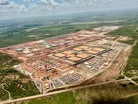
Tata Communications has joined forces with Amazon Web Services (AWS) to deliver one of India’s most advanced long-distance networks, tailored to meet the infrastructure demands of AI, high performance computing (HPC) and cloud workloads.
The national backbone connects AWS’ core data centre regions in Mumbai, Hyderabad and Chennai, creating an AI-optimised foundation for compute-intensive applications.
As India’s public and private sectors invest in digital transformation, cloud and AI, demand for high-powered systems is accelerating. This collaboration between Tata and AWS aims to meet that demand by providing high-capacity, low-latency connectivity between data centres at a hyperscale level.
It represents Tata Communications’ largest ever network project in India by both size and bandwidth.
Armada, a US-based hyperscale edge data centre company, has announced a US$131 million strategic funding round alongside the launch of Leviathan, its largest modular data centre (MDC) unit to date.
Designed for megawatt-scale performance, Leviathan extends Armada’s Galleon product line and can be deployed rapidly in remote or infrastructure-limited environments.
With investment from new strategic partners including Pinegrove, Veriten and Glade Brook, and returning backing from Founders Fund, Lux Capital and Microsoft’s venture arm M12, the new round underscores growing interest in decentralised AI infrastructure.
The ruggedised Leviathan MDC unit is designed to meet mounting demand for scalable, flexible data centres capable of supporting compute-intensive workloads at the edge.

OpenAI has announced a major partnership with Oracle to expand its AI-focused Stargate data centre programme, adding 4.5 gigawatts (GW) of new compute capacity.
The deal is one of the largest AI infrastructure buildouts to date, supporting the scale of training and deploying large language models (LLMs) while addressing the industry's demand for high-performance data centre infrastructure.
First launched in early 2024, Stargate is OpenAI’s response to the shortage of compute power facing the AI sector. Building and operating frontier AI models requires sustained use of thousands of high-density chips, with data centre facilities built specifically for this purpose.
OpenAI’s first Stargate facility is already under construction in Abilene, Texas. Combined with the Oracle-backed expansion, the company is on track to surpass 5GW in total capacity, supporting more than two million AI-specialised chips.
This latest project moves OpenAI closer to its public goal of investing US$500bn in 10GW of US-based AI infrastructure over four years.
CyrusOne is rolling out its Intelliscale data centre platform to address the sharp rise in power and infrastructure requirements driven by AI and high-density computing.
The company says Intelliscale is engineered to meet rack densities of up to 300 kilowatts (kW), offering a compact, scalable design that uses a fraction of the space of conventional facilities.
With growing enterprise demand for AI model training and deployment, traditional data centres are increasingly unfit for purpose.
This density shift introduces not only space challenges but also thermal loads that legacy cooling systems cannot handle.
Vertiv has appointed Wei Shen as President of Greater China, a key leadership move as the company strengthens its position in the region’s fast-growing data centre infrastructure market.
The appointment reflects Vertiv’s focus on scaling operations in one of the most strategically important regions for global digital infrastructure.
Wei brings nearly a decade of experience from Gates Corporation, where he served as Vice President and General Manager for Greater China.
Prior to that, he held several senior roles at Eaton Electrical, including responsibility for distributed power quality across APAC and wider sales operations.