
Trane Technologies: Energy Optimisation in AI Data Centres

The rapid expansion of AI infrastructure is placing unprecedented pressure on data centre design, forcing operators to rethink how facilities consume, manage and optimise energy. As compute density rises and workloads fluctuate unpredictably, energy optimisation has become a defining factor in long-term viability.
From advanced thermal management to predictive AI controls, the industry is shifting towards integrated, ecosystem-wide approaches that align performance with sustainability. At the centre of this transformation are collaborations between technology providers, researchers and infrastructure specialists like Trane Technologies, working to address the growing complexity of modern data centres.

AI growth intensifies energy optimisation demands
The scale and pace of AI adoption are reshaping the operational realities of data centres. Facilities are now among the most energy-intensive assets in the digital economy, driven by high-density compute environments and increasingly dynamic workloads.
Mauro J. Atalla, Senior Vice President and Chief Technology and Sustainability Officer at Trane Technologies, says: “The AI-enabled economy is accelerating at a breakneck pace, but its ultimate speed limit won't be dictated by software; instead, it will be defined by the necessary physical infrastructure: power, cooling, water and space.”
This shift places energy optimisation at the centre of infrastructure planning. Rather than focusing solely on capacity expansion, operators must balance power consumption, cooling efficiency and resource utilisation. The challenge lies in managing these variables simultaneously while maintaining reliability and uptime.
At the same time, the industry is confronting the limits of traditional engineering approaches. AI-driven applications, from climate modelling to biomedical research, are introducing new requirements for thermal performance and energy efficiency that legacy systems are not designed to handle.
Strategic partnerships enable advanced thermal management
Addressing these challenges increasingly depends on collaboration across the data centre ecosystem. No single organisation has the expertise required to optimise energy use across power, cooling and digital infrastructure simultaneously.
Mauro highlights this shift towards collective innovation: “As Chief Technology and Sustainability Officer, I see first-hand that the future of data centres depends not just on isolated technological breakthroughs, but on deep, strategic industry partnerships.”
One example is Trane Technologies’ collaboration with NVIDIA, where combined expertise in HVAC engineering and digital simulation has produced new approaches to thermal management. By leveraging NVIDIA’s Omniverse platform, engineers can model and optimise cooling systems before deployment, reducing inefficiencies at the design stage.
These developments are already delivering measurable improvements. Enhanced thermal management reference designs have achieved close to a 10% increase in performance, freeing up significant cooling capacity for additional IT workloads without increasing overall energy consumption. A separate duplex design delivers higher efficiency through integrated heat recovery, demonstrating how optimisation can unlock both performance gains and sustainability benefits.

Bridging research and deployment through collaboration
One of the ongoing challenges in energy optimisation is translating research into deployable solutions. Emerging technologies must be tested and validated before they can be integrated into live environments, creating a gap between innovation and implementation.
Mauro highlights the importance of collaboration in closing this gap: “We must engineer solutions that can handle dynamic, high-density workloads while optimising energy management and power consumption, water usage and even acoustic profiles and noise generation.”
Partnerships with academic institutions and research programmes such as the US Department of Energy’s ARPA-E COOLERCHIPS initiative are helping to accelerate this process. These collaborations support the development of hybrid cooling systems and other advanced technologies that reduce both energy and water consumption.
Dr Dereje Agonafer, Distinguished Professor at the University of Texas at Arlington, underscores the need for stronger links between research and industry: “We need to have a better dialogue between academia and the industry. That’s really the way that our nation can succeed.”
Engineering for high-density and constrained environments
As rack power densities increase, data centre operators must design systems capable of handling more demanding thermal and energy profiles within constrained physical and environmental limits.
Mauro explains the complexity of this balancing act: “To deliver the infrastructure necessary to power this new era, we must engineer solutions that can handle dynamic, high-density workloads while optimising energy management and power consumption, water usage, and even acoustic profiles and noise generation.”
Energy optimisation in this context extends beyond reducing consumption. It involves aligning multiple variables, including cooling strategies, power distribution and facility footprint, to ensure efficient operation under varying conditions.
This approach also reflects a broader industry realisation that sustainability and efficiency are intrinsically linked. Reducing energy is both an environmental objective and a practical requirement for scaling AI infrastructure within existing resource constraints.
AI-driven controls transform real-time energy efficiency
While physical infrastructure remains critical, software and control systems are playing an increasingly central role in energy optimisation. AI-driven tools are enabling real-time adjustments that align cooling and power usage with actual demand.
Hillary Gray, Director of Innovation at Trane Technologies, emphasises the urgency of this shift: “The conversation around sustainable data centres has shifted. It’s no longer about whether we should optimise data centre performance – it’s about how quickly we can deploy smarter, more sustainable solutions.”
Research initiatives such as the Center for Energy-Smart Electronic Systems (ES2) are advancing these capabilities by developing predictive control systems and intelligent resource management tools. These technologies allow operators to forecast workloads, distribute computing efficiently and dynamically adjust cooling based on real-time conditions.
For example, advanced algorithms can determine the optimal number of active servers for a given workload, minimising energy waste while maintaining performance. At the same time, sensor-driven thermal controls continuously refine cooling strategies, improving efficiency without compromising reliability.
This integration of AI into operational decision-making represents a significant evolution in how data centres manage energy, shifting from static configurations to adaptive, responsive systems.
Liquid cooling and heat recovery redefine efficiency
Cooling remains one of the most energy-intensive aspects of data centre operations, making it a focal point for optimisation efforts. As traditional air-based systems reach their limits, liquid cooling technologies are emerging as a viable alternative for high-density environments.
Research into warm-water liquid cooling, immersion systems and two-phase cooling is enabling more efficient heat transfer while reducing overall energy consumption. These approaches are particularly suited to AI workloads, where concentrated heat generation requires more direct and effective cooling methods.
At the same time, waste heat recovery is gaining traction as a way to extend energy optimisation beyond the data centre itself. By capturing and repurposing excess thermal energy, operators can reduce overall energy loads and contribute to local energy systems.
Mauro points to a practical example: “Together with the developer and the local community, we designed a system using advanced Trane heat pumps that recovers virtually 100% of the facility's waste heat.”
This recovered energy can be redistributed through district heating networks, supporting residential and commercial needs while improving overall system efficiency. Such approaches position data centres not only as energy consumers but as active participants in broader energy ecosystems.
Integrating data centres into wider energy systems
The concept of energy optimisation is expanding beyond individual facilities to encompass entire energy networks. Data centres are increasingly being designed as integrated components of local and regional power systems, capable of interacting with renewable energy sources and grid infrastructure.
Mauro describes this evolving perspective: “Instead of viewing data centres solely as massive power consumers, engineers and policymakers are increasingly recognising them as integral parts of a larger energy ecosystem.”
This integration includes the development of microgrids, onsite power generation and advanced energy storage systems. By coordinating these elements, operators can improve resilience, reduce reliance on external power sources and optimise energy use across multiple layers of infrastructure.
Collaboration remains central to this process. Partnerships with energy providers, technology companies and research institutions enable the development of systems that balance performance, sustainability and cost. These efforts are particularly important as energy prices rise and regulatory pressures increase.
Company portals


Executives

Hillary Gray
Director of Innovation
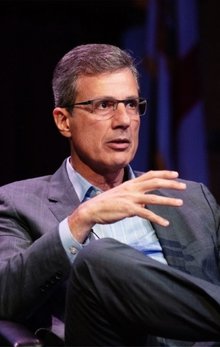
Mauro J. Atalla
SVP, Chief Technology & Sustainability Officer