Why Tesla’s AI CapEx Push Raises the Stakes for Data Centres
Tesla’s latest earnings call revealed a sharp shift in the company's capital allocation, with the California-based firm set to accelerate its investment in AI, robotics and energy systems, even as automotive revenues decline.
Elon Musk’s comments underline how compute infrastructure, power availability and chip manufacturing are becoming central to Tesla’s strategy.
Despite a second consecutive quarterly revenue decline and annual revenue slipping to US$94.8bn, Musk remains focused on long-term infrastructure buildout. Addressing investors on 28 January, he framed the transition as foundational rather than cyclical.
“We're making big investments for an epic future,” said Elon Musk, CEO at Tesla, during the Q&A call with investors on 28 January.
The scale of those investments has implications well beyond vehicles, particularly as Tesla expands its AI compute footprint and positions energy generation as a prerequisite for future data centre growth.
AI infrastructure takes priority
Tesla’s pivot is anchored in AI. Musk confirmed that production of the Model S and Model X at the California plant will be halted to make room for the manufacture of Tesla’s humanoid robot, Optimus. At the same time, Tesla’s affiliated AI company xAI is set to receive US$2bn in funding.
Musk reiterated that Tesla is advancing autonomy and has begun to “produce Optimus robots at scale”, signalling a sharp increase in demand for AI training and inference capacity.
That expansion places Tesla among the growing cohort of companies investing directly in large-scale compute rather than relying solely on third-party cloud providers.
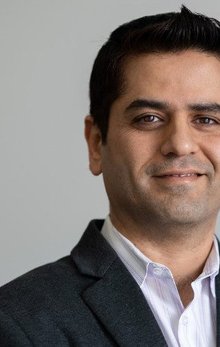
The company also expects margins to come under pressure as it transitions to a fully subscription-based Full Self-Driving model and faces intensified competition, particularly from China’s BYD, according to Vaibhav Taneja, Chief Financial Officer at Tesla.
Powering AI data centres with energy at scale
Energy infrastructure sits alongside compute as a core pillar of Tesla’s CapEx plans. Musk argued that energy generation is inseparable from AI expansion, particularly as data centres draw increasing amounts of power.
In his view, the “solar opportunity is underestimated”. He said: “We think the best way to add significant capability to the grid – lets say it is powering AI data centres – is solar and batteries on earth and solar in space. That's why we are going to work towards getting 100 gigawatts a year of solar cell production integrating across the entire supply chain from raw materials all the way to finished solar panels.”
The ambition positions Tesla not just as an energy storage supplier but as a vertically integrated solar manufacturer. Musk added that Tesla aims to become a “significant manufacturer of solar cells” alongside its “massive investments in AI”, driving further investment across battery supply chains.
Tesla’s CFO Vaibhav Taneja noted that despite 26.6% year-on-year growth in Tesla’s energy segment, the company expects “margin compression from the increased low cost competition, impacts to market from policy uncertainty and the cost of tariffs”.

Factories, compute and physical scale
Tesla expects 2026 to be a peak year for capital spending, with CapEx projected to exceed US$20bn. Vaibhav outlined plans to fund six major facilities, including a refinery, LFP factory, cybercab facility, Semi production, a new megafactory and a dedicated Optimus factory.
“We'll be paying for six factories, namely the refinery, LFP factory, cybercab, Semi, a new mega factory and the Optimus factory,” he said. “On top of it, we'll also be spending money for building our AI compute infrastructure and we'll continue investing in our existing factories to build more capacity and also the related infrastructure along with it and we'll also further expand our fleet of robotaxi and Optimus.”
The emphasis on in-house AI compute suggests Tesla will need resilient power, cooling and network capacity comparable to hyperscale facilities.
Chips as a limiting factor
Musk was explicit that semiconductor supply could become Tesla’s main bottleneck. He described chip development as the most critical near-term task.
“Completing the AI5 chip design and having it be a great chip is arguably the number-one most critical thing to get done, which is why I'm spending more time on that than currently anything else at Tesla,” he said.
He added that AI6 could follow less than a year later, but warned that manufacturing capacity remains a risk. Musk said Tesla may need to build a ‘TeraFab’ integrating logic, memory and packaging to avoid supply constraints.
“If we don't do that, we're just going to be fundamentally limited by supply chain,” he said, noting that geopolitical disruption could further exacerbate the issue.

Looking ahead, Musk identified China as Tesla’s strongest competitor, not only in electric vehicles but also in humanoid robotics.
“I do think that by far the biggest competition for humanoid robots will be from China,” he said. “China is incredibly good at scaling manufacturing. Actually, quite good at AI.”
Tesla’s ability to scale AI infrastructure and secure power and chips will shape how effectively it competes in that environment. Tesla’s strategy highlights how compute, energy and manufacturing are converging into a single industrial challenge.

Executives
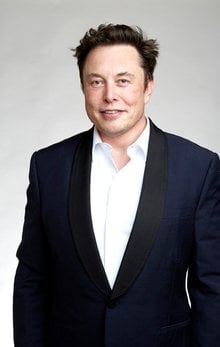
Elon Musk
Tesla CEO
Vaibhav Taneja
Chief Financial Officer