
Will Google’s Indian Ocean Cable Boost Colo Connectivity?
Google has announced Dhivaru, a new trans-Indian Ocean subsea cable system connecting the Maldives, Christmas Island and Oman.
The system forms part of the company’s wider Australia Connect initiative and is designed to enhance data-intensive services, including cloud platforms and AI workloads.
For operators in the Indian Ocean region, the cable and its accompanying connectivity hubs will increase access to diverse routes, reduce latency and add new options for local colocation and content delivery.

Bikash Koley, Vice President of Global Networking and Infrastructure at Google, says: “Reach, reliability and resilience are integral to the success of AI-driven services for our users and customers.
“Tremendous adoption of groundbreaking services such as Gemini 2.5 Flash Image (aka Nano Banana) and Vertex AI, mean resilient connectivity has never been more important for our users.
“The speed of AI adoption is also outpacing anyone’s predictions, and Google is investing to meet this long-term demand.”
Expanding subsea routes
Dhivaru takes its name from the rope that controls the mainsail on traditional Maldivian vessels, symbolising navigational skill and resilience.
The system will provide a new path across the Indian Ocean, increasing route variety for regional carriers and supporting more reliable data flows between Africa, the Middle East, South Asia and Oceania.
As part of the investment, Google will establish two new connectivity hubs in the Maldives and on Christmas Island. These hubs are positioned to serve countries whose data centre footprints are either emerging or constrained by geography, offering access to international capacity and local infrastructure in the same location.
His Excellency Dr Mohamed Muizzu, President of the Republic of Maldives, says: “Google’s decision to invest in the Maldives is a strong signal of confidence in our country’s stable and open investment environment, and a direct contribution to my vision for a diversified, inclusive and digitised Maldivian economy.
“As the world moves rapidly toward an era defined by digital transformation and artificial intelligence, this project reflects how the Maldives is positioning itself at the crossroads of global connectivity.”
Regional ecosystem growth
Local operators have highlighted the role the hubs will play in strengthening connectivity and expanding digital services.
Khalid Al Hamadi, CEO and MD of Ooredoo Maldives, says: “We are delighted to partner with Google on this landmark initiative to establish a new connectivity hub in the Maldives. This project represents a major step forward in strengthening the nation’s digital infrastructure and enabling the next wave of digital transformation.
“As a leading digital provider, Ooredoo Maldives continues to expand world-class connectivity and digital services nationwide.”
Ismail Rasheed, CEO and MD of Dhiraagu, adds: “Dhiraagu is committed to advancing the digital connectivity of the Maldives and empowering our people, communities and businesses.
“We are proud and excited to partner with Google on their expansion of subsea infrastructure and the establishment of a new connectivity hub in Addu City.”
What the hubs provide for operators
Connectivity hubs are designed around three functions: cable switching, content caching and colocation.
Cable switching allows traffic to be rerouted between multiple systems, improving resilience when faults occur. By locating hubs close to landing points, Google reduces the distance traffic travels before alternative paths become available, supporting consistent availability for digital services.
Content caching places popular content closer to users, reducing latency and improving application performance. Although caching is not unique to subsea hubs, positioning it within the region ensures faster access for carriers and enterprises that rely on consistent response times.

Colocation within the hubs gives local organisations access to shared rack space, which is valuable for markets where data centre infrastructure is limited or where smaller islands face cost and space constraints. While these facilities are not designed to operate at hyperscale, they provide foundational hosting capacity for regional carriers and service providers.
Energy considerations
Google notes that subsea cable systems require relatively little power compared with full data centres. Even so, the company is exploring opportunities to support local renewable energy generation where hub power demand is significant relative to local capacity.
The Dhivaru cable and new hubs give operators in the region additional options for connectivity and local hosting as traffic and compute demands increase.
Google plans to announce further subsea systems and hub locations as part of its long-term infrastructure strategy.
Company portals



Executives
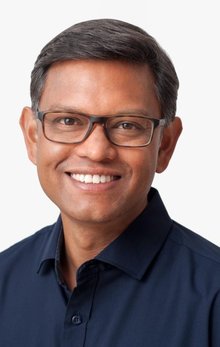
Bikash Koley
Vice President, Global Infrastructure and Capacity
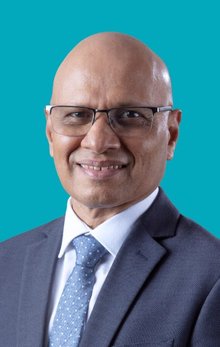
Ismail Rasheed
CEO & MD
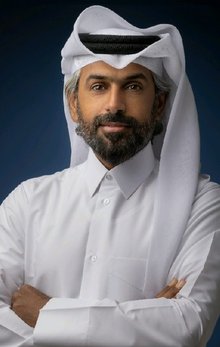
Khalid Al-Hamadi
CEO & MD