
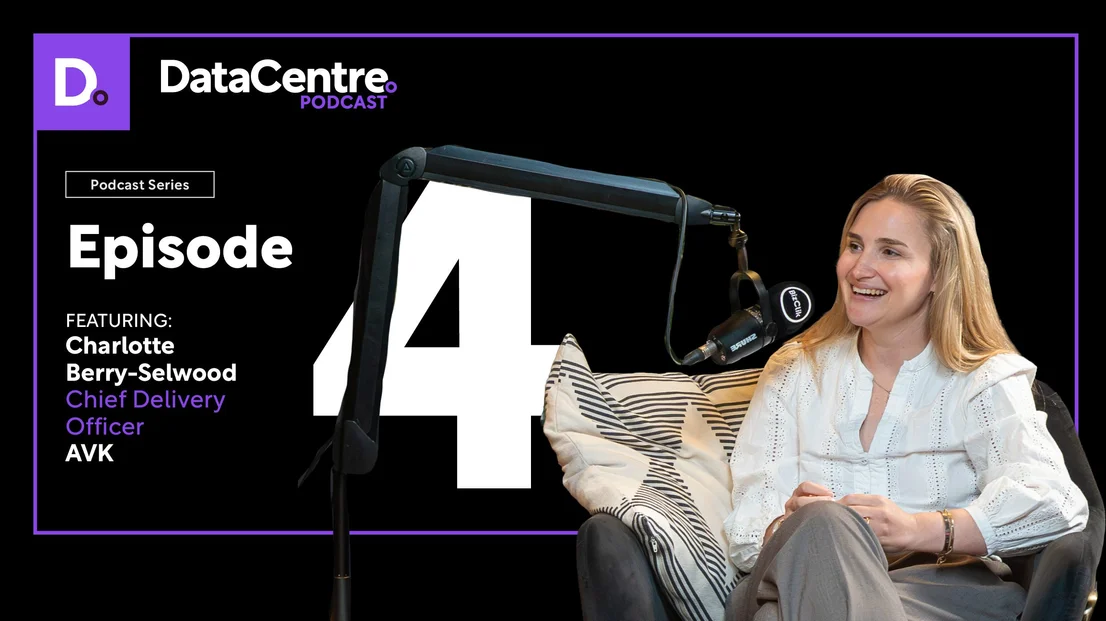
Ep. 4 | Charlotte Berry-Selwood on Diversity and Talent
Related Podcasts
Data centres have a talent problem, and Charlotte Berry-Selwood thinks the industry hasn't been looking widely enough to solve it.
In this episode of the Data Centre Podcast, host Ella Wilkinson sits down with Charlotte, Chief Delivery Officer at AVK, for a wide-ranging conversation about engineering leadership, diversity and what it will actually take to attract the next generation into digital infrastructure. Charlotte co-founded the Forum for Women in Data Centres (FWD), speaks at conferences despite admitting she doesn't enjoy public speaking, and has spent 15 years navigating a male-dominated industry with the kind of calm, fact-based approach she'd recommend to anyone coming up behind her.
🎧 To listen and subscribe on Spotify click here
▶️ To listen and watch on YouTube click here
In this episode we explore:
- Why engineering is a creative career – and why the industry is terrible at saying so
- How the Forum for Women in Data Centres grew from a drinks event into a mentoring and wellbeing community
- Why Charlotte makes the diversity case with commercial data, not moral arguments
- How to handle bias, dismissiveness and aggressive rooms without losing your composure
- Why the industry needs to get into schools before it's too late
From civil engineering to data centre leadership
Charlotte didn't set out to work in data centres. She graduated into the GFC, relocated to Australia for work, and found her way into project management almost by accident.
The first project that landed her in a data centre was enough – she could see which way the world was heading and never really looked back.
Today, as Chief Delivery Officer at AVK, she oversees the technical and commercial delivery of critical power solutions at a moment when power has become the defining challenge for the entire industry.
Why engineering needs more diverse thinkers
Charlotte challenges the idea that engineering isn't creative. Actually, she argues, it is all about creative problem solving – and young people who consider themselves creative but rule out STEM subjects are making a decision based on outdated assumptions.
Her broader advice is to look at your values first, understand what different careers actually involve day to day and never rule something out before you've investigated it properly.
Careers advice, she says bluntly, is extremely limited and the industry needs to do a better job of filling that gap.
Building the Forum for Women in Data Centres
The FWD started, by Charlotte's own account, as a group of senior women in the industry who were tired of being invited to golf days and wanted a drinks event that was actually for them.
That informal gathering has since grown into a community of around 10 volunteers running roughly 10 events a year: networking, mentoring, leadership panels and – in one memorable case – putting male executives in vests that simulate the effects of menopause and putting them on stage.
The point was serious: policymakers making decisions about staff wellbeing need to understand experiences they've never had. It’s all about retention, says Charlotte, explaining that if you support people through difficult life stages, they stay.
Diversity as a business strategy
Charlotte makes the diversity case on both moral and commercial grounds. Diverse leadership teams are statistically more likely to outperform, and the industry has a talent shortage that isn't going away.
Widening the pool – including by targeting a demographic that makes up 50% of the population but a fraction of the workforce – is just good business.
She's direct about it, too: if you want people to act, speak to their commercial interests rather than their personal values. Linking diversity to business success is what makes people take it seriously.
Leading with confidence
Charlotte is candid about what it was like coming up as a young female project manager, constantly having to prove herself before anyone would listen, navigating dismissiveness that her male counterparts simply didn't face.
Her advice for handling it hasn't changed: stay calm, trade facts not opinions, and never let someone else's behaviour shake your belief that you're there on merit.
She's equally direct about asking for help. She does it every day, considers it a strength and would be more concerned about someone who didn't.
If the behaviour is persistent, report it. And if the organisation isn't supporting you, reach out to communities like FWD, she says, stating in no uncertain terms that help is the most powerful word in your arsenal.
Subscribe and listen
Episode 4 is brought to you by Data Centre Magazine.
Catch up on Episode 3 now, and hear DXC’s Richard Wilkinson dive into AI at scale, data sovereignty and what quantum computing means for the future of data centres.
Company portals

Executives

Charlotte Berry-Selwood
Chief Delivery Officer (CDO)