Top 10: Strategies for Data Centre Consolidation
As demand for digital infrastructure surges, leading organisations are consolidating data centres to boost efficiency and minimise costs while advancing sustainability goals.
Modern strategies blend physical site rationalisation with technology upgrades, hybrid cloud adoption and more – helping streamline operations and unlock new value.
This week’s Top 10 explores some of the crucial consolidation strategies from innovative industry leaders, in association with Honeywell.
10. Physical infrastructure audit and rationalisation

- Case study: A UK telco (Bell Integration)
- CEO: Manpreet Gill
- Year founded: 1996
- Based: UK
Physical infrastructure audit and rationalisation are foundational steps that enable operators to execute efficient data centre consolidation strategies by providing a detailed understanding of existing assets, supporting cost reduction and identifying optimisation opportunities.
Bell Integration led a telecom giant through a complete physical and logical audit of its racks, uncovering "zombie" servers and racks with poor utilisation.
The result: decommissioning 99 assets and returning 35 racks for resale, saving more than £1m (US$1.3m) annually and releasing commercial opportunity, all completed in just five months during restrictive conditions.
9. Centralised management with DCIM
- Case study: Five9 (Sunbird)
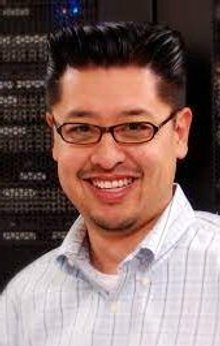
- CEO: Herman Chan
- Year founded: 2015
- Based: USA
Managing a dense, consolidated environment is impossible with siloed tools and spreadsheets.
Implementing data centre infrastructure management (DCIM) software creates a "single source of truth" to manage the entire stack, from assets and power to connectivity.
Cloud contact centre provider Five9 uses Sunbird DCIM to gain a holistic view of its mission-critical infrastructure.
This allows the company to move beyond fragmented tools, reduce operational inefficiency and make faster, data-driven decisions about capacity planning and resource allocation in its consolidated environment.
8. Server virtualisation
- Case study: A financial services group (Harvard Partners)
- CEO: Matthew Ferm (Founder and Managing Partner)
- Year founded: 2009
- Based: USA
Server virtualisation enables data centre consolidation by allowing multiple virtual servers to run on a single physical server, increasing resource utilisation and reducing the number of physical servers required.
This results in lower hardware, power and cooling costs, a smaller physical footprint and simplified management.
By virtualising thousands of Windows and UNIX servers, a financial services firm elevated utilisation rates from 13% up to more than 70%, reducing physical server count from 13,000 to 6,000 and repurposing more than 150 legacy data centres by collaborating with Harvard Partners.
7. Strategic decommissioning and asset disposition
- Case study: A US financial firm (CentricsIT)
- CEO: Derek Odegard
- Year founded: 2007
- Based: USA
A consolidation project is not complete until legacy hardware is properly retired.
This final step involves a systematic and secure process for decommissioning servers and storage to recover value and ensure compliance.
For a major financial firm with 27,000 employees, a full data centre closure required CentricsIT to not only unrack thousands of assets but also shred more than 2,000 drives on-site.
For regulated industries, this demonstrates that auditable data destruction and certified disposal are critical risk management functions, not just a clean-up job.
6. Cost and energy reduction initiatives
- Case study: A large banking corporation (Cambridge MC)
- CEO: Tim Passingham (Chairman)
- Year founded: 2015
- Based: UK
Data centre operators should prioritise cost and energy reduction initiatives when pursuing consolidation strategies because these are core drivers of both immediate and long-term benefits, directly impacting operational expenses, organisational sustainability and overall competitiveness.
By consolidating facilities and embracing efficiency at all locations, data centre operators can streamline operational costs and avoid underutilisation.
Cambridge MC helped a bank halve its data centre operating costs and drastically improve energy efficiency through estate consolidation and cloud alignment, with flagship locations now operating closer to target utilisation.
5. Data centre M&A and network integration
- Case study: ESR Group's APAC expansion
- CEO: Diarmid Massey (CEO, Data Centres)
- Year founded: 2016
- Based: Singapore
Data centre mergers and acquisitions taken alongside network integration are leading consolidation strategies because they deliver immediate financial benefits, operational efficiencies and technological advantages, while positioning organisations for growth in a competitive, sustainability-conscious market.
ESR Group’s acquisition strategy positioned it as a leader in APAC data centre consolidation, merging networks and expanding capacity to support cloud and hyperscaler clients across 18 major projects, including pivotal Australian and Japanese builds.
4. Hybrid cloud adoption
- Case study: Nationwide Building Society (HPE)
- CEO: Antonio Neri (HPE)
- Year founded: 2015
- Based: USA
The move away from single-provider cloud infrastructure towards multicloud models is gaining traction amid regulatory scrutiny over market concentration.
Cost control, sovereignty and operational resilience are now driving infrastructure strategies in data centres across the world.
Nationwide Building Society selected Hewlett Packard Enterprise's (HPE) GreenLake cloud platform that provides pay-per-use IT resources, combining on-premises and cloud benefits, for its private cloud deployment, aiming to accelerate its hybrid cloud strategy and enhance its ability to meet the changing needs of its customers.
3. Geographic optimisation

- Case study: RR Donnelley (Ensono)
- CEO: Tom Quinlan (RRD), Jeff VonDeylen (Ensono)
- Year founded: 1864 (RRD), 1969 (Ensono)
- Based: USA
For data centre operators, location is a crucial consideration to consider.
Factors like proximity to power and water, taken alongside climate, local governance and other geopolitical factors have a tremendous impact on data centres – so optimisation for geography is key.
Ensono helped RR Donnelley rapidly consolidate and refactor its data centre footprint, optimising locations to enable faster spinoff and seamless retail support ahead of key holidays, minimising disruption through pinpoint execution and raising five data centres in the process.
2. Automated management, monitoring and optimisation

- Case study: IBM Turbonomic data centre solution
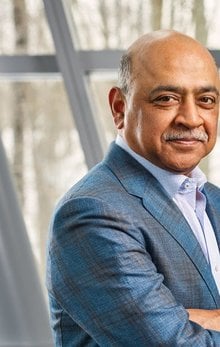
- CEO: Arvind Krishna
- Year founded: 1911
- Based: USA
IBM’s automated monitoring tools allowed clients to dynamically manage energy, cooling and compute resources across consolidated estates in 2025.
With real-time dashboards, clients detected inefficiencies and acted swiftly without risking uptime, driving global site optimisation.
Used by companies like Samsung, IBM and BBC Studios, IBM's solution helps customers spanning multiple industries ensure application performance, resource optimisation and cost reductions.
1. Strategic partnerships for sustainability
- Case study: Madrid campus (DAMAC Digital)
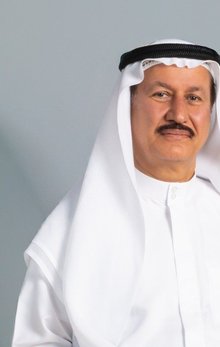
- CEO: Hussain Sajwani (Founder and Chairman of DAMAC Group)
- Year founded: 1982
- Based: UAE
In a context of escalating demands from AI workloads, data centre operators must balance increased output with sustainability. Strategic partnerships are helping unlock greener data centres worldwide.
DAMAC Digital’s 40-megawatt Madrid campus, acquired from ActivumSG for 2026 operations, targets both hyperscalers and enterprises.
“DAMAC is strategically positioning itself in the European market by developing state-of-the-art data centres that meet the rigorous, high-capacity needs of major hyperscalers,” Tarun Tyagi, Senior Vice President of DAMAC Properties, tells Data Centre Magazine.
“Our facilities are designed to provide the scalability, reliability and security that hyperscalers require, with an emphasis on adopting the latest in energy-efficient technologies and network architectures.”
Strategic location considerations extend beyond traditional connectivity metrics to encompass energy security and sustainability mandates.
Company portals






Executives
Antonio Neri
President & CEO
Arvind Krishna
CEO
Derek Odegard
CEO

Diarmid Massey
CEO, Data Centres, ESR Group
Herman Chan
President and CEO
Hussain Sajwani
Founder

Jeff VonDeylen
CEO

Manpreet Gill
Chief Executive Officer - Systems integrator
Matthew Ferm
Managing Partner

Tim Passingham
Chairman