BlackRock Invests US$100m in the AI Infrastructure Workforce

BlackRock has announced a US$100m investment aimed at strengthening the workforce that supports the expansion of infrastructure across the US, including data centres.
The programme, called the BlackRock Future Builders Initiative, targets skilled trades at a time when demand for workers continues to rise alongside the rapid construction of AI infrastructure.
Through the programme, funds reach non-profit organisations and workforce development partners across the country, with the goal of supporting 50,000 workers during the next five years.
As investment in AI infrastructure grows, the availability of electricians, technicians and construction specialist workers becomes an increasingly important factor in how quickly facilities can be built and operated.
Larry Fink, CEO of BlackRock, announced the initiative, saying: “Throughout our history, tradespeople have built our country.

“America needs an estimated US$10tn in infrastructure investment by 2033 to modernise ageing systems and build new energy, digital and AI infrastructure.
“Capital alone is not enough – people are central to building our nation’s future.”
Building the workforce behind data centres
The BlackRock Future Builders Initiative connects workers with training pathways that lead into skilled trades. These roles support construction, installation and operation of infrastructure projects including energy systems, telco networks and data centres.
BlackRock states that the initiative supports several stages of workforce development. The programme funds pre-apprenticeship access, while also helping workers complete training and supports professional licensure.
It also includes financial literacy education designed to help workers manage income and long-term financial planning.
Additional phases of the initiative will roll out across 2026, expanding the programme’s reach to new training partners and regions.
BlackRock notes that employment in infrastructure-related skilled trades in the US is expected to grow by more than 5%, a rate which exceeds the average projected employment growth of around 3%.
This growth is linked closely to the expansion of digital infrastructure. As organisations increase investment in AI systems, new facilities require electrical installations, cooling systems, network connectivity and mechanical equipment, all of which depend on specialised trade skills.
Data centre construction accelerates
As facilities supporting AI workloads require large-scale construction and complex engineering systems, the need for skilled workers is particularly clear in the data centre sector.
Industry projections show that hyperscale technology companies plan to spend between US$630bn and US$700bn on combined capital expenditure to expand AI infrastructure.
Such spending translates directly into construction projects and equipment installation across the US and other markets. BlackRock states that matching the speed of demand for skilled workers “is essential to enabling the next phase of economic growth.”
The Future Builders Initiative forms part of BlackRock’s broader philanthropic activity. Since 2020 the company has committed US$354m to programmes focused on economic opportunity and education.
These programmes already support training initiatives that upskill around 250,000 people across the US and Europe.
Tech leaders highlight labour shortages
Concerns about workforce shortages extend across the technology sector. Companies building AI infrastructure repeatedly highlight the challenge of finding enough skilled labour to support the pace of development.
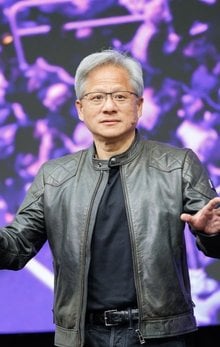
Jensen Huang, CEO of NVIDIA, addressed the scale of the buildout in a company blog post, saying the development of AI infrastructure is “becoming the largest infrastructure buildout in human history.”
He also emphasised the wide range of trades required to construct and operate AI facilities, saying: “The labour required to support this buildout is enormous. AI factories need electricians, plumbers, pipefitters, steelworkers, network technicians, installers and operators.
“These are skilled, well-paid jobs, and they are in short supply. You do not need a PhD in computer science to participate in this transformation.”
Jensen has previously described AI infrastructure as an every-day resource as it scales. Speaking at the World Economic Forum, he said: “I really believe that every country should get involved to build AI infrastructure, build your own AI, take advantage of your fundamental natural resources which is your language and culture and have your national intelligence be part of your ecosystem.”


Executives
Jensen Huang
Founder and CEO
Larry Fink
Chairman and Chief Executive Officer