Cadence Adds Nvidia DGX SuperPOD to Digital Twin Platform
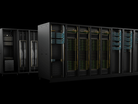
Cadence has added Nvidia’s DGX SuperPOD with DGX GB200 systems to its Reality Digital Twin Platform library as Goldman Sachs forecasts AI will push data centre power demand up 165% by 2030.
The new digital twin lets data centre designers model AI factories before they build them. Users can test different configurations against power, cooling, space and cost constraints without touching physical hardware.
“Rapidly scaling AI requires confidence that you can meet your design requirements with the target equipment and utilities,” says Michael Jackson, SVP of System Design and Analysis at Cadence. “With the addition of a digital model of Nvidia's DGX SuperPOD with DGX GB200 systems to our Cadence Reality Digital Twin Platform library, designers can model behaviorally accurate simulations of some of the most powerful accelerated systems in the world, reducing design time and improving decision-making accuracy for mission-critical projects.”
The platform works by letting engineers drag and drop digital equipment models into virtual data centres. Each model behaves like its physical counterpart, so designers can spot problems before construction starts.
Nvidia Grace Blackwell systems join 14,000-item library
Cadence’s library now holds over 14,000 items from 750-plus vendors. The company says it covers all standard data centre equipment, and will create missing items on request through its support service.
Nvidia’s DGX SuperPOD with GB200 systems represents some of the most power-hungry AI hardware available. Data centre operators need to know exactly how these systems will behave in their facilities before they commit to multimillion-pound installations.
Engineers can run failure scenarios with a few clicks. They can also test upgrade paths and see how changes affect the entire facility. Once data centres go live, the same platform tracks performance as equipment ages and workloads change.
Tim Costa, General Manager of Industrial and Computational Engineering at Nvidia, says: “Creating the digital twin of our DGX SuperPOD with DGX GB200 systems is an important step in enabling the ecosystem to accelerate AI factory buildouts.
“This step in our ongoing collaboration with Cadence fills a crucial need as the pace of the innovation increases and time-to-service shrinks.”
Cadence and Nvidia deepen data centre collaboration
The DGX SuperPOD addition builds on work the two companies started earlier this year. Cadence's platform already supports Nvidia’s Omniverse blueprint for AI factory design and operations.
Both companies are pushing to make data centre design faster and more accurate. The old approach meant working from spreadsheets and best guesses. Digital twins let engineers see exactly how systems will perform before they order equipment.

The collaboration makes sense for both sides. Nvidia gets its latest hardware into design tools that engineers actually use. Cadence gets access to cutting-edge systems that its customers want to deploy.
Michael explains: “Designers can model behaviorally accurate simulations of some of the most powerful accelerated systems in the world, reducing design time and improving decision-making accuracy for mission-critical projects.”
AI infrastructure summit highlights platform capabilities
Data centre operators are scrambling to deploy AI infrastructure, but many lack the tools to model complex systems accurately. The company's platform promises to bridge that gap.
Digital twins matter more as AI hardware gets more complex. The Nvidia Grace Blackwell architecture packs enormous compute power into dense configurations. Getting the cooling, power delivery and networking right requires precision that traditional design methods cannot provide.
- Goldman Sachs projects AI will drive 165% increase in data centre power demand by 2030
- Cadence Reality Digital Twin Platform library contains over 14,000 items from 750-plus vendors
- Platform allows engineers to model entire data centres before physical implementation begins
The market opportunity is substantial. Every hyperscaler, cloud provider and enterprise building AI capabilities needs to solve the same infrastructure puzzle. They need to deploy the most advanced hardware available while staying within power, space and budget constraints.
Tim frames the challenge in terms of speed and accuracy: “This step in our ongoing collaboration with Cadence fills a crucial need as the pace of the innovation increases and time-to-service shrinks.”