Can Infinium EdgeSites Enable a New Wave of AI Data Centres?
Infinium Edge, an Infinium subsidiary, believes the next generation of AI capacity could come from buildings that already exist.
The company has launched Infinium EdgeSites, a programme that converts commercial and industrial facilities into AI-ready data centres using factory-built immersion cooling systems.
Instead of constructing new campuses, the company's focus is on deploying modular infrastructure inside powered buildings with unused electrical capacity, bringing new AI compute online in months instead of years.
While not an entirely new concept, the project may mark an incoming sustainability trend. For example, Nscale's Start Campus in Sines was developed from a pre-existing industrial site.

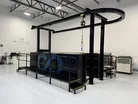
At the heart of Infinium Edge's initiative is Vector ONE, Infinium's factory-built immersion cooling platform.
Each unit delivers 1MW of AI compute capacity and can be deployed indoors or outdoors without requiring a municipal water connection, allowing buildings that were never designed as data centres to host high-density GPU infrastructure.
Reusing power already on the grid
EdgeSites is built around a simple premise: much of the electrical capacity needed for AI infrastructure is already available.
Infinium cites industry research showing that more than 20 million commercial and industrial electricity customers in the US are connected to electrical infrastructure sized for peak demand, yet that capacity is typically only utilised at between 40% and 60%.
By tapping into this spare headroom behind the meter, the company aims to avoid the lengthy utility interconnection queues that have become one of the industry's biggest obstacles.
Robert Schuetzle, CEO of Infinium, says: "The data centre industry has been answering an infrastructure shortage with a construction playbook – build new facilities, secure new grid connections, wait years for capacity to come online.
"That model cannot keep pace with AI deployment timelines.
"Infinium EdgeSites operate around different premises: the power already exists, the buildings already exist and the technology now exists to put them to work.
"We are making operational what the industry has been treating as stranded."
The modular approach also allows deployments to expand over time. Additional Vector ONE units can be added as more electrical capacity becomes available, enabling sites to scale without rebuilding supporting infrastructure.
Supporting the rise of AI inference
When developing the EdgeSites programme, Infinium kept in mind the growing shift from AI training to inference, where compute needs to be deployed closer to users and applications, not concentrated in large hyperscale campuses.
Each Vector ONE module is designed to support up to 250kW per rack while achieving an average power usage effectiveness (PUE) of 1.05.
The immersion cooling platform uses a dry-cooler loop that requires no municipal water, making deployments possible in locations where water availability or regulation limits traditional evaporative cooling.
The company also says its immersion-cooled systems occupy up to 70% less floor space than comparable air-cooled infrastructure, allowing high-density AI deployments inside existing commercial buildings.
Multiple modules can be combined to deliver up to 10MW of AI compute capacity from a single site, creating distributed AI infrastructure without the need for new purpose-built facilities.
A different path to AI infrastructure
Infinium's programme is designed to appeal to both property owners and AI operators.
Industrial sites, warehouses, distribution centres and other commercial facilities with unused electrical capacity can host EdgeSites infrastructure and generate lease income without investing in data centre equipment. Infinium oversees the development and operation of each deployment.
The offering provides access to high-density GPU capacity through kilowatt-month agreements that include backup power.
Because the infrastructure is delivered as pre-integrated modules, customers avoid managing construction projects and lengthy permitting processes.
As the idea of reusing existing industrial assets gains traction, Infinium's new programme suggests it could move further into the mainstream as operators seek faster, more sustainable ways to deploy AI infrastructure.